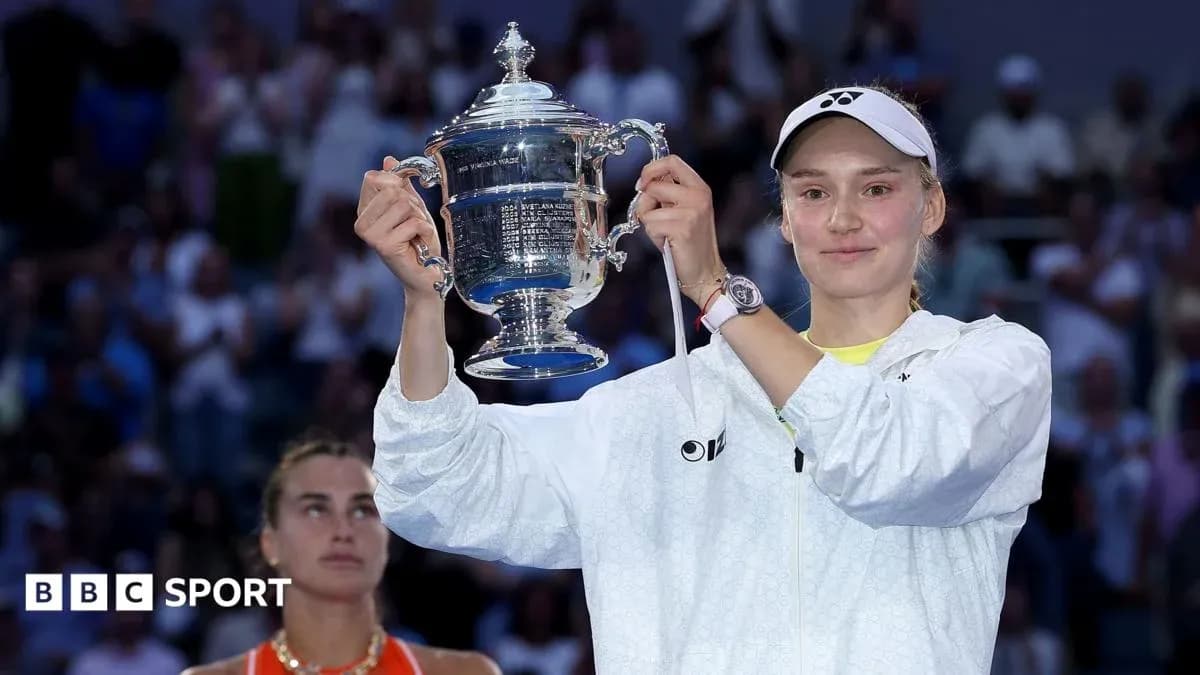
Elena Rybakina walked into Arthur Ashe Stadium already guaranteed the number one ranking. She walked out with something heavier, louder, and far more defining – her first US Open title and a rivalry tilted decisively in her favour.
The Kazakh beat two-time defending champion Aryna Sabalenka 6-4 5-7 6-2, a scoreline that only hints at the psychological tug-of-war beneath it. This was Rybakina’s third Grand Slam crown, after Wimbledon 2022 and the Australian Open earlier this year, and it may be the one that finally cements her as the standard-bearer in the women’s game.
Ice against fire
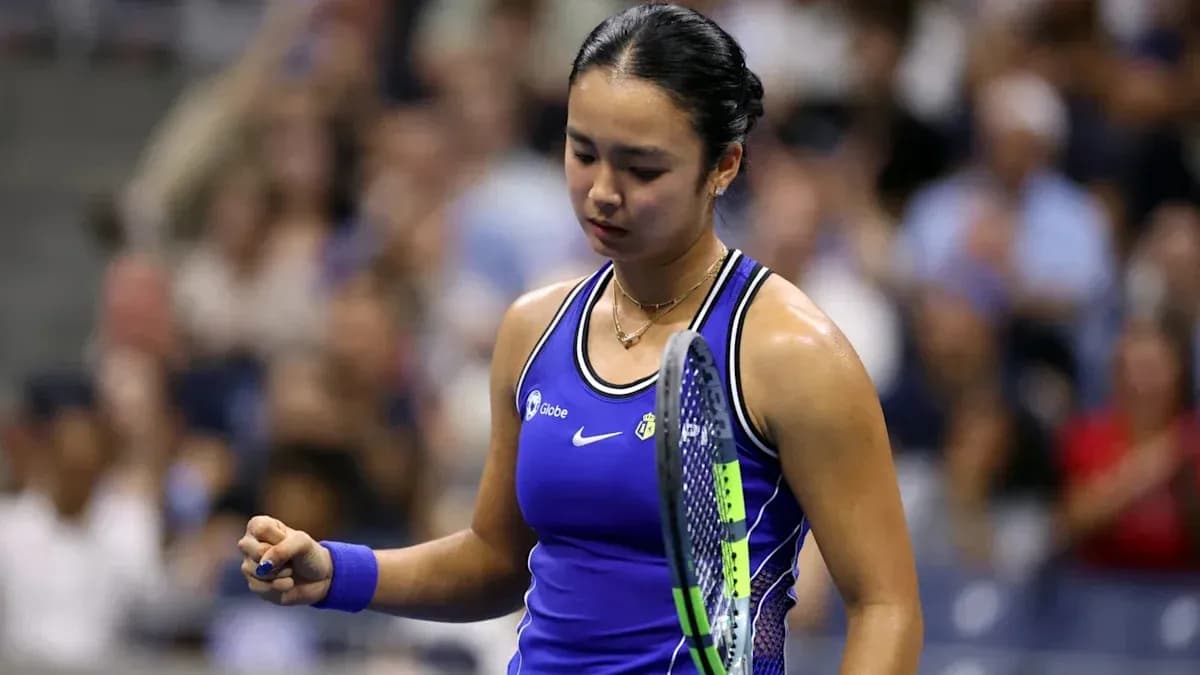
They could not be more different. Sabalenka, all snarl and adrenaline, pacing and gesturing, rides emotional waves. Rybakina barely changes expression, her face a mask even when the match hangs on a single point. On this night, that contrast decided a US Open final.
From the start, Rybakina’s most trusted weapon betrayed her. The first serve misfired, the percentages dipped, and for many players that would have been the cue for panic. She refused to blink. If the serve would not carry her, the return would. Standing tall on the baseline, she repeatedly pounced on Sabalenka’s deliveries, driving deep, flat returns that pushed the Belarusian back and drew error after error.
The opening set went to Rybakina 6-4, not through fireworks but through clarity. She played the bigger points with a cool edge Sabalenka could not match.
The defending champion, though, is not easily dislodged. In the second set, her groundstrokes finally found their range. The forehand bit through the court, the backhand stopped sailing long, and the rallies turned brutal. Rybakina’s level dipped just enough to let Sabalenka in, and suddenly the match tightened.
At 5-6 in the second, Sabalenka surged. She attacked Rybakina’s second serve with ferocity, stepping inside the baseline and unloading. On her third chance to break, she ripped another aggressive return, forced the error, and snatched the set 7-5. The crowd sensed a shift. So did Sabalenka, who roared toward her box. For a moment, the night looked ready to bend her way again.
Turning the screw
Then the loose shots crept back.
Early in the third set, Sabalenka’s control deserted her. Balls flew long, backhands dipped into the net, and with them went her composure. The negativity that has haunted her at key moments resurfaced, and Rybakina, ever watchful, moved in.
A deep, punishing return game in the third set’s early stages pinned Sabalenka behind the baseline. Rybakina broke for 2-1, and that single break felt like a crack in the dam. The new world number one grew taller with every point, her feet lighter, her swings freer. Sabalenka, by contrast, shrank into her own frustration.
From there, Rybakina controlled the tempo. She mixed heavy, flat drives with measured aggression, choosing her moments to step in and bully from the baseline. Sabalenka fought, but she was chasing the match, and Rybakina does not offer many second chances.
Serving for the championship, the nerves finally showed. On her first match point, Rybakina threw in a double fault, a rare lapse on a night defined by mental steel. She paused, reset, and then delivered the perfect response: an ace, hammered down the middle, sealing the title and underlining exactly why she now sits atop the sport.
There was, at last, a flicker of emotion. A brief smile. A small, telling crack in the ice as she claimed her second major of an outstanding 2026 season.
Conquering a city that never suited her
For years, New York had been the outlier in Rybakina’s story. With her piercing serve and thunderous groundstrokes, she owns a brand of first-strike tennis built for hard courts. She can take the racquet out of anyone’s hands in a handful of blows. Yet Flushing Meadows had stubbornly refused to yield.
She admitted as much.
"I was coming here for the last 10 years and it was never successful. I'm falling in love with New York more and more," the 27-year-old said, the line carrying the weight of a decade of frustration.
Part of the puzzle has always been fit. The brash, chaotic, noisy energy of New York has never quite matched Rybakina’s understated personality. This fortnight, she bent the city to her rhythm instead.
What makes this run even more remarkable is that, not long ago, there was a real chance she would not play at all. An ankle injury in the Cincinnati Open quarter-finals left her unable to walk for several days. Her team could only go “day by day”, as she put it, uncertain whether the US Open was realistic or reckless.
She not only played. She steamrolled the early rounds.
With her serve back to its devastating best, Rybakina cruised through her first four matches, barely allowing opponents a foothold. Service games flew by; rallies were short, brutal, and mostly one-sided.
The tests arrived later. Against Zheng Qinwen and then home favourite Coco Gauff, she dropped the first set in both matches. Each time she responded with stubborn resilience, tightening her game, extending rallies when needed, and proving she could grind as well as blast. Those comebacks hardened her for the final.
Against Sabalenka, all of it came together. The first-strike aggression, the durability, the refusal to panic when the momentum swung away. She bullied from the baseline when she had the opening, dug in when she didn’t, and walked the fine line between patience and power that defines champions.
By the end of the night, one fact stood clear: Rybakina now stands a French Open title away from completing the career Grand Slam.
"Some magic is happening. I was unlucky with injury and just going day by day," she told Sky Sports. "We didn't know how it was going to be so I'm super happy and still can't believe it."
New York finally belongs to her. The number one ranking is hers. The question now is not whether Elena Rybakina is the best player in the world – it’s how far, and how fast, she can stretch the gap.