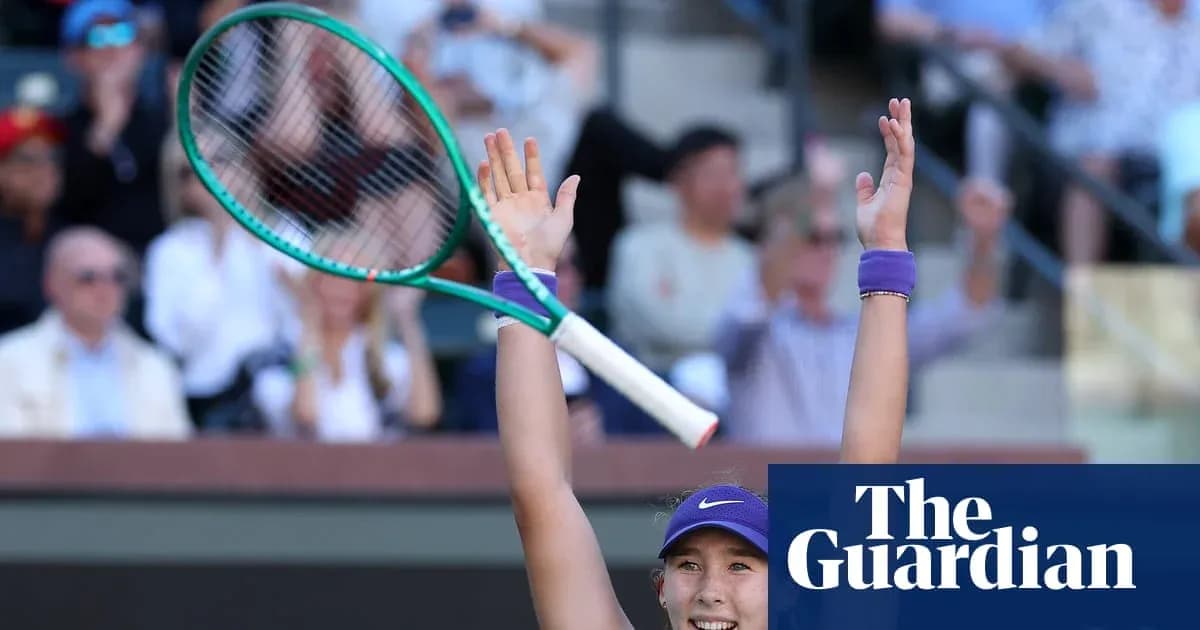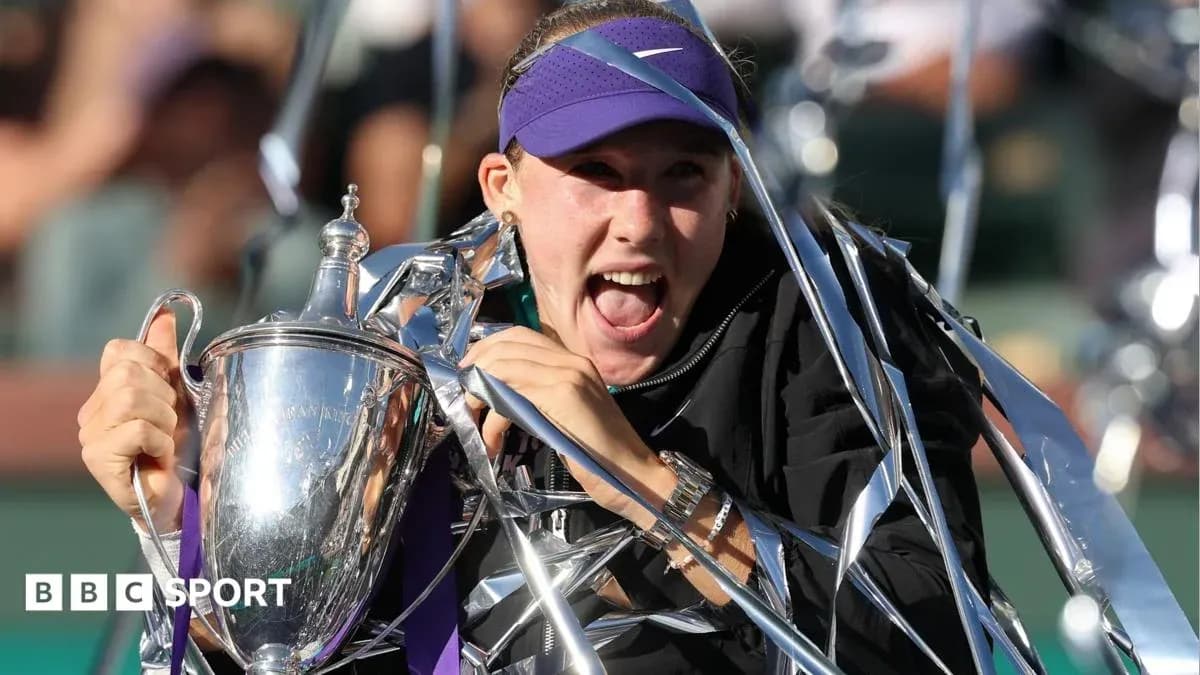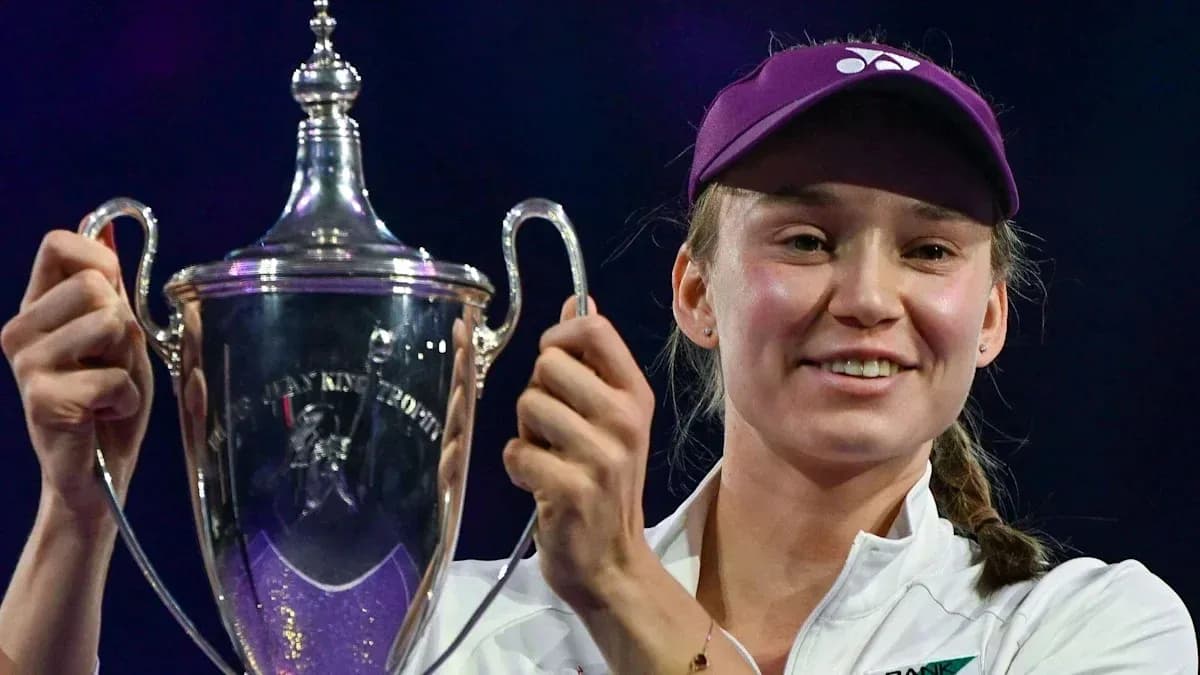
Elena Rybakina’s season of supremacy has ended not with a final statement in the desert, but with a withdrawal slip.
The world number one and reigning WTA Finals champion has pulled out of this year’s event in Indian Wells on the eve of the tournament, laid low by a viral illness that has finally forced a body pushed to its limits to say no.
“I am really sad to inform all my fans and supporters that I unfortunately have to withdraw from the WTA Finals this year,” Rybakina said. “I've had an incredible season but my body is just not physically ready to compete. I'm going to spend some time resting and recovering at home and getting myself ready for the 2027 season.”
For the tour, it is a jarring twist. For Rybakina, it is the bill coming due on a relentless, career-defining year.
A year at full throttle
In 2026, Rybakina did what the sport had been waiting for since her Wimbledon breakthrough in 2022: she turned promise into outright dominance.
She opened the year by conquering Melbourne, then closed the Grand Slam calendar by overpowering Aryna Sabalenka in the US Open final, a victory that snapped the Belarusian’s 99-week grip on the number one ranking. That win in New York did more than deliver a second major of the season. It redrew the map at the top of the women’s game.
The trophies kept coming. Titles in Stuttgart and Ningbo. Finals in Indian Wells and Toronto. Six of her 15 career titles have arrived since last October, a surge that transformed her from dangerous contender into the standard everyone else must chase.
By October in Tokyo, the maths became official: Rybakina had locked up the year-end world number one. The ranking merely confirmed what the locker room already knew.
Chasing Serena’s shadow
That is why this withdrawal stings beyond the simple loss of a marquee name from the draw.
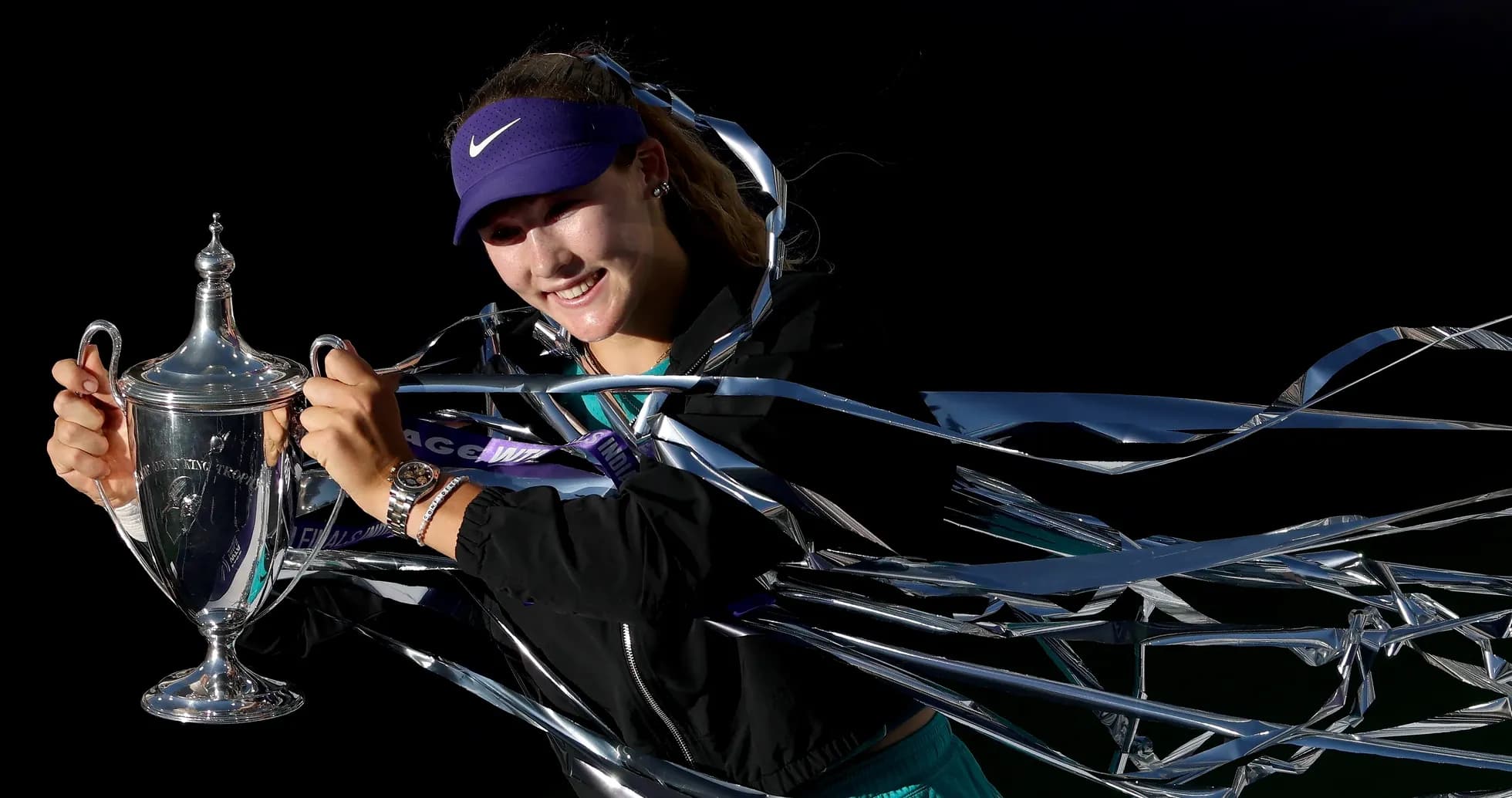
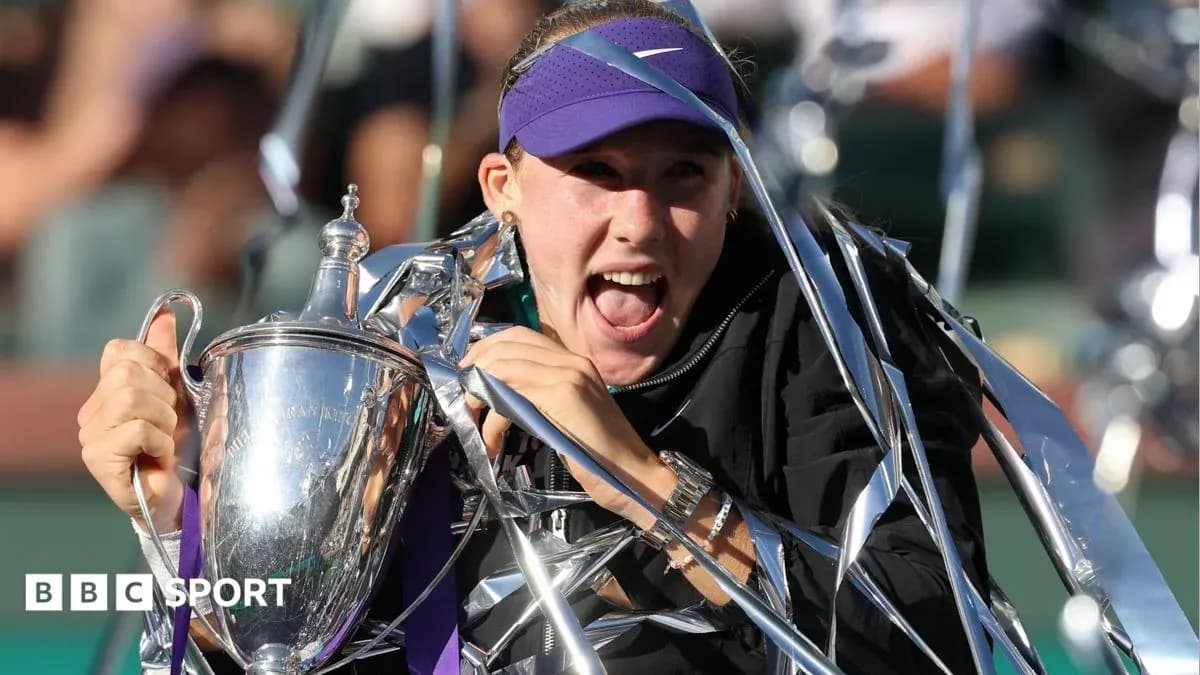
Rybakina arrived in Indian Wells with a chance to step into elite company. No woman has defended the WTA Finals title since Serena Williams in 2014. Rybakina, 27, was poised to try to match that feat, to put a Serena-era statistic finally under threat.
Instead, the defending champion will not strike a ball.
The stage was set for a statement week. A world number one in peak form, a field stacked with rivals she has repeatedly beaten this season, and a format that rewards the biggest game under the brightest lights. The narrative wrote itself—until illness tore up the script.
Power, precision, and a punishing schedule
Rybakina’s rise has been built on the most formidable serve in the women’s game and a baseline game that refuses to blink.
The numbers are brutal. She fired 438 aces this season, a tour-leading figure that left second-placed Sabalenka trailing by 140. Her first strike doesn’t just start points; it suffocates opponents. When the return does come back, they face another problem: 1,775 winners, more than anyone else on tour, a relentless barrage that has broken resistance all year.
She has not just feasted on lower-ranked players. Rybakina has gone 10–0 against fellow top-10 opponents this season, a record that underlines her authority when the stakes spike. On the biggest stages, against the best, she has been the one dictating terms.
The win–loss column tells the same story. Fifty-four victories in 68 matches. Seventeen wins in 19 Grand Slam contests. From Melbourne to New York, she played like a woman determined to make up for nearly four years spent searching for a second major after that first Wimbledon crown.
But such a schedule, such intensity, extracts a price. The viral illness that has forced her out of Indian Wells arrives at the end of a campaign in which there was almost no let-up.
A pause, not a full stop
This is not how champions like to close a season. There is no trophy lift, no final handshake at the net, no last authoritative performance to bookend a dominant year. Just a statement, a diagnosis, and the quiet of an early return home.
Yet the context matters. Rybakina leaves 2026 not as a player on the rise, but as the undisputed number one, with the season’s two biggest hard-court prizes in her possession and a statistical profile that screams control.
She will not defend her WTA Finals crown this week. She will not get the chance, this year, to join Serena Williams in that particular chapter of the record books.
But with her serve, her firepower, and now the status of year-end world number one, the question shifts to 2027: was this season the peak, or just the start of a new era she intends to own?