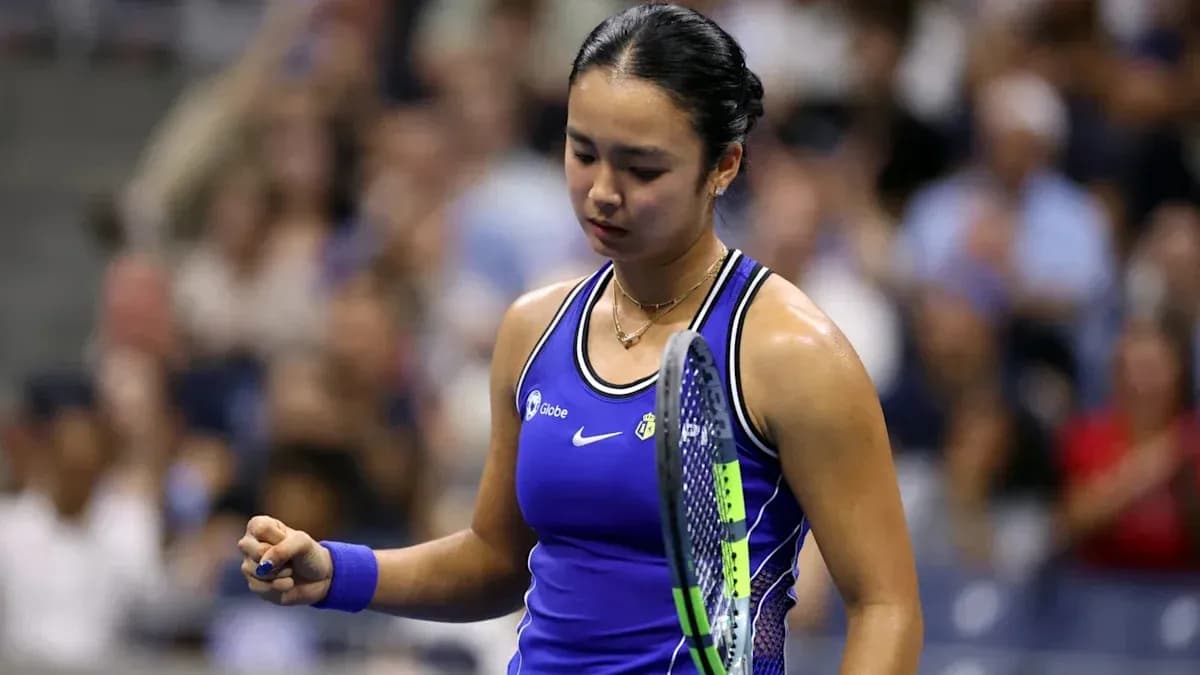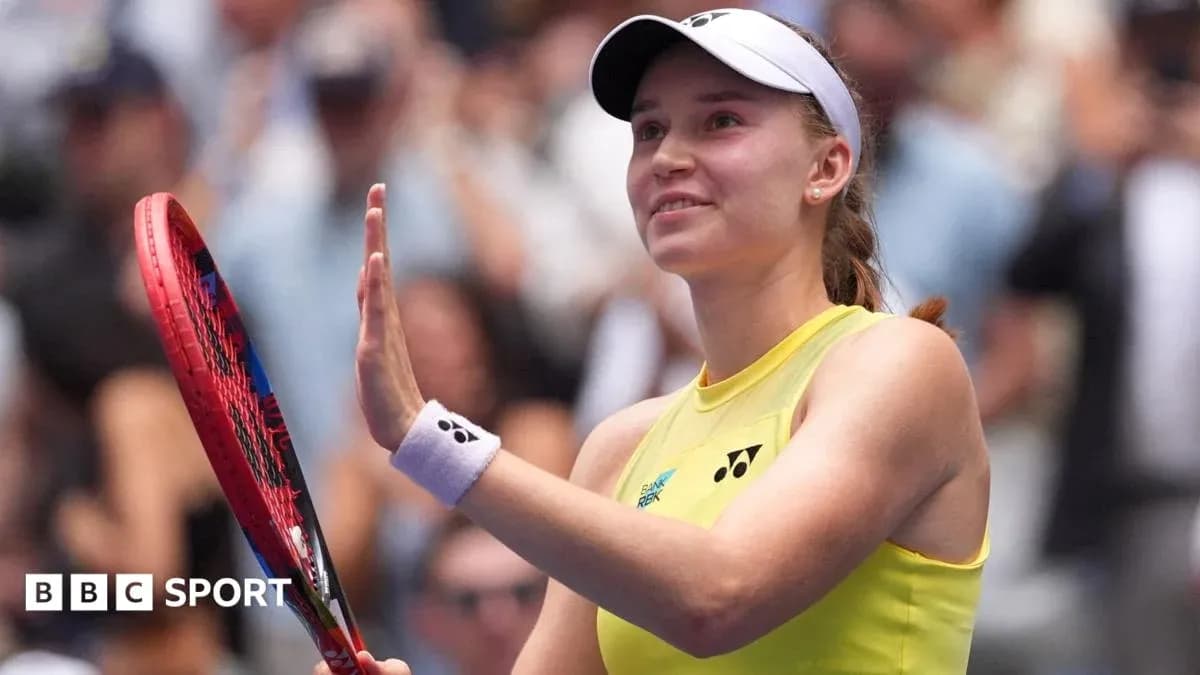
After 99 weeks, the women’s game has a new ruler. Her name is Elena Rybakina.
Under the lights in New York, the Kazakh finally completed a chase that has stretched across continents and seasons, turning a shaky start into a defining win. Her 3-6 6-1 6-4 victory over Zheng Qinwen in the US Open quarter-finals did more than book a semi-final place. It guaranteed she will replace Aryna Sabalenka as world number one on Monday.
History, sealed with a comeback.
A ranking sealed the hard way
This was no procession. For the first time at this US Open, Rybakina dropped a set. Zheng came out swinging, taking the ball early, rushing the taller woman and snatching the opener 6-3. Rybakina looked flat, timing off, footwork heavy.
Then the switch flipped.
The second set turned into a statement. Rybakina’s serve, previously muted, exploded into life. She ripped through Zheng 6-1, dictating from the baseline, striking clean through the ball, and suddenly the match – and the ranking race – felt inevitable.
The deciding set was anything but. Zheng dug in, earned a crucial break point, and for a moment the script trembled. Rybakina stared it down, saved it, and held. That escape proved pivotal. She tightened her grip, broke once, and guarded the advantage to the line.
On match point, she didn’t flinch. One final surge, one last authoritative strike, and with it, Kazakhstan had its first world number one in singles, man or woman.
Ending Sabalenka’s long reign
Sabalenka’s stretch at the top has been immense. Ninety-nine consecutive weeks, dating back to 21 October 2024, the sixth-longest run in WTA history. She has been the fixed point in a shifting tour.
Rybakina has been the storm gathering on the horizon.
She arrived in New York as one of three women with a mathematical shot at the summit, alongside Jessica Pegula and Coco Gauff. But the equation always favoured her. The Americans needed perfection – win the title – and help – Rybakina out before the semi-finals. Neither condition has been met.
Instead, Rybakina has marched through the draw and slammed the door shut herself.
The twist? The dethroned Sabalenka is still very much in the picture. She faces Pegula in her own quarter-final, with the tantalising prospect of a US Open final against the very woman who has chased her all year. They already split a major final this season in Melbourne, where Rybakina beat her in three sets to take the Australian Open.
World number one or not, Rybakina’s eyes remain on the silverware.
“It’s just a number right now. My goal is to win the tournaments which I play,” the 27-year-old said. She called it “an amazing achievement” but warned how quickly rankings can shift in this sport. For her, the trophy in New York still trumps the crown on Monday.
Before she can think about the final, she must solve either Coco Gauff or Mirra Andreeva in Thursday’s semi-finals. Sabalenka, on the other side, will try to keep her own title hopes alive against Pegula. The rivalry that has defined the last 18 months of the tour could yet decide this Slam as well.
The long climb to the summit
Rybakina’s push for the top did not start in New York. It began in the closing weeks of 2025.
Back then, Sabalenka had the upper hand. She beat Rybakina in the quarter-finals of the Wuhan Open last October, a reminder of her authority at the top of the game. Rybakina’s response was ruthless. One week later she lifted the Ningbo Open title, then took her revenge in the biggest way possible – defeating Sabalenka to win the season-ending WTA Finals.
That week changed the tone of their rivalry. It also changed the trajectory of the rankings race.
Rybakina carried that surge into 2026. In Melbourne, she again stared down Sabalenka, this time in a major final, and edged her in three tight sets to claim the Australian Open – her second Grand Slam, almost four years after her breakthrough at Wimbledon. The narrative of Sabalenka as the immovable number one suddenly had a challenger with real weight.
Their duel rolled across the hard-court swing. Sabalenka struck back in the Indian Wells final and the Miami Open semi-final, but Rybakina answered with the Stuttgart title on clay as Sabalenka’s form flickered.
Not everything went to plan. Rybakina suffered early exits at Roland Garros and Wimbledon, then rebuilt with a run to the final in Toronto, where Iga Swiatek beat her in straight sets. The bid for number one stalled again in Cincinnati, where she retired from her quarter-final against Swiatek with a left ankle problem.
Later, Rybakina revealed the injury had been “bothering me for a long period of time,” affecting her movement and her ability to push off on serve. She insisted she had it “under control,” but her US Open preparation suffered. By her own admission, the build-up in New York “wasn’t great” as she struggled to train for much of the week before the tournament.
Yet here she is: in the last four of a major and guaranteed the top ranking. The first of her two stated goals in New York is already secure. The second – the title – now looms larger.
A complex partnership at the core
Behind this ascent stands a familiar, complicated figure: coach Stefano Vukov.
Rybakina and Vukov have worked together for almost seven years, first teaming up from 2019 to 2025. They split, and later that year the Croatian coach was banned from the WTA Tour after an independent investigation into his behaviour towards Rybakina and a breach of the tour’s code of conduct.
Vukov denied wrongdoing. Rybakina publicly said she was never mistreated by him.
Crucially, she wanted him back. At the start of 2025 she pushed for his return to her team. Vukov successfully appealed the suspension and rejoined her camp in August last year. Their reunion instantly bore fruit: at her first tournament back with him, Rybakina reached the US Open fourth round for the first time in her career.
From there, the results snowballed. The strong end-of-season surge, capped by the WTA Finals title, and the major breakthrough in Melbourne have now carried her all the way to the pinnacle of the sport.
The ranking will become official on Monday. The statement, though, is being written now in New York. With the number one spot secured and the ankle holding up under pressure, the question shifts from whether Rybakina belongs at the top to something far more daunting for the rest of the field:
How long can she stay there?