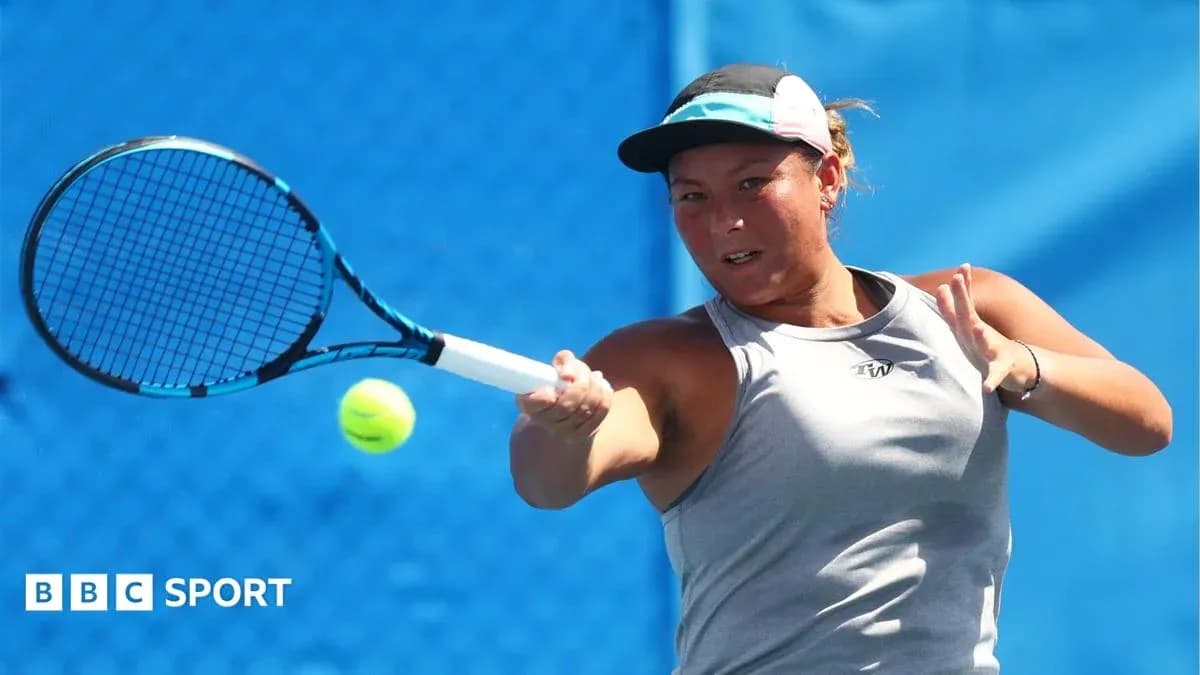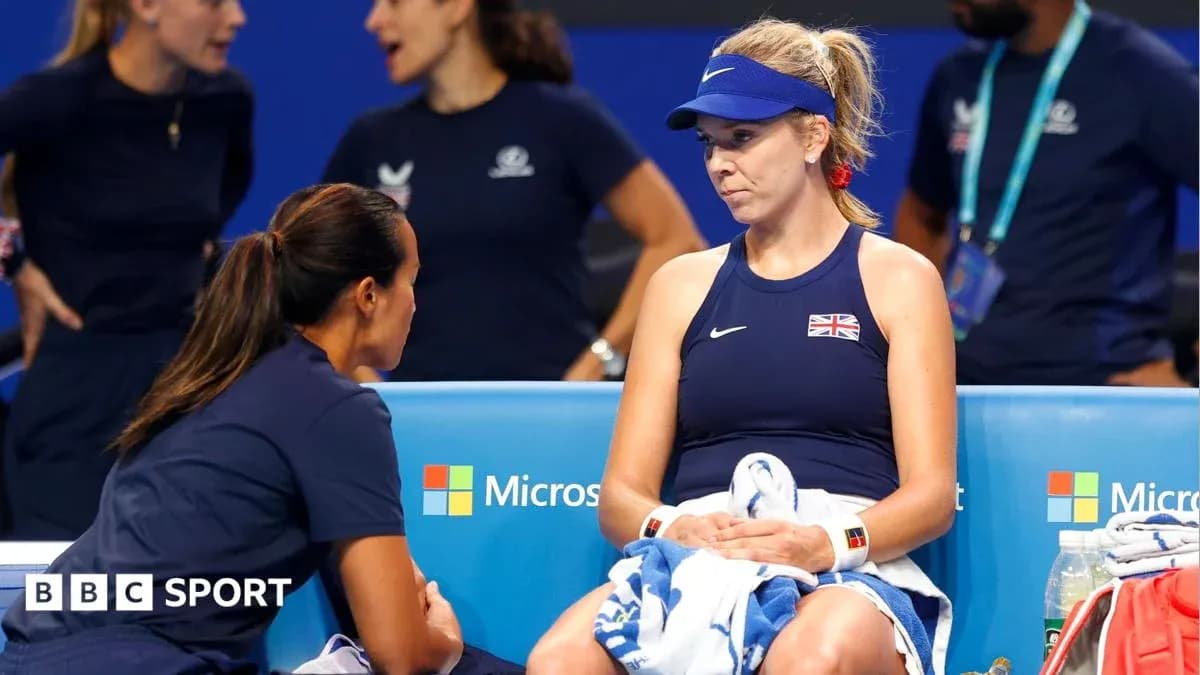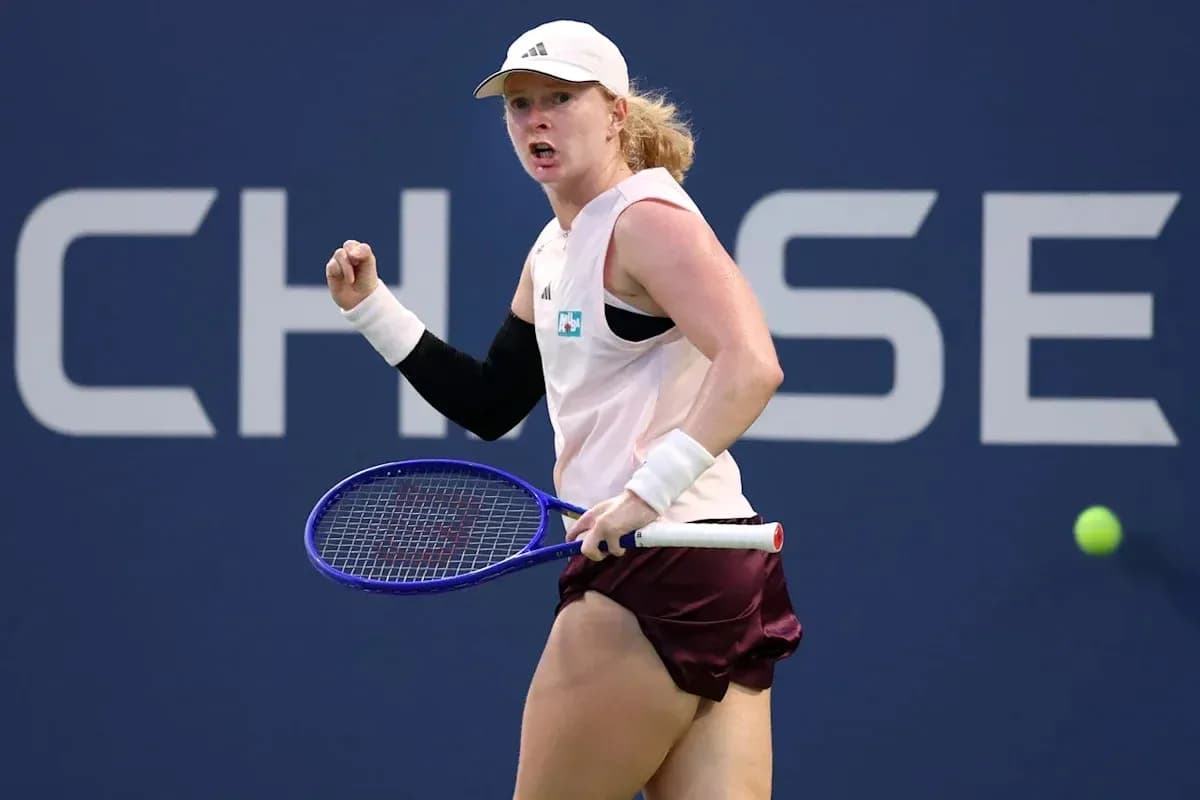
Fran Jones walked off court in New York as the last Briton standing. Minutes later, she was calling for British tennis to take a hard look at itself.
Her straight-sets defeat to 14th seed Iva Jovic on Thursday night ended British interest in the US Open before the third round. Nine players made the main draw. Not one reached the last 32.
For a nation that talks a big game about its tennis infrastructure, that statistic stings.
Early exits and awkward truths
Arthur Fery, the great hope after his Wimbledon semi-final run, never really had the chance to build momentum. He ran into 13th seed Lorenzo Musetti in the first round and went out early. A tough draw, yes, but the kind of match a genuine top-level threat has to find a way to win at some point.
Cameron Norrie, Jan Choinski and Henry Wendelken all followed Fery through the exit door in round one. Jacob Fearnley, Toby Samuel, Katie Boulter, Harriet Dart and Jones at least reached the second round, but that was as far as it went.
Samuel could leave with his head high after battling through qualifying and then winning his first main-draw match at a grand slam. The rest? Respectable, workmanlike, but nowhere near the sharp end of the tournament.
Jones didn’t try to dress it up.
“You want to see people get to the back end of tournaments,” she said. “But the top players aren't here. Jack and Emma are our best players.”
She acknowledged the difficulty of some of the draws, but cut straight to the core of the issue.
“You’d have to play a seed in the second round. You have to beat the best to be the best. It was good to see everyone win the matches they probably should be winning, but you've got to be able to beat the seeds.”
That, in a sentence, is the gap British tennis still hasn’t closed.
Injuries to the stars, questions for the system
Jones did not ignore the obvious caveat. Jack Draper and Emma Raducanu, the two brightest talents in the British game, are both missing.
Draper’s story has become a grim loop. A recurring bone bruising problem has derailed him for much of the last 18 months, with multiple comeback attempts stalling and his ranking sliding as a result. Every time he seems ready to launch, his body shuts the door.
Raducanu’s absence is just as significant. Since that astonishing run from qualifying to the title at the 2021 US Open, her career has been punctured by injury breaks and aborted restarts. This time it is a stress fracture in her leg, serious enough to keep her out of both Wimbledon and New York.
Without them, the British team always looked lighter. But Jones still believes the sport has to ask itself serious questions.
“Do I think there could be an inquest? I always think there's things that British tennis could do better. So yes, definitely,” she said. “Do I think it's something that's concerning? No, not at all.
“Things happen. The level is getting better and everyone is dangerous on their day. People might lose (in the) second round but you might see someone reach semis, like Arthur.”
So the alarm bells aren’t blaring, but the call is clear: review, refine, improve.
Raducanu urged to be patient
While British fans wait for Raducanu’s return, the player who shared that unforgettable 2021 final with her offered a pointed warning.
Leylah Fernandez, now seeded 31st in New York, knows the temptation to rush back all too well.
“It's hard. You are sidelined and there is always that internal battle of 'ah, let me get back earlier than expected',” the Canadian said.
“But that doesn't help in the long run. You always have to see the short-term gains and long-term gains. It's that continuous battle.”
Her words hang over Raducanu’s situation, and by extension over British tennis. The urge to fast-track a saviour back onto court is strong. The risk of breaking them again is stronger.
For now, the numbers don’t lie: nine Brits in the main draw, none in the third round. The inquest Jones wants will have to answer a blunt question — when the next slam comes around, will Britain still be clinging to excuses, or finally producing players who can live with the seeds when it matters most?