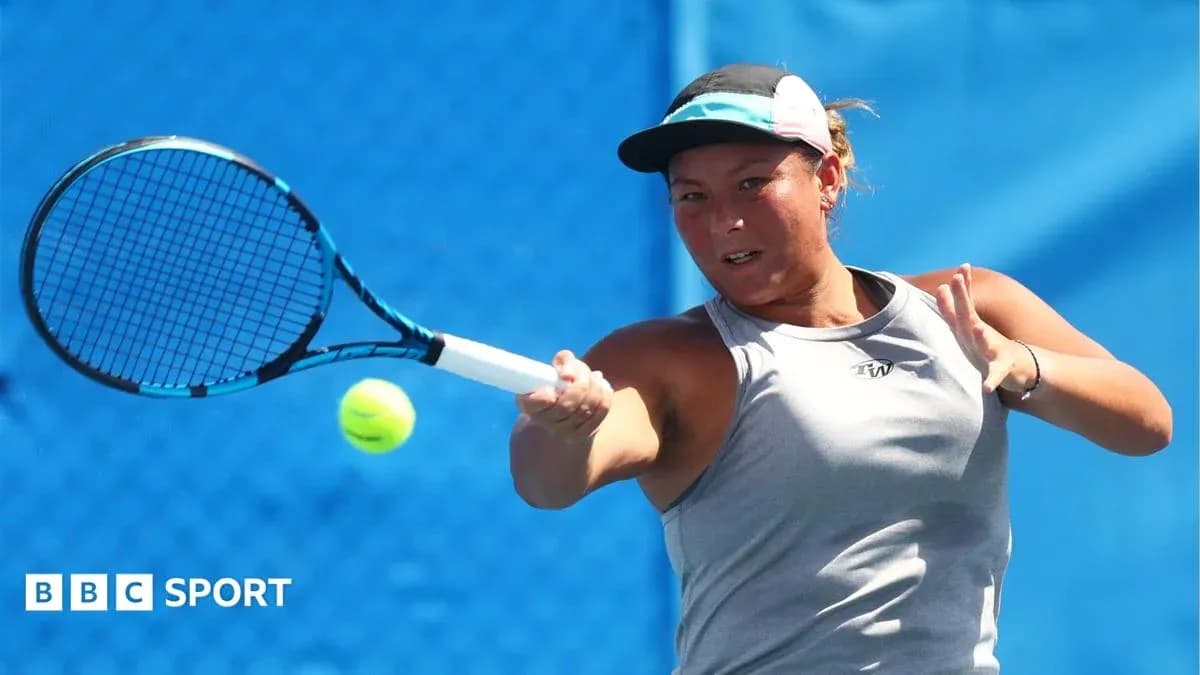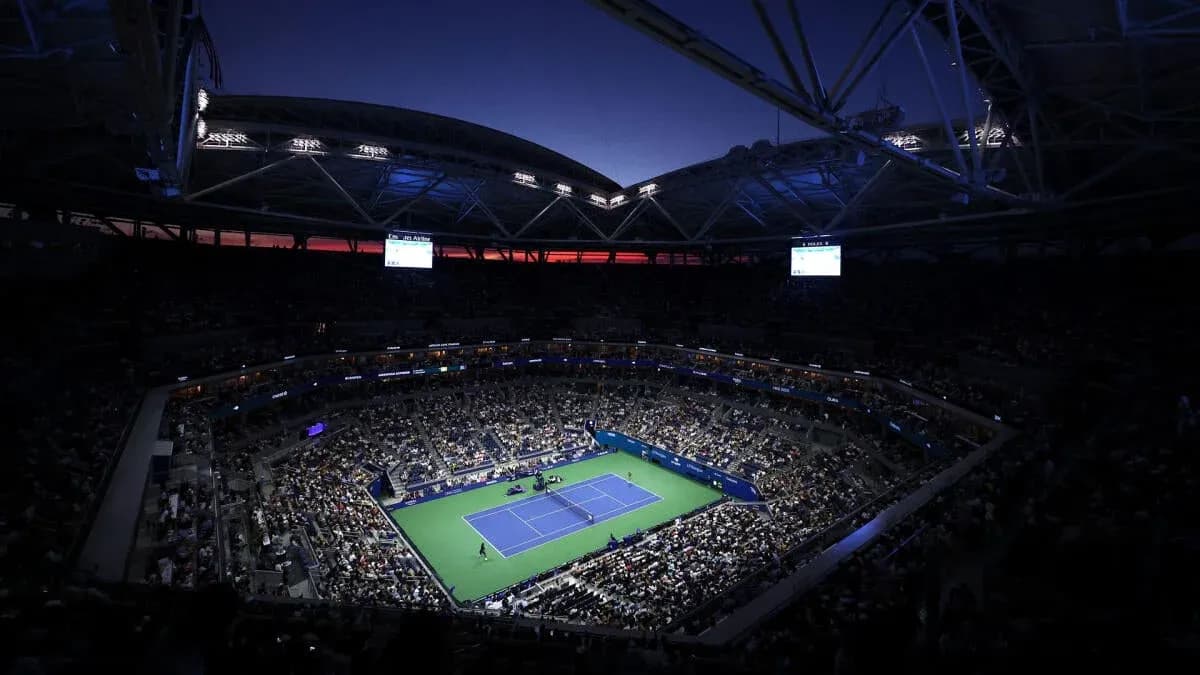
On a humid New York night that refused to end, Frances Tiafoe walked the edge and never fell off.
Down two sets. Out of rhythm. Outplayed for long stretches by 19-year-old Alex Michelsen. Then, point by point, game by game, the 11th seed turned a match that looked gone into one of the great survival acts of his career, clawing back to win 5-7, 3-6, 7-5, 6-3, 7-6 (10-6) inside Arthur Ashe Stadium.
By the time he ripped the final passing shot up the line, Michelsen was in tears, collapsing into Tiafoe’s arms at the net. The veteran held the teenager tight. He knew exactly what this kind of loss feels like.
From flat to ferocious
For two sets, Michelsen owned the biggest court in tennis. The young American dictated with clean, early strikes and a calm that belied his age, taking the opener 7-5 and backing it up 6-3. Tiafoe, usually the one feeding off the Ashe energy, looked stuck in neutral.
The numbers told their own story. Michelsen’s serve gave him first-strike control; Tiafoe’s timing on the return and from the baseline lagged just enough to keep him chasing. At two sets down, the 26-year-old faced the kind of scoreboard that has broken better players.
But Tiafoe refused to let the night drift away. He tightened his patterns, cut out the loose errors and began dragging Michelsen into longer, more physical rallies. The pressure finally told late in the third set. At 5-5, Tiafoe pounced, grabbed the crucial break, and served out the set 7-5. The roar from Ashe said it plainly: the match had turned.
The fourth followed the new script. Tiafoe now stood on the baseline, not behind it, stepping into returns and forcing Michelsen to hit closer and closer to the lines. A 6-3 set levelled the contest and sent it where Michelsen least wanted it to go: a fifth.
Michelsen came into the night 0-5 in five-set matches. Tiafoe’s own record in deciders, 11-17, hardly screamed certainty either. But the veteran had been here more often, and as the clock pushed deep into the night, experience began to matter.
A tiebreak and a 135 MPH statement
The fifth set felt like a separate match, played on nerves as much as on talent. Neither man backed off. Neither blinked on serve. The rallies grew shorter, the stakes heavier. A final-set tiebreak always seemed inevitable; when it arrived, Ashe rose with them.
Tiafoe seized the early mini-breaks, racing out to a 7-4 lead. Michelsen, to his credit, refused to fold, clawing back to within a point and threatening yet another twist in a match already full of them.
Tiafoe slammed the door himself.
First, he uncorked a 135 MPH ace, a thunderbolt that cut through the tension and the night air. Then he watched Michelsen misfire on a return. Finally, with match point on his racket, Tiafoe threaded a passing shot up the baseline, the ball streaking past Michelsen and into the corner for the win.
Four hours and 40 minutes. Five sets. One of the biggest comebacks of his career, and a third trip to the US Open semifinals secured.
“He played a super tough game, obviously he gave me some gifts and I slowly started to getting my rhythm,” Tiafoe said afterward. “He’s a helluva player. He easily could’ve won today.”
On another night, he might have.
Sabalenka survives, Noskova pushes No. 1 to the brink
Earlier in the day, the top seed on the women’s side walked a similar tightrope.
Aryna Sabalenka’s bid for a US Open three-peat is still alive, but only just, after a wild 7-6(1), 3-6, 7-6(7) win over No. 6 seed Linda Noskova in a bruising, momentum-swinging quarterfinal.
Sabalenka started like a defending champion. She controlled the baseline, bullied the rallies, and looked on course for a routine first set. Noskova, though, settled, steadied, and dragged the set into a tiebreak. Once there, Sabalenka reasserted herself, racing through it 7-1 to take the lead.
That should have broken a lesser opponent. Noskova used it as fuel.
The Wimbledon champion stepped inside the court in the second set, attacking returns, coming forward, and finally flipping the script. She broke Sabalenka, rode out some late nerves, and closed the set 6-3 with her 12th ace of the match. Suddenly, the world No. 1 was staring at a deciding set and the ghosts of past meltdowns.
When Noskova broke for 4-2 in the third, the pattern felt familiar: a Sabalenka lead, a swing in momentum, and the creeping negativity that has undone her before. This time, she slammed the door on that storyline. She broke back at love, stamped her authority on her service games, and forced the Czech into a defensive crouch once more.
The final tiebreak was a test of nerve. Sabalenka jumped ahead with a mini-break, Noskova battled back, and the two traded blows deep into the breaker. Sabalenka found the last surge. She edged in front again, then finished the match with an ace, a fitting end for a contest built on first-strike power.
She’s back in the US Open semifinals, still chasing a slice of history. Waiting for her will be an American: either Jessica Pegula or Emma Navarro, who face off later today.
A night that won’t be forgotten
By the time Sabalenka walked off with her three-set escape and Tiafoe completed his five-set resurrection, Arthur Ashe Stadium had seen just about every version of sporting tension.
A teenager pushing a star to the brink. A world No. 1 dragged into the chaos of a deciding tiebreak. A veteran American digging out from two sets down, then serving a 135 MPH warning to whoever comes next.
For Tiafoe, that next test will be brutal: the winner of Ben Shelton and Carlos Alcaraz in Thursday’s semifinals.
He says he played four hours and 40 minutes and will still be watching that match.
After a night like this, who would dare look away?