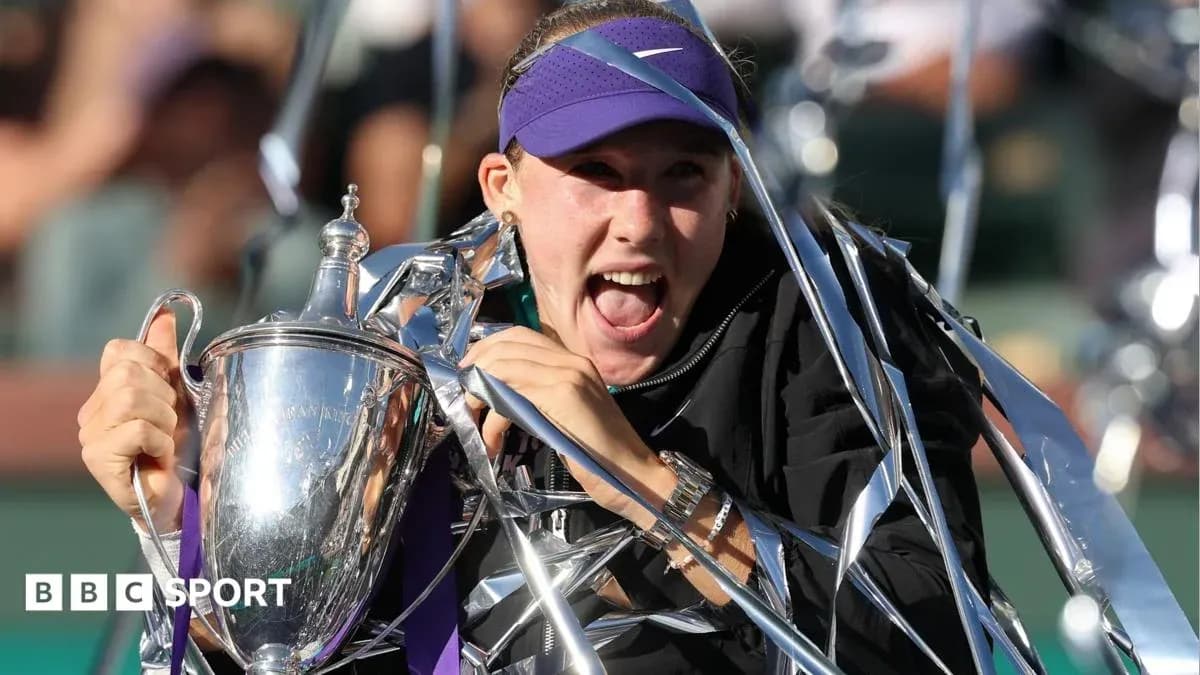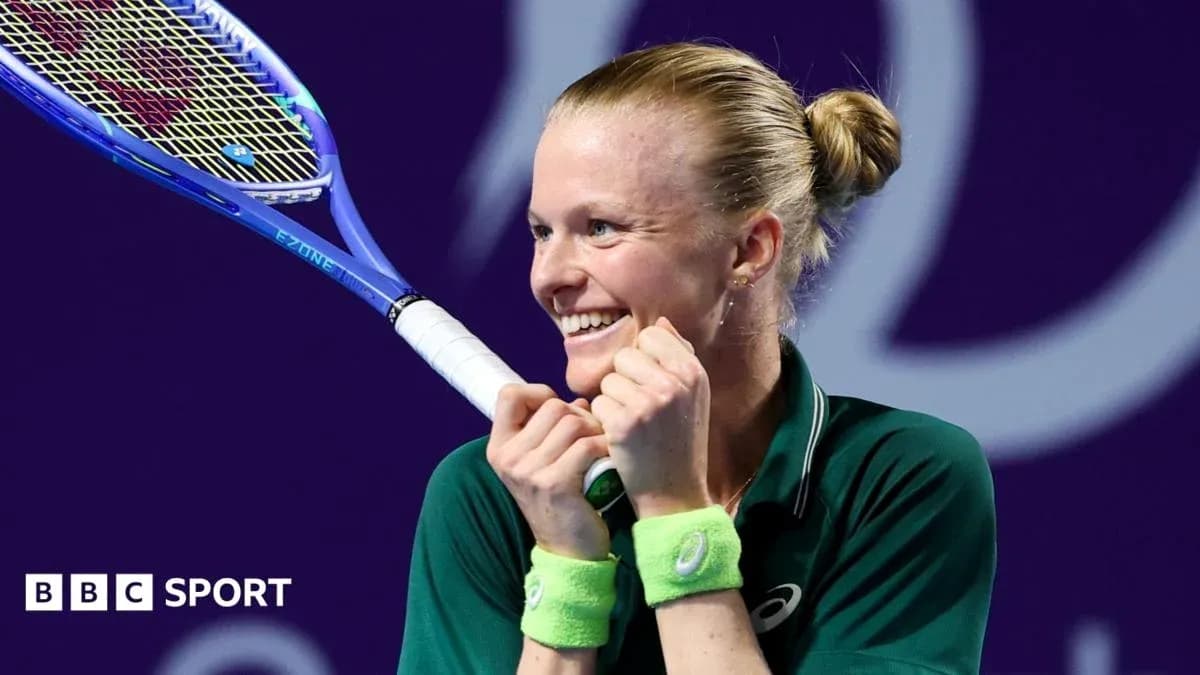
For years, Harriet Dart has lurked on the fringes of the tennis conversation – a gritty competitor, a dangerous qualifier, a name that often popped up in second rounds rather than on trophy engravings. In Guangzhou, that changed.
On a humid afternoon in China, the 30-year-old Briton walked through the fire and came out a champion, beating fast-rising Austrian teenager Lilli Tagger 4-6 6-3 6-4 to win the first WTA Tour singles title of her career.
She didn’t glide to it. She wrestled it.
A final on the edge
Tagger, just 18 and already touted as one of the sport’s coming forces, struck first. The 2025 French Open junior champion, ranked 53rd in the world, took the opening set 6-4, her heavy ball and fearless hitting pushing Dart back and silencing any early British optimism.
Dart, ranked 115 and Britain’s number five, has lived most of this season on the margins, grinding through qualifying draws and long travel days. That experience showed. She refused to panic. She changed height, changed pace, dragged Tagger into longer exchanges. The match tightened.
The pressure finally told in the second set. Dart’s return found its mark, the errors crept into Tagger’s game, and the Briton levelled the contest 6-3, forcing a deciding set that felt every bit like a crossroads in both careers.
Momentum swings and a nervy finish
The decider became a test of nerve as much as shot-making. Dart twice broke to lead, twice saw Tagger hit back. Each time Dart nudged ahead, the teenager answered with bold strikes, flattening forehands and stepping inside the baseline as if to reclaim territory.
At 3-3, Dart dug in again. She broke for a third time, this one for 4-3, then held serve to move within a game of the title. The finish line appeared. It didn’t come quietly.
Serving at 3-5, Tagger faced two championship points. Dart had the match on her racquet, a mid-court ball begging to be dispatched. She dumped it into the net. The gasp from the crowd matched the look on her face. Another chance gone, doubt threatening to creep in.
But this version of Harriet Dart is built on recovery. She reset, kept her composure, and forced Tagger to serve to stay in the match again. When her third championship point arrived, Dart didn’t hesitate. A clean service winner ripped through the box. Tagger could only watch.
Dart fell to the court, overcome, before rising to celebrate with her team. The reaction said everything: this wasn’t just a title; it was a breakthrough years in the making.
From qualifying to champion
This Guangzhou run started in the shadows. Dart came through qualifying just to reach the main draw of this WTA 250 event. Seven matches later, she was holding the trophy.
Her week followed a familiar pattern. She has made a habit of playing from behind, and this final fit the script. Beating Tagger after losing the first set marked the fourth time in seven matches that Dart turned a deficit into victory. Resilience wasn’t a subplot; it was the defining theme.
The numbers underline the transformation. Since Wimbledon, Dart has won 19 of 24 tour-level matches on hard courts. Across the season, she now owns 23 wins from 34 matches on the WTA Tour – the best winning percentage of her career.
This surge has not come out of nowhere. A career-high ranking of 70 in 2024, fuelled by a run to the Wimbledon third round and the US Open second round, hinted at what she could do. But the last two seasons have mostly been spent outside the top 100, battling through qualifying and watching the big stages from a distance.
Working with former Wimbledon champion Marion Bartoli has helped change that trajectory. The improvements are visible: a cleaner, more assertive ball-strike, smarter point construction, and a growing belief that she belongs at this level, not just visiting it.
A teenager announced, a veteran reborn
Tagger leaves Guangzhou without the trophy but with further proof she is arriving fast. She beat seven-time major champion Venus Williams on her way to the final, and pushed Dart to the edge in a tense, physical contest. After the match, the Austrian acknowledged the scale of Dart’s performance, admitting “it wasn’t fun to be on the other side of the court today” and praising the Briton’s year.
For Dart, the rewards are immediate and tangible. The ranking boost will take her back inside the world’s top 100 and, crucially, straight into the main draw of the Australian Open in January. No qualifying, no early scramble. A seat at the table from day one of the new season.
The deeper reward is harder to measure but just as real. After years of scratching away at the tour’s edges, Harriet Dart now has a WTA title beside her name. The question no longer hangs over whether she can win at this level.
The next one is sharper: with confidence, form and a major coach in her corner, how far can she push from here?