Holger Rune is only three tournaments into his comeback, but the signs are already hard to ignore.
The results column still looks patchy. The tennis does not.
From rust in Japan to rhythm in Basel
His first official step back came in Japan after a Davis Cup outing, and it was brutal. Kyrian Jacquet beat him comfortably, exposing all the rust you would expect from a player who had been out for almost a year. Rune knew it. He apologised for the level he showed there, a rare public admission from a player who usually trades in defiance.
Shanghai brought another first-round exit, but also a flicker of something different. The movement sharpened, the timing improved, the body language less strained. For a player who relies so heavily on intensity and elastic court coverage, those details mattered more than the scoreline.
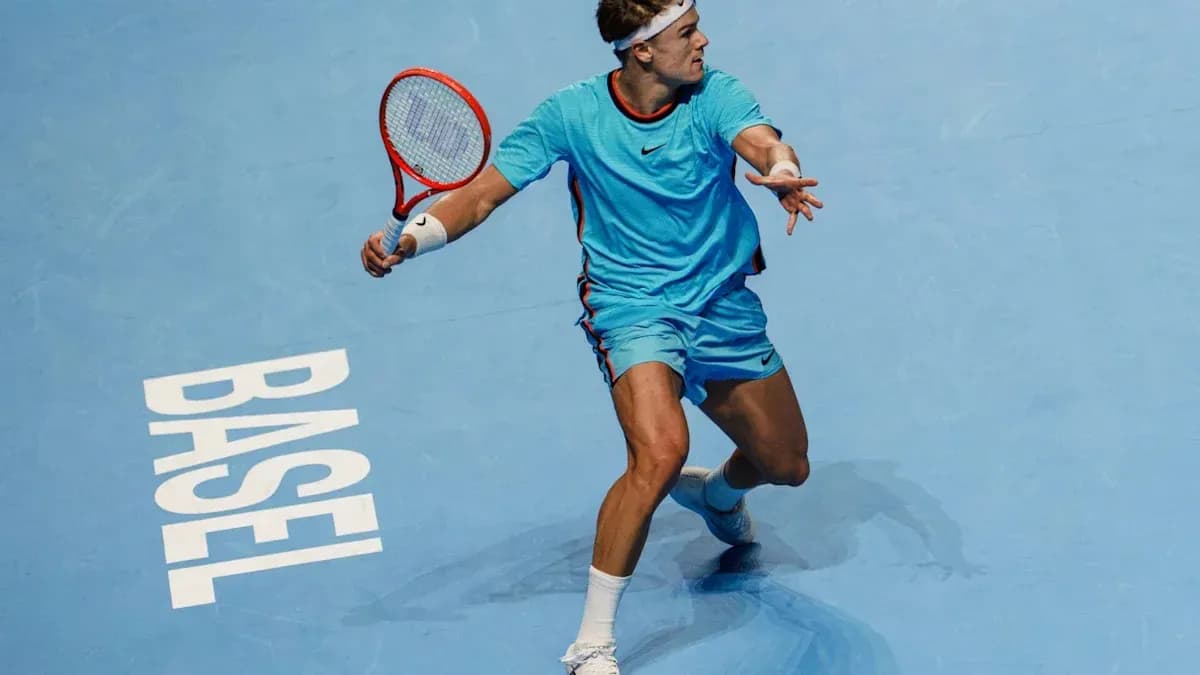
Basel, though, is where the comeback stopped being theoretical.
On the indoor courts in Switzerland, the brief flashes of quality finally stretched into full matches. Rune’s decision to pull out of Brussels earlier in the autumn had been widely accepted as the sensible call – no one expected him to charge back from such a serious lay-off without missteps. What mattered was what came next.
In Basel, he answered that.
Basel breakthrough: wins that actually mean something
His first win back on the ATP Tour arrived in the opening round against Quentin Halys. It was not pretty, but it was exactly what he needed. Rune had to dig deep, push through long rallies and trust a body that had betrayed him 11 months earlier. He edged it in a third-set tiebreak, and that tiebreak felt bigger than the match itself. It snapped a 373-day winless run at tour level.
The real statement came in the next round.
Hubert Hurkacz, one of the form players on tour and a constant threat indoors, stood across the net. Rune did not ease past him; he outlasted him. Again, it went the distance. Again, Rune held his nerve in a deciding-set tiebreak. The fitness work, the rehab, the endless repetitions in practice – all of it showed in those final points as he matched Hurkacz stride for stride.
Those back-to-back battles proved something that rankings and seedings cannot: the quality is still there, and the legs are starting to follow.
His run ended in another three-set fight, this time against Valentin Vacherot. On paper, a loss is a loss. On court, it did little to dent the growing sense that Rune is tracking in the right direction. He is competing, he is staying in rallies, he is stretching matches again. That matters far more at this stage than a spotless win–loss record.
Give him a proper off-season, and the outlook shifts again. With a full training block behind him, the Dane could arrive in Australia not just as a comeback story, but as a genuine contender for titles.
A brutal injury, a long road back
To understand why this surge in form feels so significant, you have to go back to where it all broke.
Rune’s injury struck in the semi-finals of the Stockholm Open. He led Ugo Humbert by a set, in control, when disaster hit. A horrific Achilles injury on 18 October 2025 stopped everything. No gradual fade, no gentle decline – just an abrupt halt to a rising career.
Since then, the tour has watched other stars battle their own setbacks. Carlos Alcaraz spent five months out. Jannik Sinner shut down his season early. Both stories drew sympathy and headlines, but Rune’s ordeal stretched even longer and cut even deeper into his momentum.
He tested the waters at the Davis Cup, but his first official ATP Tour match did not come until 1 October this year. That gap – 348 days, or 11 months and 13 days – is an eternity in modern tennis, where the sport rarely waits for anyone.
The drought did not end there. Rune had to wait even longer for his first tour-level victory, finally breaking a 373-day spell without a win when he beat Halys in Basel.
That is the context that frames every forehand he rips now, every sprint to the net, every clenched fist after a tight game. This is not just a player finding form; it is a player relearning trust in his own body after nearly a year on the sidelines.
The optimism around Holger Rune is not built on hype or nostalgia. It is built on hard minutes, long matches, and a comeback that is starting to look less like a question and more like a warning to the rest of the locker room.