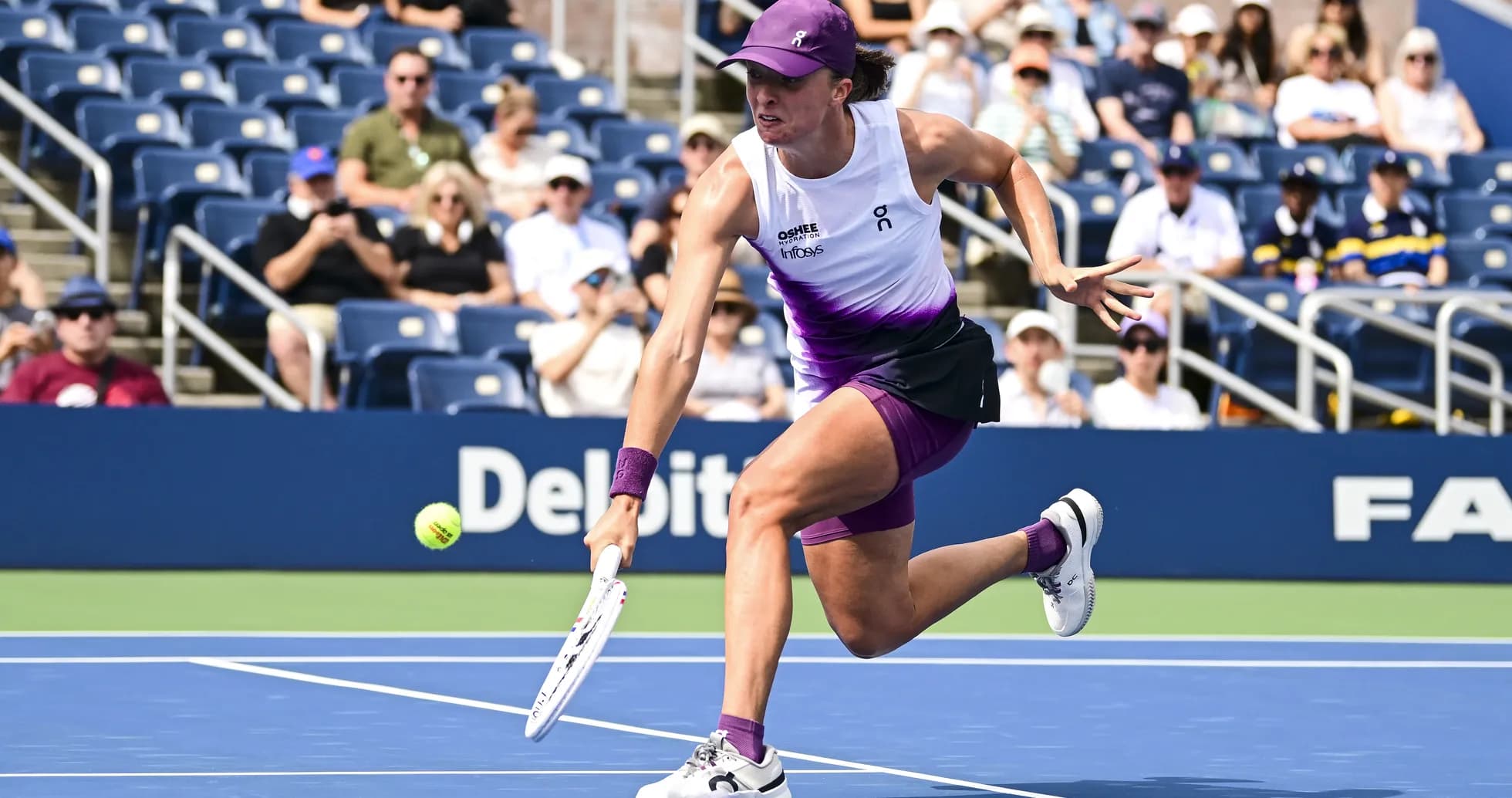
NEW YORK – On a sun‑splashed afternoon away from the glare of Arthur Ashe Stadium, Iga Swiatek turned the Grandstand into her own private rehearsal space and barely missed a note.
Given a rare US Open outing in the more intimate arena, the World No. 8 delivered a performance of ruthless clarity, dismissing Nadia Podoroska 6-3, 6-2 in a little over an hour and never once loosening her grip on the match.
They hadn’t faced each other since the French Open semifinals six years ago. Any sense of rekindled rivalry vanished almost immediately. Swiatek’s serve set the tone: 79 percent of first serves landed, and she captured 78 percent of those points. She did not face a single break all afternoon.
Podoroska, fresh from a three‑set win over Simona Waltert in the opening round, had one real window. It came late in the first set, just as she seemed to settle. Having held serve to trim the deficit to 5-3, the Argentinian finally applied some pressure and carved out three break points.
That was the moment Swiatek snapped the door shut.
Two unreturned serves erased the first two chances in a flash. She dragged the game back to deuce, then survived a pair of extended exchanges through two more deuces. On her second set point, Podoroska went for the forehand and missed by inches, the ball sailing just wide. Set Swiatek, 6-3, with a reminder of why she lives so comfortably in these tight corners.
Any suspense disappeared with it. Swiatek surged out to 5-1 in the second set, reading Podoroska’s serve earlier, stepping into returns, and gliding forward whenever the court opened. The rallies shortened. The gap in weight of shot grew.
She finished with a flourish: a gorgeous cross‑court backhand, struck early and angled away, leaving Podoroska stranded and the crowd with a shot to remember from a match that rarely felt competitive.
The scoreline flattered no one. Podoroska actually played a clean match, striking 11 winners against just 12 unforced errors. Swiatek’s numbers were similar – 14 winners, 13 unforced errors – but the difference lived in the details. Her serve bit harder. Her return dug deeper. At the net, she chose her moments and executed, keeping herself a step ahead in every key exchange.
It was professional, efficient, and quietly emphatic – the kind of performance that doesn’t scream for headlines but sends a clear message to the rest of the draw.
Into the third round she goes, where Harriet Dart or 25th seed Maria Bouzkova will try to slow her rhythm. On this evidence, they’ll need more than a good day. They’ll need to find a way to disrupt a player who, even on a side court, looks entirely at home on the biggest stage.