John Paul Hale knew he was done with amateur boxing long before the final bell rang in Glasgow. The frustration that followed only confirmed it.
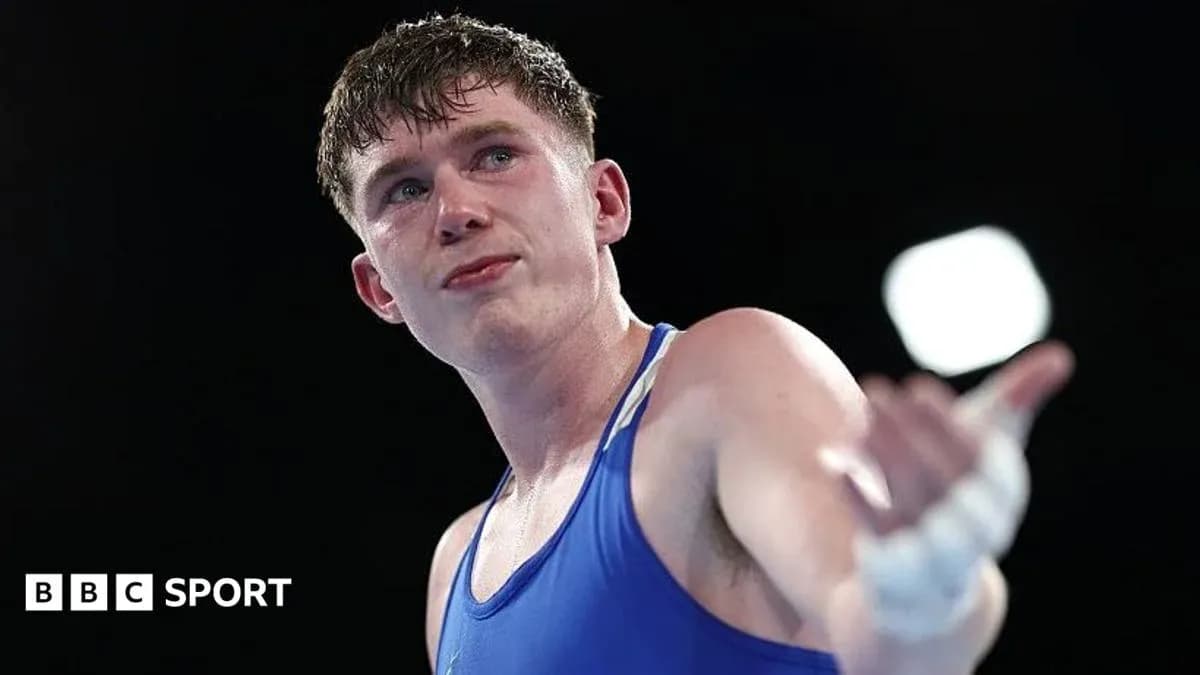
The Belfast fighter, an Irish Elite champion in 2021 and a six-time Ulster title winner, walked into this summer’s Commonwealth Games believing it would be his last act in the vest. He wanted a medal, a moment to frame the years of graft. Instead, he left with a points deduction, a defeat, and a one-finger message to the officials that said more than any post-fight interview ever could.
That same gesture once came from his new manager, Michael Conlan, on an Olympic stage in Rio. Different tournament, same anger.
Hale’s split-decision loss to England’s Patris Mughalzai in his opening bout still grates. He had beaten Mughalzai before. He felt he’d done enough again. This time, though, the referee’s interventions cut through the contest, Hale docked two points to his opponent’s one in a fight he believed should have been allowed to breathe on the inside.
“It’s a weird one as it’s the first time I wasn’t upset at myself,” he told BBC Sport NI, still picking over that July afternoon. He had emptied himself in camp, arrived confident after their previous meeting, and expected a similar pattern: referee lets them work, warnings for holding, a fair shake.
Instead, he walked out of the ring convinced the man in the middle had taken his last big amateur chance away.
That’s what stung most. Not just a defeat, but the sense that his final crack at ticking off a lifelong target had been snatched from him in a sport where subjectivity is stitched into the scoring system.
Conlan’s own Olympic nightmare against Vladimir Nikitin in 2016 helped expose and ultimately destabilise AIBA, the body that once ruled amateur boxing and is now rebadged as IBA. The landscape has shifted again with World Boxing gaining recognition from the International Olympic Committee and taking charge of events like these Commonwealth Games.
On paper, it’s a new era. In Hale’s eyes, the old problems are still lurking.
He doesn’t dress it up. He doesn’t think judging has truly changed, despite the transition. He talks about mixed messages: judges supposedly favouring aggression, yet fighters who press the action not getting the nod; slick operators on the back foot also feeling robbed. He points to Jude Gallagher’s experience at the Games and mentions Scottish boxers who left the ring sickened by decisions they couldn’t understand.
For Hale, it all fed into a clarity he’d been edging towards for two years. He had already flirted with the idea of turning professional but held off, determined not to walk away from the amateur game with what-ifs hanging over him. Glasgow, for all the bitterness of that final result, still counts as a “great experience” in his mind. It just confirmed the chapter was over.
There will be no late dash for the 2028 Olympic Games in Los Angeles. No return to the vest. At 25, he wants something different now: control, momentum, and a fresh set of rules.
That new story starts with a familiar face in his corner. Conlan, a former amateur world champion and two-time professional title challenger, is now the man guiding Hale into the paid ranks. For a fighter stepping into a new world, it’s a serious ally to have.
“It’s class to have him on board because he knows a lot about pro boxing and it’s great to have someone like him with that knowledge behind me,” Hale says. There’s no mistaking the respect. Conlan has walked this road, felt the sting of politics, and still built a major professional career. Hale wants to carve out his own version.
He’ll begin at welterweight, but he won’t abandon his roots to do it. Training remains at Star ABC in the New Lodge, the north Belfast gym that shaped him. The surroundings are familiar; the stakes are not.
On 27 November, he’ll cross the city to The Devenish to make his professional debut. It’s a venue that already carries a bit of Belfast boxing folklore: the place where Anthony Cacace first stepped through the ropes as a pro, and where James Tennyson pieced together the early stages of a run that took him to a world title shot.
Hale likes that. It fits how he sees his journey.
“If I perform, the bigger venues and nights will come,” he says. No rush. No talk of skipping levels or chasing glamour under bright lights before he’s ready. He wants to start at the bottom, to feel like an underdog, to build properly rather than be swallowed by hype.
“You can jump into too much too early and be overwhelmed by it,” he adds, matter-of-fact. He’s watched big names slog it out on small-hall shows, learning the hard rounds away from the cameras. To him, that’s not a comedown; it’s the job.
The Devenish will be packed with people who watched him grow up in the amateur system, who saw the national titles, the Ulster dominance, the Commonwealth near-miss. Curiosity will bring them. So will loyalty. Hale knows that first walk will feel different, the gloves the same but the stakes altered.
“As it’s the debut, a lot of people who watched me as an amateur will want to come and see me as a pro, so it will be a good night,” he says.
The vest is gone, the headguard long since discarded. The finger to the judges in Glasgow lingers as a snapshot of a system he no longer has to navigate. Now, under pro lights in a Belfast hall with history in its walls, John Paul Hale gets to find out who he really is when the scorecards are only part of the story.