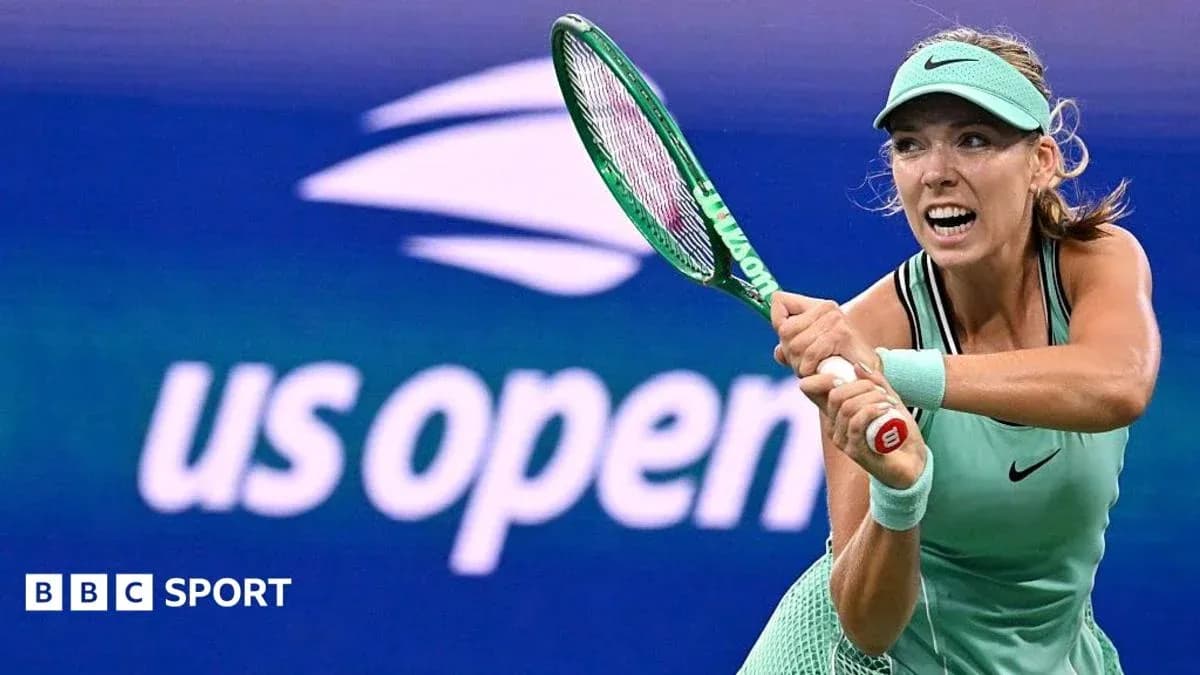
Katie Boulter’s US Open ended with the kind of defeat that lingers.
Under the closed roof of Louis Armstrong Stadium, on one of the sport’s biggest stages, Britain’s number one was swept aside 6-1 6-0 by Karolina Muchova in just 58 brutal minutes. One game won. Eight double faults. No aces. Barely a foothold in the match.
This was supposed to feel like an upgrade. Heavy rain in New York had shifted the contest from an outside court to the 14,000-seat arena, giving Boulter a showcase slot many players crave. Instead, it turned into a public unravelling.
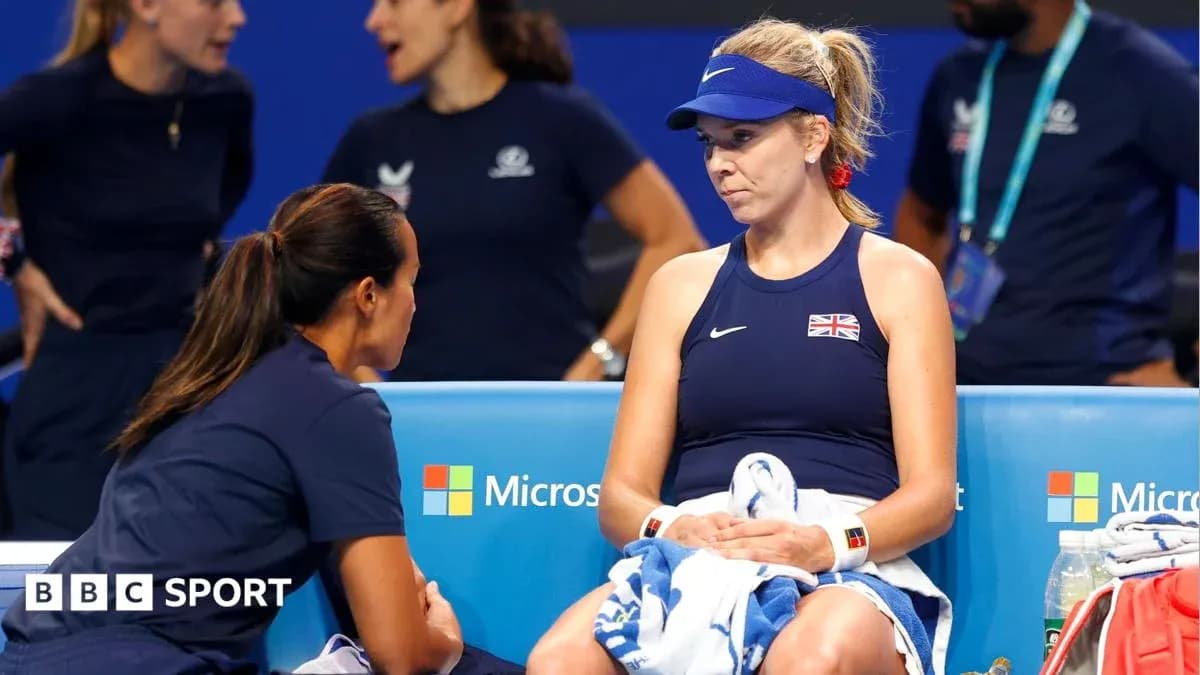
“Ultimately, it was a bad day at the office – times two,” Boulter admitted afterwards. She didn’t hide. “I struggled with the conditions. I struggled with the roof, the noise, I let things distract me. I let it get to me. I'm not usually aware of everything going on. It made me feel a little bit uncomfortable. I have to deal with it better."
Muchova, the seventh seed and Wimbledon runner-up, needed no invitation to exploit that discomfort. She played with the calm assurance of a player who knows exactly where her game is. Fourteen winners, only nine unforced errors, and a steady stream of smart drop shots and clean, driving groundstrokes that repeatedly left Boulter off balance and out of position.
The numbers on the other side of the net told a harsher story. Boulter won just 33% of points behind her first serve. She failed to save any of the seven break points she faced. Her 22 unforced errors dwarfed her tally of four winners. The serve, usually a cornerstone of her game, deserted her entirely.
For former world number five Daniela Hantuchova, watching on for BBC Radio 5 Live, the problem was glaring.
"I would be really humbled [if I was Boulter], I would sit down with my team and say 'OK, we need to change something big time'," Hantuchova said. “First of all, it was very obvious today that it was the serve. I feel like it needs to be cleared up because she was losing the rhythm and not using her legs. That's the number one thing.
"If I am Boulter, I would be on the practice court tomorrow. If she still wants to invest everything into her tennis then she needs to be on the court."
That question – how much she wants to invest – now hangs over the rest of her season.
Boulter’s life away from the court has been full of light. She married Australia’s Alex de Minaur, the world number seven, in July, a high point in a summer that has brought more joy off the court than on it. On it, the picture is far less flattering.
Ranked 62 in the world, Boulter leaves New York with just two wins across all four Grand Slams this year. Since her first-round exit at Wimbledon, she has taken only two victories from six matches. For a player installed as Britain’s standard-bearer in the women’s game, that is a thin return.
The British results on the day underlined the fragility of momentum at this level. Jacob Fearnley’s run also ended in the second round, beaten 6-3 6-3 3-6 6-3 by Argentina’s Tomas Martin Etcheverry. He at least landed a set and showed flashes of resistance before Etcheverry’s heavier weight of shot reasserted control in the fourth.
Francesca Jones, though, offered a rare bright note for the British contingent. Returning to finish a rain-delayed first-round match against Poland’s Magda Linette, she held her nerve and closed it out, turning a stop-start assignment into a valuable Grand Slam win.
For Boulter, there was no such escape. The match never caught, never simmered, never turned into a contest. From the moment Muchova broke early, the gap in composure and clarity grew wider with every game. The noise under the Armstrong roof, the stage, the sense of occasion – all of it seemed to close in rather than lift her.
Days like this can define a season, or they can reshape one. Boulter has the ranking, the profile and the backing to treat this as a line in the sand. The question now is whether she turns a 58-minute mauling into the moment her year finally starts to move in the right direction.