Tennis has never been short of history. What it has often lacked is nerve.
In 2017, the sport took a rare gamble.
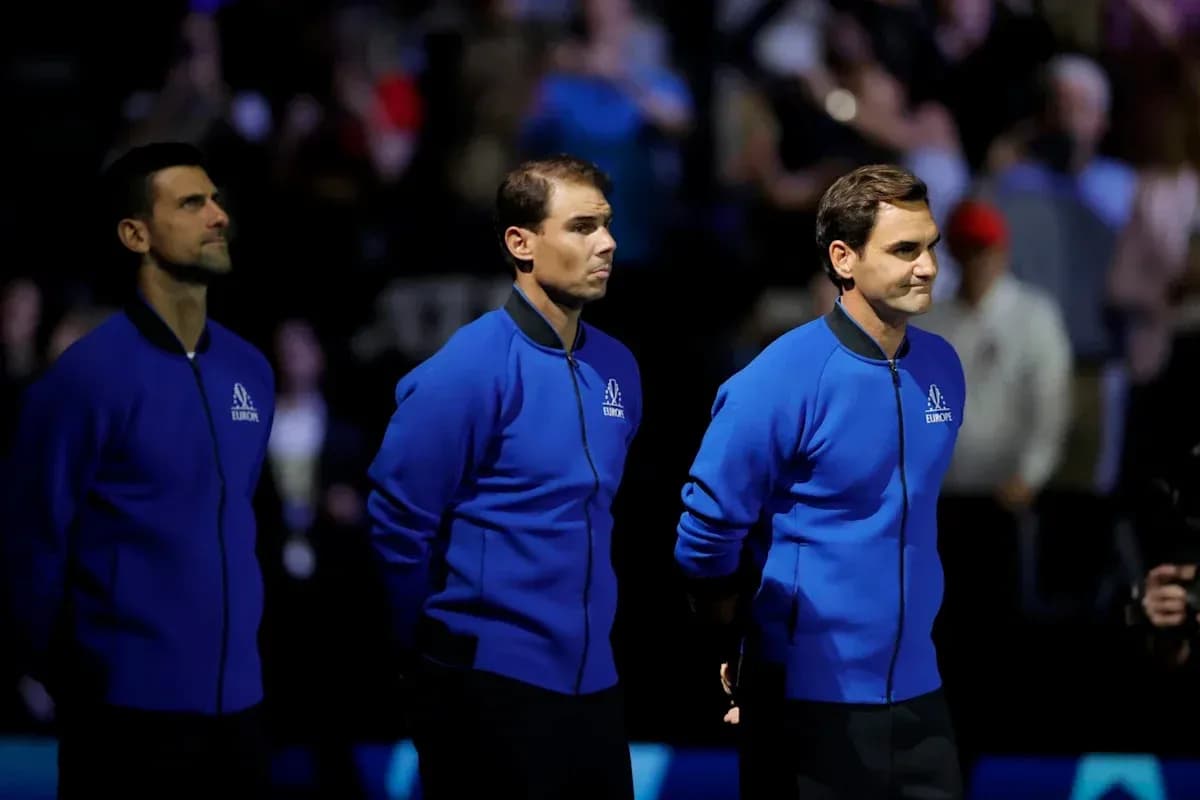
Roger Federer, the sport’s great traditionalist-turned-innovator, helped launch the Laver Cup – a made-for-television, three‑day team event pitched as tennis’ answer to golf’s Ryder Cup. Six of Europe’s finest against six of the best from the rest of the world. Singles, doubles, big names, big noise.
Seven years on, with the ninth edition set to begin on 25 September 2026, the question still hangs over it: competition or just a very expensive show?
A bold idea under fire
From the start, the Laver Cup has fought a perception problem. The format is clear enough. Twelve players split into Team Europe and Team World. Points piling up over three days. Benches roaring, captains scheming, doubles pairings you’d never see on a regular tour week.
Yet for a section of the tennis public, the verdict has barely shifted. Exhibition.
The criticism has not only come from the stands. Former French pro Julien Benneteau went in hard on the Grandes Gueules du Sport podcast earlier this year, dismissing the event as having “no sporting value” and claiming players show up “because the cheque is huge.”
The numbers are not small. The total prize pool for the 2026 edition stands at $1.5 million. Each player on the winning team will earn $250,000. Those on the losing side get nothing. That structure underlines the competitive pitch, but it also fuels the sceptics who see money, not meaning.
Nadal’s 4 a.m. answer
Federer and Rafael Nadal faced those doubts head-on even before a ball was struck in the inaugural 2017 event.
Pressed in a pre-tournament press conference on whether the Laver Cup was just an exhibition in disguise, Nadal did not bother with diplomacy.
“No, is not an exhibition at all. No, no, I don’t think,” he said, before offering the kind of detail that cuts through PR speak. “I woke up today at 4:00 in the morning to practice. An exhibition match, I don’t practice before an exhibition match normally, no.”
That line mattered. Nadal does not wake at 4 a.m. for fluff.
“We are here to try our best. We are here to try to win,” he continued. “Not at all like a friendly match, no? We are here to really play with passion and to play for our continent.
“We have a great team behind us. We want to do it well for all of them. Let’s see if we are able to do it.”
Team Europe did more than just “do it well” that first year. They beat Team World 15–9, a scoreline that reflected the talent gap but also hinted at something deeper: players diving into a team concept that tennis rarely offers.
What lit the fuse for Federer
Federer, as co-creator, knew that format and prize money alone would not carry the event. Atmosphere would.
Asked in 2017 how important it was to recreate the Ryder Cup’s intensity, he didn’t hide where his eyes were.
“Well, I think it’s going to be vital,” he said. “That’s why I’m very excited to see that the guys all arrived a day early.
“You know, they were supposed to arrive on Wednesday. They all came in on Tuesday. Everybody seems really eager to play, to win.”
That detail – stars turning up ahead of schedule – struck him as the first real sign that this might be more than a glossy weekend hit-and-giggle.
“But of course we have to give it the passion and the energy,” Federer added. “Without that, the fans are just going to sit there and maybe enjoy some tennis, but they’re not going to get into it.”
He was blunt about what he wanted from the stands, too.
“I hope that while we are playing on home soil, the fans are going to understand how much we need their support and how lovely it would be if everybody got really excited and make this event something very unique and special for years to come. But it’s clearly crucial.”
That has become the Laver Cup’s central test: can it feel essential, not optional?
Exhibition or evolution?
The event has steadily pulled in elite names and built a distinct identity on the calendar. Benches spilling onto the court after big points. Rivals coaching each other. Legends captaining from the sidelines. For some, it is exactly the injection of personality tennis needs.
For others, Benneteau’s verdict still rings truer than Nadal’s 4 a.m. alarm.
As the 2026 Laver Cup approaches, the stakes are no longer about whether it can simply survive. The event has done that. The real question is sharper now.
Can it finally convince its harshest critics that what happens over those three days is not just entertainment dressed up as competition, but a fixture that genuinely belongs in tennis’ competitive fabric?