The first real roar of this US Open did not come from a winner, a champion, or a home favourite.
It came from a broken racquet.
Boisson boils over as Navarro survives three-set scrap
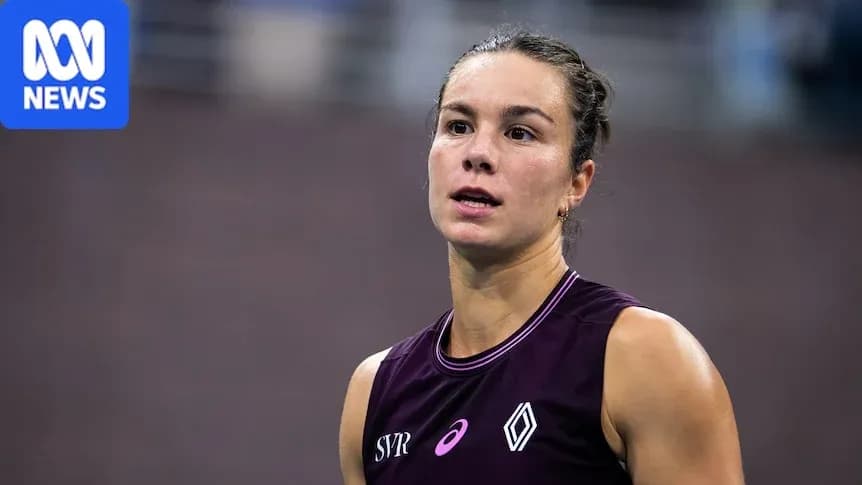
Frenchwoman Lois Boisson, once one of the brightest risers on the WTA Tour, walked off Louis Armstrong Stadium with another first-round exit on her record and splinters of graphite at her feet.
Her 7-6(6), 6-7(1), 6-3 loss to American 26th seed Emma Navarro was tight, tense, and for Boisson, one disappointment too many.
At 23, Boisson already owns a French Open semifinal and a tour title, but the last year has dragged. Injuries forced her off the circuit between September 2025 and April, yet she still climbed to a career-high ranking of 34 in February, a testament to how devastating her 2025 form had been.
Since then, the slide has been brutal. Early exits have piled up. Her ranking has plunged to 237. The confidence that once carried her through big points has frayed.
On Monday, she fought hard to push Navarro into a third set. The margins were slim: a first-set tiebreak edged by Navarro, a superb response from Boisson in the second, where she dominated the breaker 7-1, and then a final set where the American’s consistency slowly squeezed the air out of the contest.
The breaking point came at the end.
Serving to stay in the match, Boisson tried a backhand slice, the kind of defensive shot that used to buy her time. It died meekly into the net. Navarro had the win; Boisson had seen enough.
She hurled her racquet to the court in disgust.
The two players met at the net, exchanged the obligatory handshake, Navarro turning to acknowledge the crowd. Behind her, the scene darkened. Boisson reached into her bag, grabbed a second racquet and obliterated it with three violent slams into the hard court, then flung it away.
It was raw, unfiltered frustration from a player who has spent 12 months chasing a version of herself she cannot quite find.
Navarro moves on, with a second-round meeting against either fellow American Caty McNally or Dutch player Anouk Koevermans. Boisson, facing a third straight first-round exit at a major this year, must now somehow stitch together a season that keeps slipping from her grasp.
Sabalenka sends early message in title defence
On the main stage, Aryna Sabalenka chose a very different tone.
The world number one, chasing a third consecutive US Open crown, opened her campaign on Arthur Ashe Stadium with a clean, authoritative 6-2, 6-4 win over Colombia’s Camila Osorio.
Sabalenka has looked oddly mortal in recent months, unable to reach a final since March. The usual thunder had dulled. On Monday, it returned.
She ripped 32 winners in just two sets, dictating from the baseline and never allowing Osorio to settle. The match felt less like a test and more like a statement: the defending champion is still here, still swinging, still dangerous.
“I’m happy with my performance. She’s a tough opponent, makes you work really hard to get every point,” Sabalenka said on court. “So I’m happy that I was able to close the match in straight sets.”
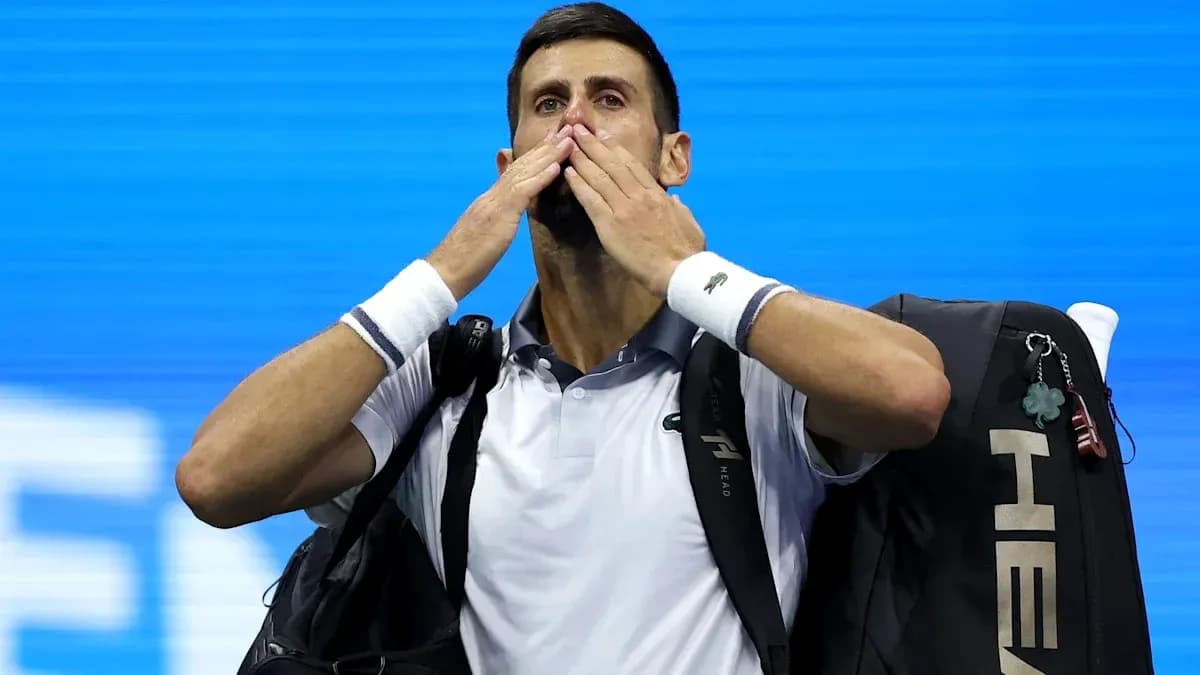
Next up is Russian Polina Iatcenko in the second round, a step Sabalenka will be heavily favoured to clear. With Novak Djokovic already gone from the men’s draw, the women’s top seed looked determined to bring a little order back to a tournament already humming with chaos.
Men’s draw jolted again as Fils falls to Tsitsipas
If Djokovic’s first-round exit ripped a hole in the men’s event, Arthur Fils’ early departure widened it.
The 10th seed, fresh off a title run in Cincinnati and tipped by many as a dark horse in New York, ran into a stubborn Stefanos Tsitsipas and could not find a way through.
Tsitsipas, still searching for his own reset after a patchy stretch, absorbed the Frenchman’s early surge and turned the match around to win 4-6, 7-6(3), 6-1, 6-4 on Louis Armstrong Stadium.
The turning point came in the second-set tiebreak. Fils blinked; Tsitsipas did not. From there, the Greek took control, racing through the third set and managing the fourth with the composure of a man who has lived plenty of these Grand Slam battles.
Fils’ exit joins Djokovic’s in a growing list of early shocks in the men’s field, opening lanes for those with the nerve and fitness to exploit them. Tsitsipas now faces South African Lloyd Harris in the second round, a match that suddenly carries more weight in a draw stripped of two major names.
Muchova, Zheng, and a schedule stretched by rain
The US Open’s new 15-day structure, with an extended three-day first round, earned its keep as rain forced the suspension of seven matches on the outer courts on Sunday night. Those contests resumed on Monday, easing what would once have been a scheduling nightmare.
On the Grandstand, Wimbledon runner-up Karolina Muchova wasted no time. The Czech seventh seed brushed aside Austrian Sinja Kraus 6-3, 6-0, a clinical performance that underlined her status as one of the most dangerous players in the field when healthy. She meets Britain’s Katie Boulter next.
Olympic champion Zheng Qinwen took a more winding road through her opener. Forced into qualifying just two years after reaching the quarterfinals in New York, Zheng started slowly against Kristina Liutova, dropping the first set 4-6. Then she clicked.
The Chinese star powered through the next two sets 6-3, 6-1, reminding everyone why her presence in qualifying felt so jarring in the first place.
Anisimova celebrates birthday with ruthless win
On Louis Armstrong, Amanda Anisimova turned her 25th birthday into a straightforward night’s work.
Last year’s US Open runner-up swept past fellow American Ashlyn Krueger 6-1, 6-3, shrugging off early pressure to make a sharp opening statement.
Krueger pushed hard at the start, carving out three break points for a 2-1 lead. Anisimova snuffed them all out. From there, the match belonged to the 10th seed.
She ran away with the first set, controlled the rallies, and even when the second set opened with traded breaks, she never loosened her grip. Serving at 5-3, Krueger faltered; Anisimova pounced, breaking in the final game to close out the match in just one hour and 12 minutes.
“Ashlyn’s a great player so I knew it was going to be a tough match,” Anisimova said afterwards, before the crowd broke into a chorus of Happy Birthday.
Next, she faces Austrian Lilli Tagger in the second round, with the memories of last year’s run and the expectation of another deep push hanging over every cleanly struck forehand.
On a day when racquets shattered, seeds fell, and champions reasserted themselves, the US Open reminded everyone why it rarely eases you in gently.