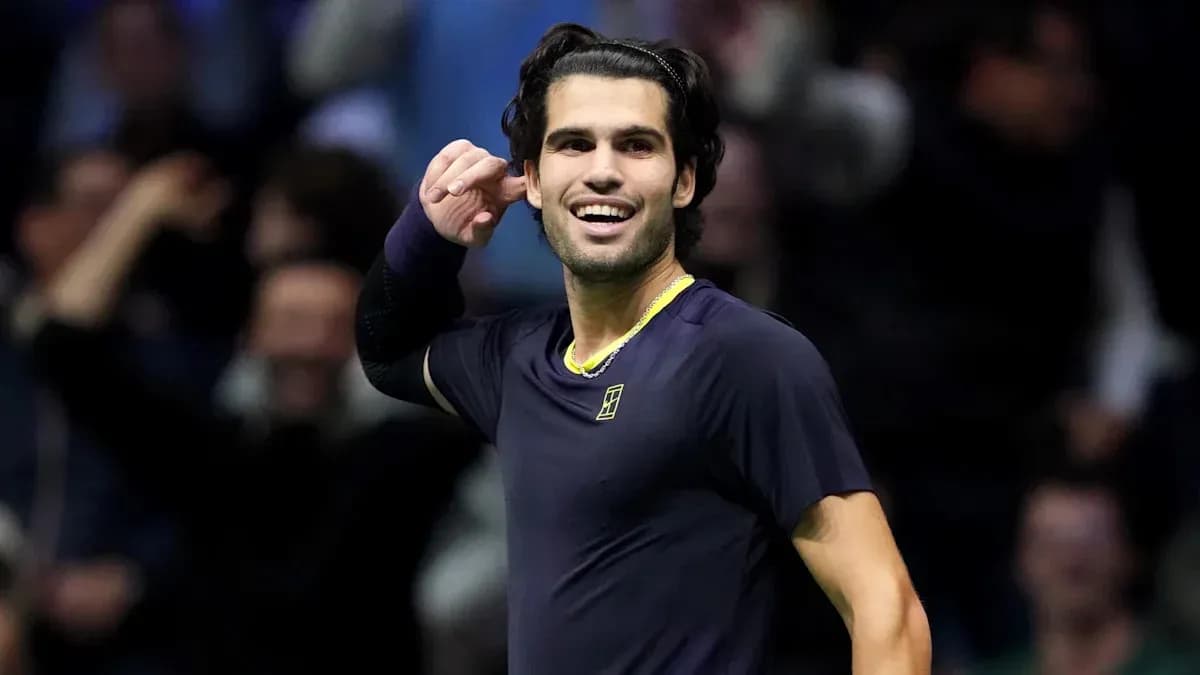
Luca Van Assche did not just win a tennis match in Paris. He walked into the role of home hero.
The 22-year-old, born in Belgium but very much a Parisian project now, dragged himself past Rinky Hijikata 6-4, 6-7 (4-7), 7-5 in a gripping Paris Masters quarter-final that lasted just shy of three hours and felt, for long stretches, like it belonged on the final weekend.
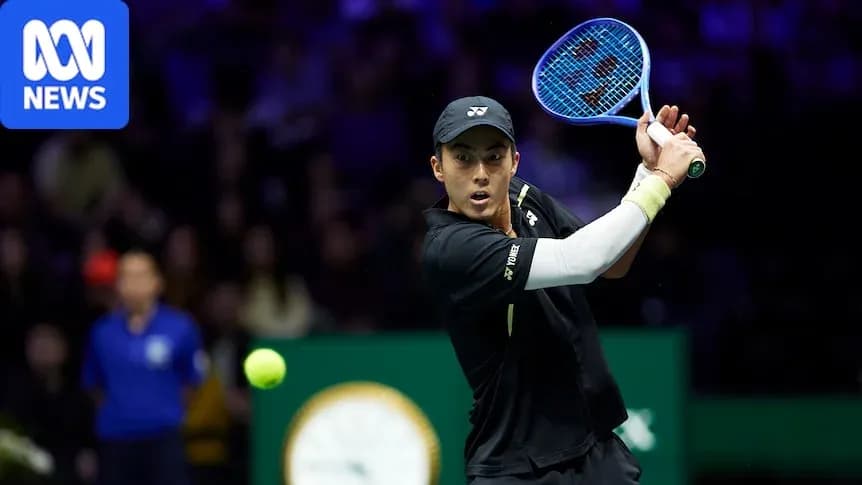
Hijikata’s run had been the story of the week. A qualifier, six matches in seven days, and the scalp of Novak Djokovic in the second round. Each time he was pushed, he found a way back. Each time the script said “that’s enough,” he tore it up.
Hijikata’s surge, Van Assche’s answer
For the third match in a row, the 25-year-old Australian had to climb out of a hole. Van Assche snatched the opening set 6-4, but Hijikata, brimming with the same fearless aggression that had carried him past Djokovic, refused to fold.
He dragged the contest into a second-set tiebreak and played it like a man who had no interest in returning to the locker room. Hijikata took it 7-6 (7-4), ripping through his forehand, stepping inside the baseline, daring Van Assche to match his courage.
The arena tightened. The crowd, desperate to roar for their new French hope, suddenly had to deal with a visiting underdog who wasn’t going away.
Then came the twist. Hijikata broke immediately in the deciding set and sprinted to a 2-0 lead. At that moment, it looked as if the Sydneysider was about to complete another comeback, punch through to his first Masters 1000 semi-final and become the first qualifier in nine years to reach the last four in Paris.
Van Assche looked heavy in the legs. The week, the occasion, the pressure – all of it seemed to be weighing on him.
And then the crowd went to work.
A wall in French colours
Van Assche admitted it himself: the stands dragged him back into the fight. As the physical strain bit harder in the third set, the noise rose with every rally, every chase, every desperate retrieval.
He responded by turning into a wall.
One point at a time, he extended rallies, dug out balls that should have been winners, and forced Hijikata to hit again, and again, and once more on top of that. The Australian, who had thrived all week on first-strike tennis, suddenly had to solve a defender playing the match of his young life.
The momentum shifted. Van Assche reeled Hijikata in, broke back, and then kept squeezing. His defensive resilience, already highly regarded inside the game, finally cracked the qualifier’s resistance. From 2-0 down in the decider, the Frenchman surged to take it 7-5, sealing his place as the 12th Frenchman ever to reach the Paris Masters semi-finals.
Hijikata’s dream week was over, but not without one last flurry of resistance and shot-making that left the crowd briefly silenced before they rose for their own.
His consolation? A ranking leap that will see him start next week as Australia’s No.2 behind Alex de Minaur, and a place in the world’s top 60 that underlines how real this breakthrough is.
Van Assche’s reward? A semi-final against one of the most explosive servers on the planet.
Shelton bombs his way through – and shapes Turin
Earlier in the day, Ben Shelton had done his part to set up that showdown.
The American third seed hammered down 19 aces and muscled his way past compatriot Tommy Paul 6-4, 4-6, 6-3, booking his first Paris Masters semi-final. It was a bruising, all-American contest, and it ended Paul’s late push to sneak into the ATP Finals in Turin.
Shelton’s victory did more than just move him into the last four. It locked in another name for the season-ending showpiece.
With Paul’s challenge ended, fellow American Frances Tiafoe clinched his spot in Turin, joining world No.1 Alexander Zverev, Carlos Alcaraz, Shelton himself, Daniil Medvedev, Flavio Cobolli and Arthur Fils in the elite field.
So Paris now has its storyline. A new French standard-bearer, Van Assche, riding the energy of a home crowd, and Shelton, serving thunder and chasing his own breakthrough title.
One of them will step into a Masters 1000 final. The other will leave with a clear message about where the men’s game is heading next.