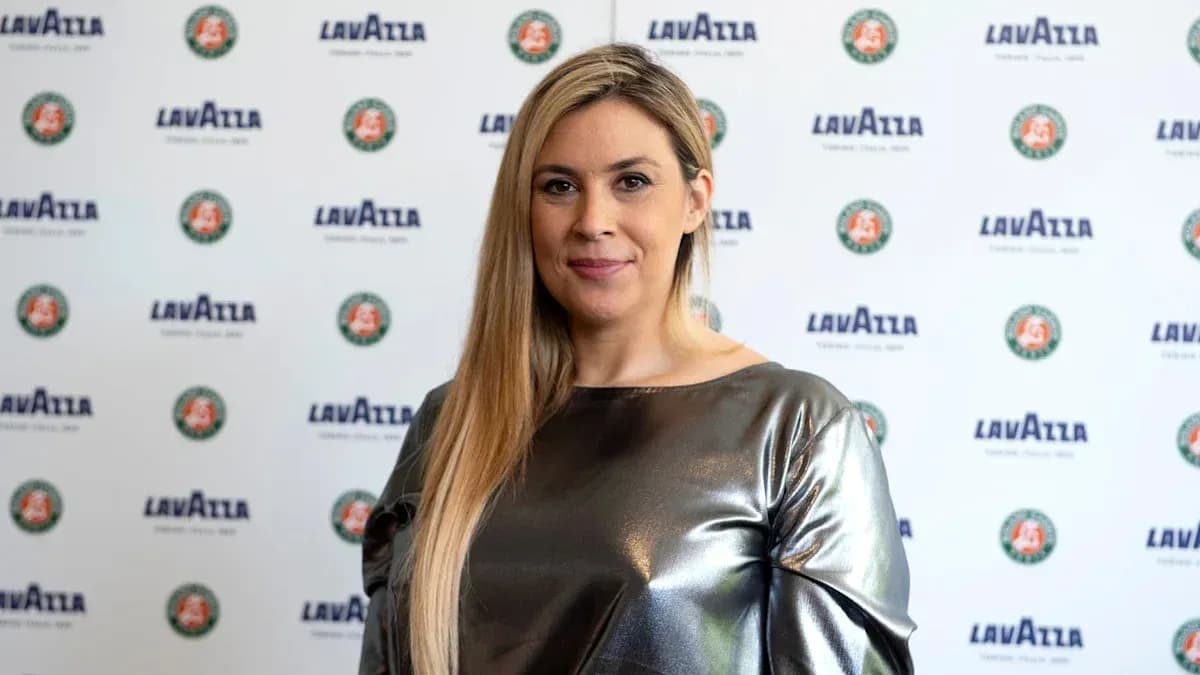
Marion Bartoli still cannot quite believe what she heard on the day her life changed.
Moments after lifting the Wimbledon trophy in 2013, after years of being mocked for her unorthodox game and questioned over her weight and ability, the new champion should have been allowed to bask in the glow of a childhood dream fulfilled. Instead, a line from the BBC’s John Inverdale cut straight through the euphoria and has stayed with her ever since.
On 5 Live, as Bartoli celebrated the greatest win of her career over Sabine Lisicki, Inverdale suggested that her father and coach, Walter, might have told her as a child that she would need to "be scrappy and fight" because she was "never going to be a looker" like Maria Sharapova. The comment drew immediate and widespread condemnation. The BBC later apologised, describing the remarks as "insensitive".
Years on, Bartoli is still appalled.
"I still can't understand the comment he made. How on earth, when someone just achieved a childhood dream, can you say that?" she told The Times. "It is just absolutely disgusting, so yes, unfortunately it's been a constant pressure. And it's only on female [players]. A male would never be treated that way."
Those words land with extra weight when you trace the path that led her to that Centre Court final. Bartoli’s career was a grind against injury, scepticism and sneering. She did not move like others, did not hit like others, did not fit the aesthetic mould so often imposed on women’s tennis. Yet she found a way, building a game around fierce intensity, two-fisted strokes and relentless resilience.
Forty days after her greatest triumph, her body finally gave in. Bartoli retired, citing the cumulative toll of injuries and the constant pain she was living in. The decision stunned many, but for her, the cost of continuing had become too high.
She tried to come back in 2018. The attempt was brief. The injuries that had stalked her career refused to loosen their grip.
What followed her initial retirement was darker still. Bartoli slipped into a severe and life-threatening battle with anorexia. By Wimbledon 2016 she had lost 30kg. The transformation shocked those who saw her. She ended up in hospital for months, fighting to regain her health and, eventually, herself.
One conversation at the All England Club proved pivotal. Philip Brook, then the chairman, pulled her aside that summer. He told her she was too unwell to play in the Wimbledon legends' invitational event.
She did not brush it off. She could not.
"That's when I really hit the lowest of the low, because you can take everything away from me, but not tennis," she said. "Tennis is my true passion. When the racket is in my hand, that's when I'm happiest, so that's when I thought, 'I have to get myself back up somehow. I can't let this destroy me.'
Brook’s intervention jolted her out of denial.
"I will be forever thankful to Philip because I was in such denial that I think otherwise I would have kept hurting myself. He was strong enough to tell me and that got me to understand that I had to recover."
Today, Bartoli is back in the sport in a different guise, coaching British player Harriet Dart, passing on the same defiance that carried her from outsider to Wimbledon champion. The sting of that on-air remark has not faded, but it sits alongside something stronger: the knowledge that, in a world obsessed with appearances, she won the only battle that truly mattered.