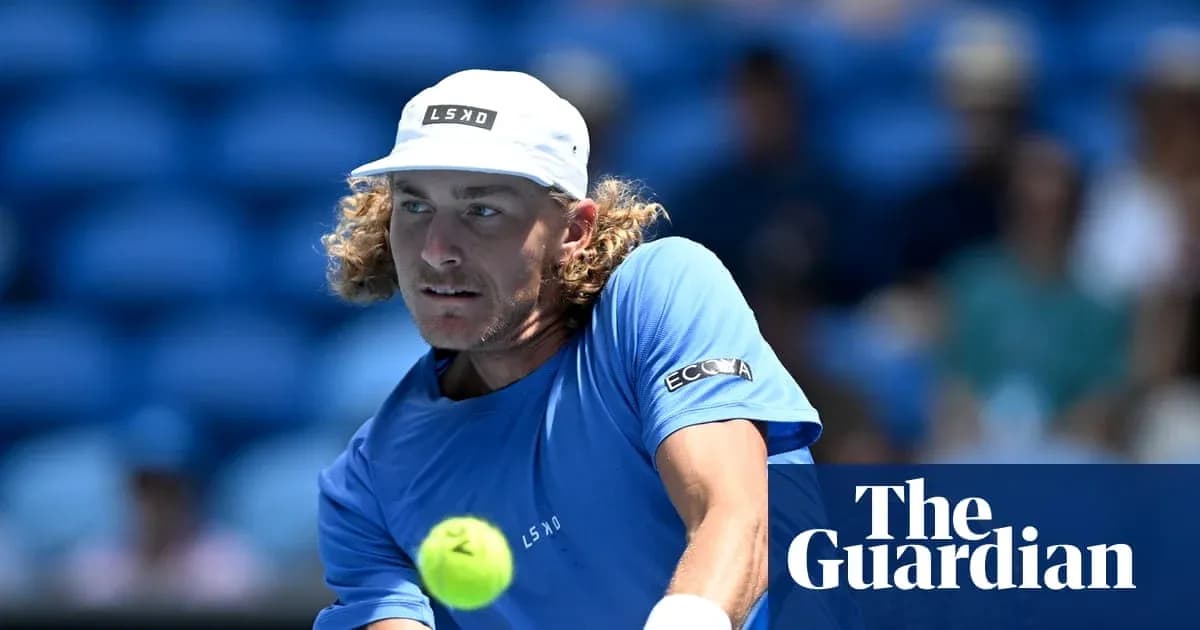
Max Purcell will walk back into the Australian Davis Cup team next week carrying more than a racquet bag. He returns with scars, a point to prove, and a quiet endorsement from Lleyton Hewitt that speaks louder than any press release.
The 28-year-old, once left shattered by an anti-doping ban that many within the sport felt was harsh and inconsistent, has been named in Australia’s squad to face Poland in a World Group 1 tie at Brisbane’s Pat Rafter Arena on 19-20 September. If he plays, it will be his first Davis Cup rubber in two years.
Hewitt’s Call – and a Statement
Hewitt has gone with a familiar spine. Alex de Minaur leads the side, searching for a spark after an underwhelming US Open. James Duckworth, Rinky Hijikata and Adam Walton complete the squad, with Walton in the frame for a possible debut.
Then there’s Purcell. World No 803 on paper. Two-time grand slam men’s doubles champion in reality, with Wimbledon 2022 and the US Open 2024 already on his résumé. His selection is the headline, the risk, and potentially the difference in a tricky tie.
Since his return to competition in June, Purcell has gone about rebuilding his career in the shadows. No big fanfare, no grand statements, just matches and miles. A singles title at a modest event in China marked one step on the way back. This call-up is another, far bigger one.
For Hewitt and the team bosses, bringing him straight back into the national fold at the first real opportunity is not just tactical. It is a public show of faith.
A Ban That Cut Deep
The ban that derailed Purcell’s rise did not stem from a failed test for a prohibited substance. In December 2024, he accepted a provisional suspension under the International Tennis Integrity Agency’s Tennis Anti-Doping Programme, after receiving an intravenous infusion of vitamins that exceeded the permitted 100ml limit.
Purcell said he had fallen ill while on holiday in Bali a year earlier and had been unknowingly administered an amount over the legal threshold by a doctor there. The vitamins themselves were all on the World Anti-Doping Agency’s approved list.
The sanction, originally set at two years, was cut by 25% because of his cooperation and the substantial assistance he provided to the ITIA. The numbers on the ruling told one story. His own account told another.
On social media, he laid bare how the case had chewed away at him. He wrote of “nervous and anxious tics”, of not being able to eat properly, of a process that had “seriously affected” his quality of life. For an athlete on the rise, it was more than a professional setback. It was a personal unravelling.
Teammates rallied. John Millman and Jordan Thompson, Purcell’s partner in that US Open-winning doubles run, publicly backed him. They stressed what many in the locker room believed: that the breach was clearly unintentional and that no banned substance had ever been in his system.
Now the Davis Cup selection completes the circle. Australia is not just forgiving him. It is trusting him again.
A Specialist for a High-Stakes Weekend
From a purely tennis perspective, the numbers make the case. Purcell owns a 9-2 record in Davis Cup doubles. That is elite territory. In a format where one doubles rubber can swing an entire weekend, he is a major weapon.
Australia must beat Poland in Brisbane to keep alive hopes of chasing next year’s trophy. There is no margin for sentiment. Hewitt’s sides are built on edge, not emotion. If Purcell is in, it is because the captain believes he can deliver under pressure.
The tie itself carries a sharp edge. Poland arrive led by Kamil Majchrzak, the world No 73, who has already proved awkward for Australia this season. He beat de Minaur in the grass-court ATP final in ’s-Hertogenbosch, a result that will not have been forgotten in the Australian camp.
One significant name is missing, though. Hubert Hurkacz, Poland’s injury-prone No 1 and a regular force at the top end of the ATP Tour, was not listed in their team announcement on Wednesday. His absence strips the tie of one marquee matchup but tilts the balance towards the hosts.
Without Hurkacz, Poland lose their biggest server and most established big-match player. For Australia, it removes one of the more daunting singles obstacles and should make the path to victory less treacherous—at least on paper.
A Different Kind of Comeback
For Purcell, this is not just another selection. This is a chance to step back into a team environment that once felt routine and now feels hard-earned.
He returns older, bruised by a system he complied with yet suffered under, and acutely aware of how quickly a career can veer off course. The sympathy he received from peers softened the blow. This call from Hewitt might finally start to heal it.
Australia will take the court in Brisbane with a familiar mix of grit and expectation. De Minaur looking to reset. New blood in Walton waiting in the wings. A dangerous Polish side missing its talisman.
And in the middle of it all, a doubles specialist with a 9-2 record, a grand slam pedigree, and a story that suddenly has a new chapter.
How big a role that chapter plays in Australia’s Davis Cup push will be decided across two tense days at Pat Rafter Arena.