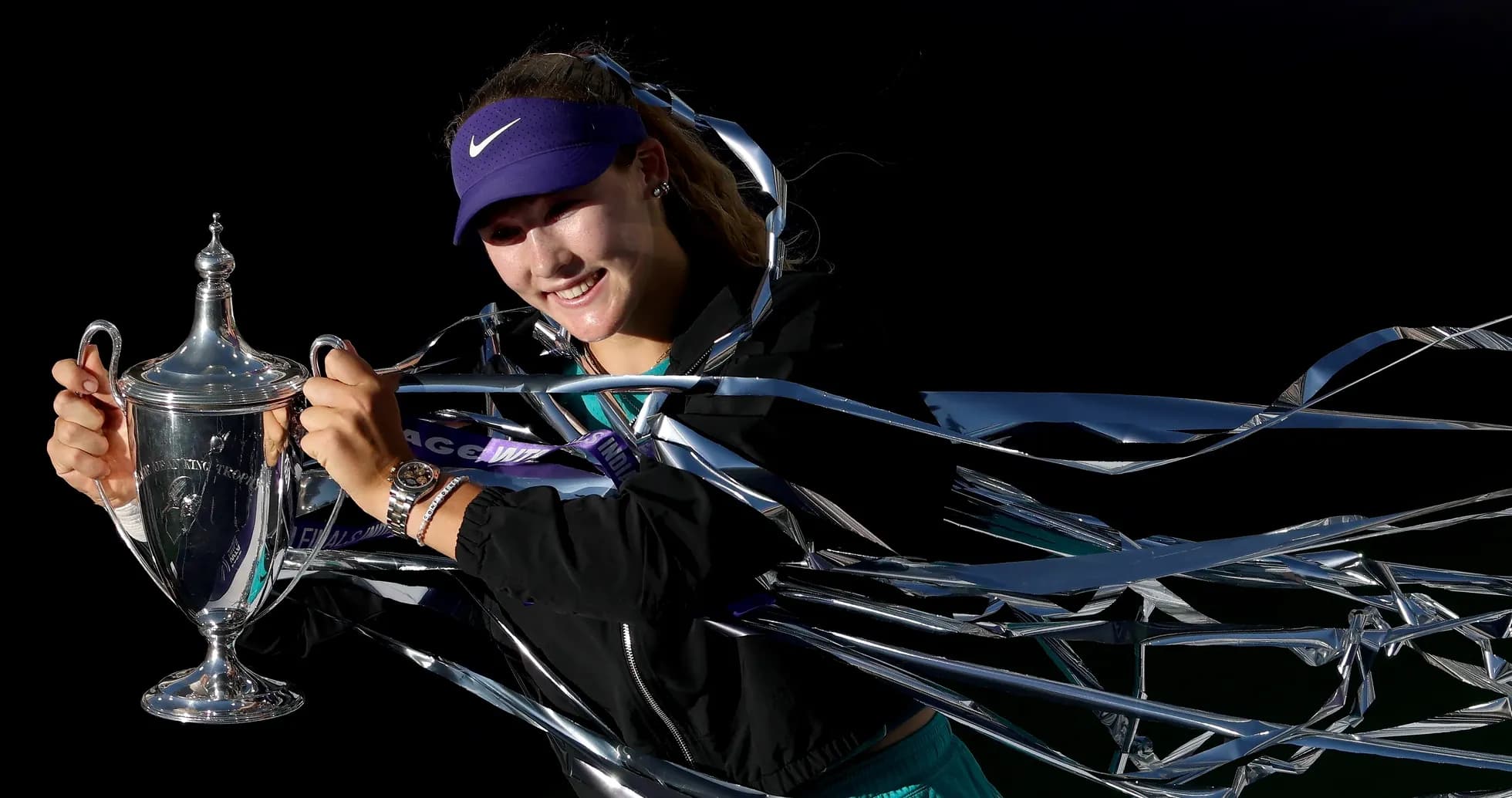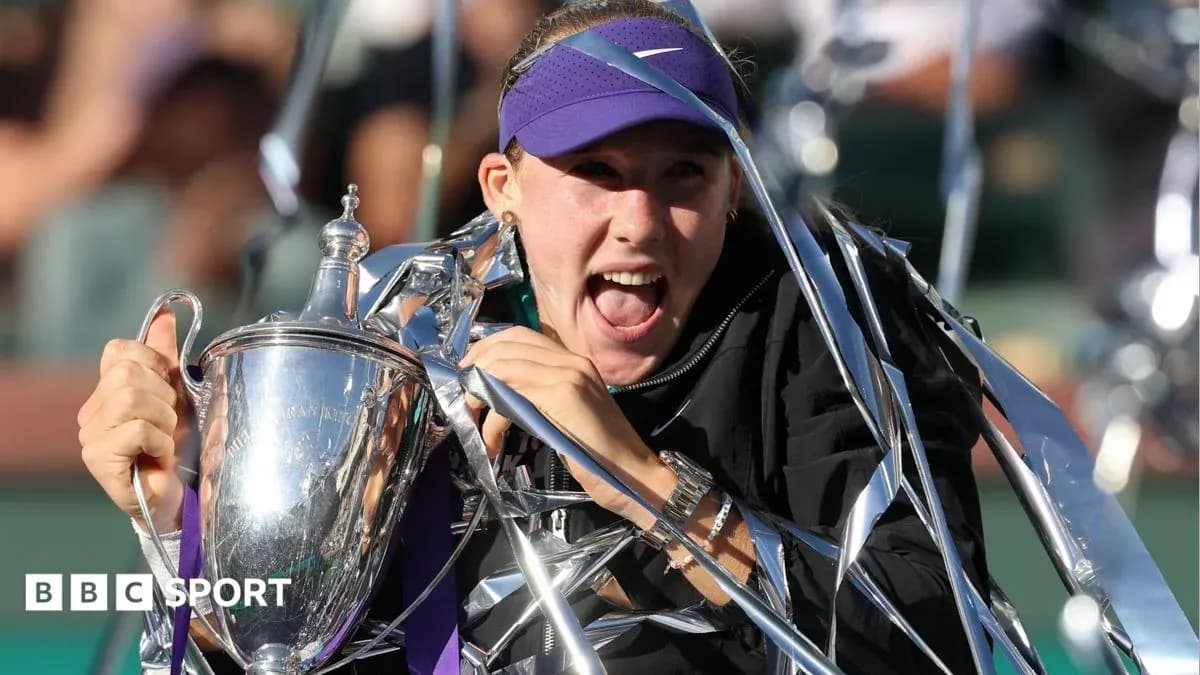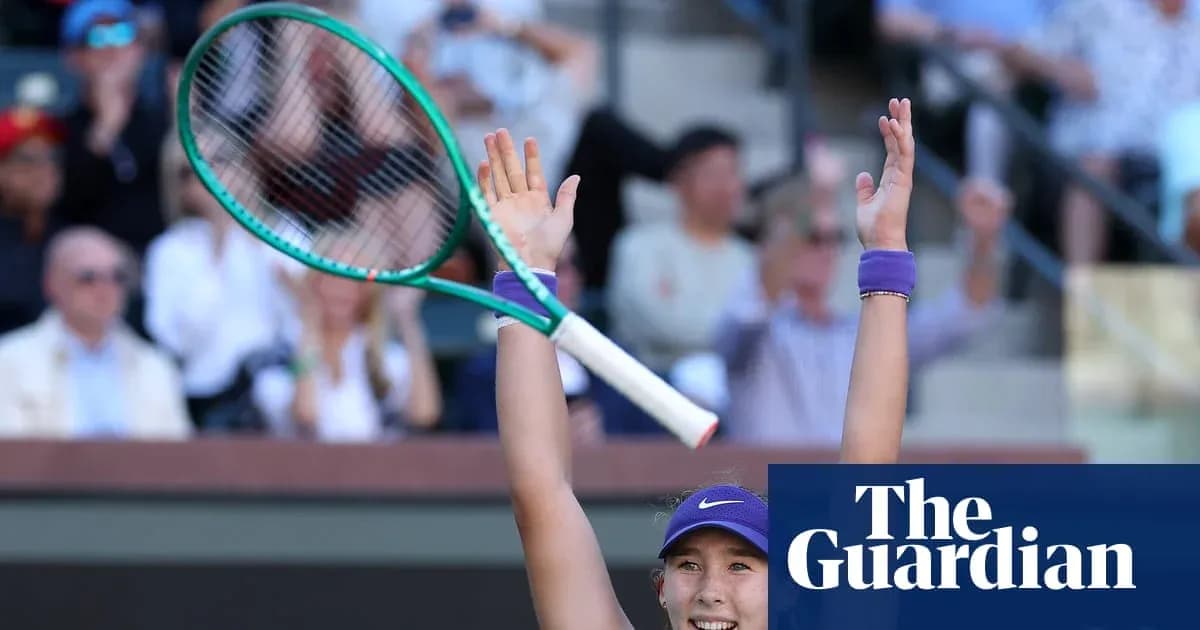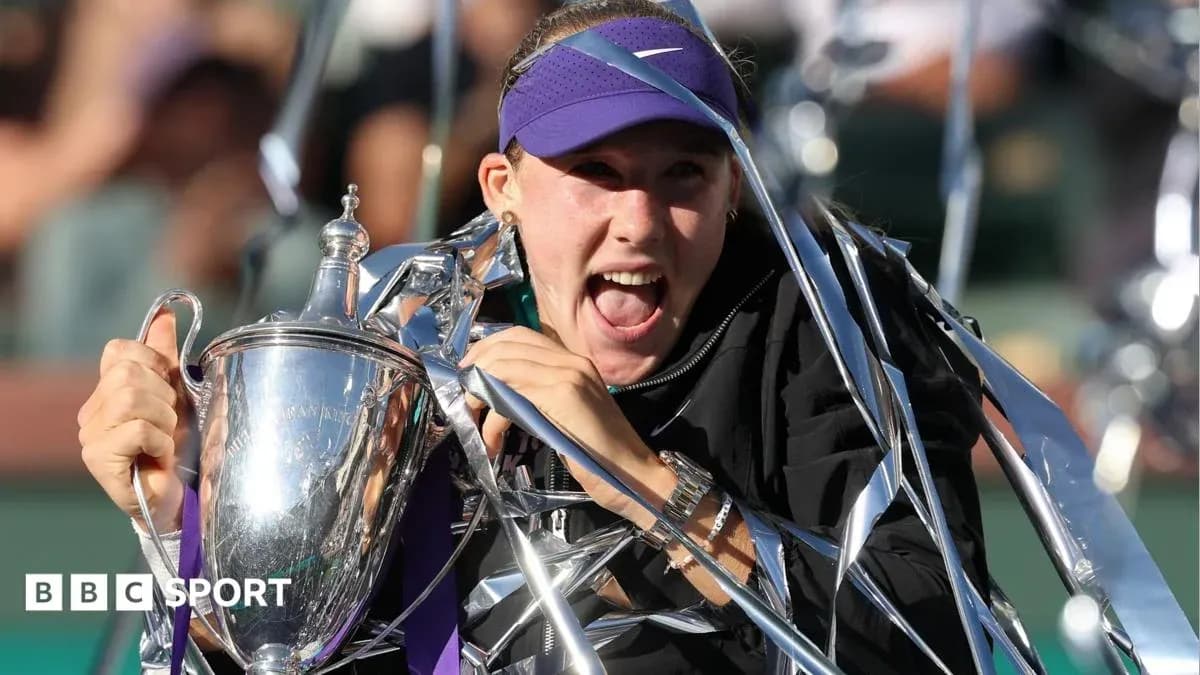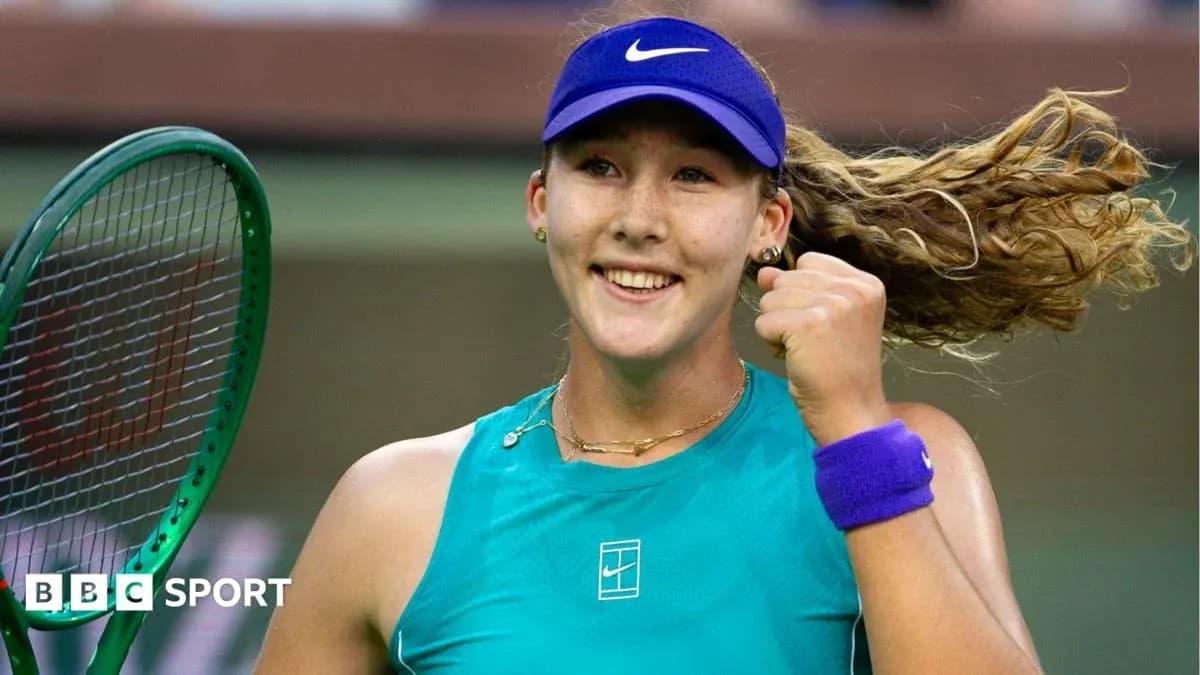
Mirra Andreeva stormed into the semi-finals of the WTA Finals with a ruthless, 11-game surge that dismantled world number two Aryna Sabalenka 6-4 6-0 at Indian Wells.
For five games, it looked like a familiar script. Sabalenka, the second seed, raced to a double-break lead at 4-1, leaning on her trademark aggression and stepping inside the baseline. Andreeva, just 19 and already a French Open champion, seemed on the verge of being blown away.
Then the match turned. Completely.
A teenager takes control
Andreeva stopped trying to trade raw power with one of the biggest hitters in the sport. She started to toy with the height and shape of the ball, sending looping, high, teasing shots that dragged Sabalenka out of rhythm and out of patience.
The change was dramatic. From 1-4 down, Andreeva reeled off five straight games to take the opening set, then all six in the second. Eleven games in a row against a four-time major singles winner. On one of the biggest stages of the year.
Her numbers told the story of clarity and control: 16 winners to just six unforced errors, clever angles from the baseline, and a calmness that belied her age. Sabalenka, by contrast, sprayed 23 unforced errors and did not hit a single ace on a court where she had lifted the WTA title earlier this season.
The only moment of tension came as Andreeva served for the first set at 5-4 and slipped to 15-30. The pressure should have been on her. Instead, she responded with three consecutive aces, slammed down with icy conviction, to close out the set and seize the momentum for good.
She never gave it back.
Sabalenka unravels
Sabalenka played with taping on her knee, but there was little sign that the issue restricted her movement. This was not a physical collapse. It was the latest in a series of mental and tactical unravellings that have crept into her season.
From 4-1 up and double-break in front, Sabalenka would win only 10 more points in the entire match.
The errors mounted. Rallies that began on her terms drifted away as Andreeva absorbed the pace, floated the ball high, then pounced with easy, controlled power. The Belarusian’s shoulders dropped, her frustration grew, and the scoreboard raced against her.
Sabalenka has already endured brutal 6-0 deciding sets this year, including at the French Open and Berlin Open. Those collapses unfolded over time. This one felt even more abrupt, a freefall that started with a teenager refusing to panic and ended with a world number two unable to find a way out.
Andreeva’s measured verdict
Andreeva’s own assessment was as composed as her tennis.
"I will be honest, I feel like Aryna did not have the best day," she told Sky Sports. "I feel like I cannot really take all the credit today - I feel like that is not very fair in some ways.
"I'm just happy. I had a goal in front of me to commit no matter what and control the things I can control."
That commitment showed in every tactical adjustment. She used height, spin and depth to drag Sabalenka away from her strike zone, then stepped in herself to finish. It was a mature, intelligent performance from a player still in her teens, and it shut Sabalenka out of the contest long before the final point.
Group picture and what comes next
The result locks Andreeva in as the group winner and sends her straight into the last four of the season-ending showpiece, a statement in itself given the field and the stage.
For Sabalenka, there is still a lifeline. Her final round-robin match against Elina Svitolina on Friday has become a straight shootout for the remaining semi-final spot from the group.
Andreeva is already through. Sabalenka must now steady herself, park the 6-0 second set, and find out whether she can still play like a contender when the margin for error has completely disappeared.