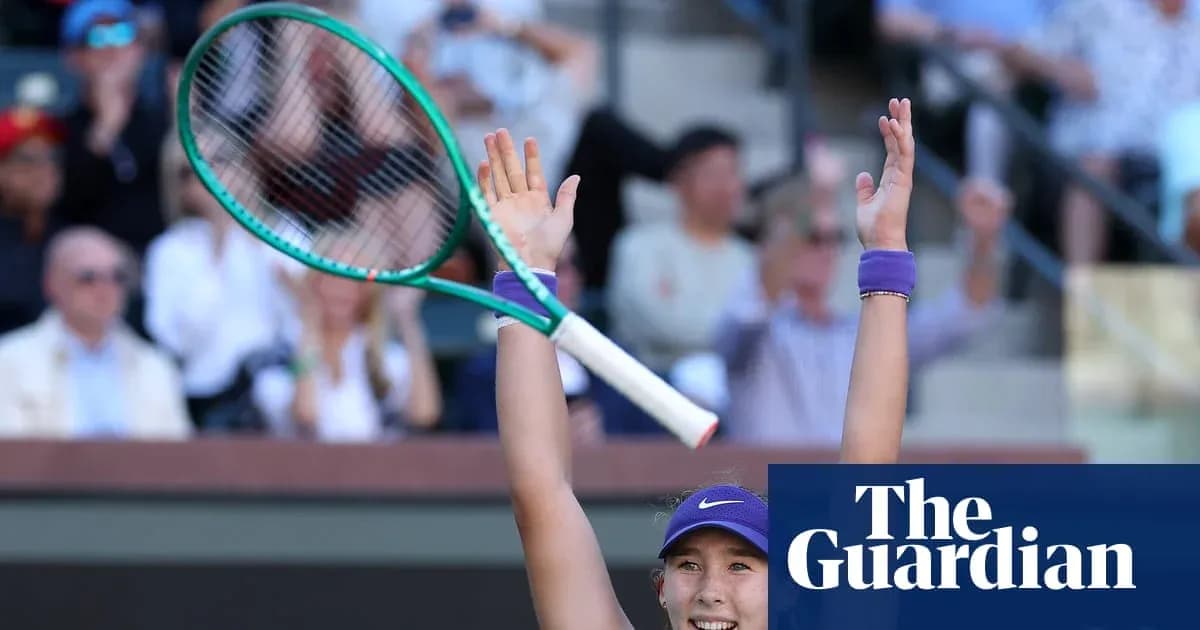
INDIAN WELLS, Calif. — Four matches. Four straight‑set wins. Eighteen games conceded.
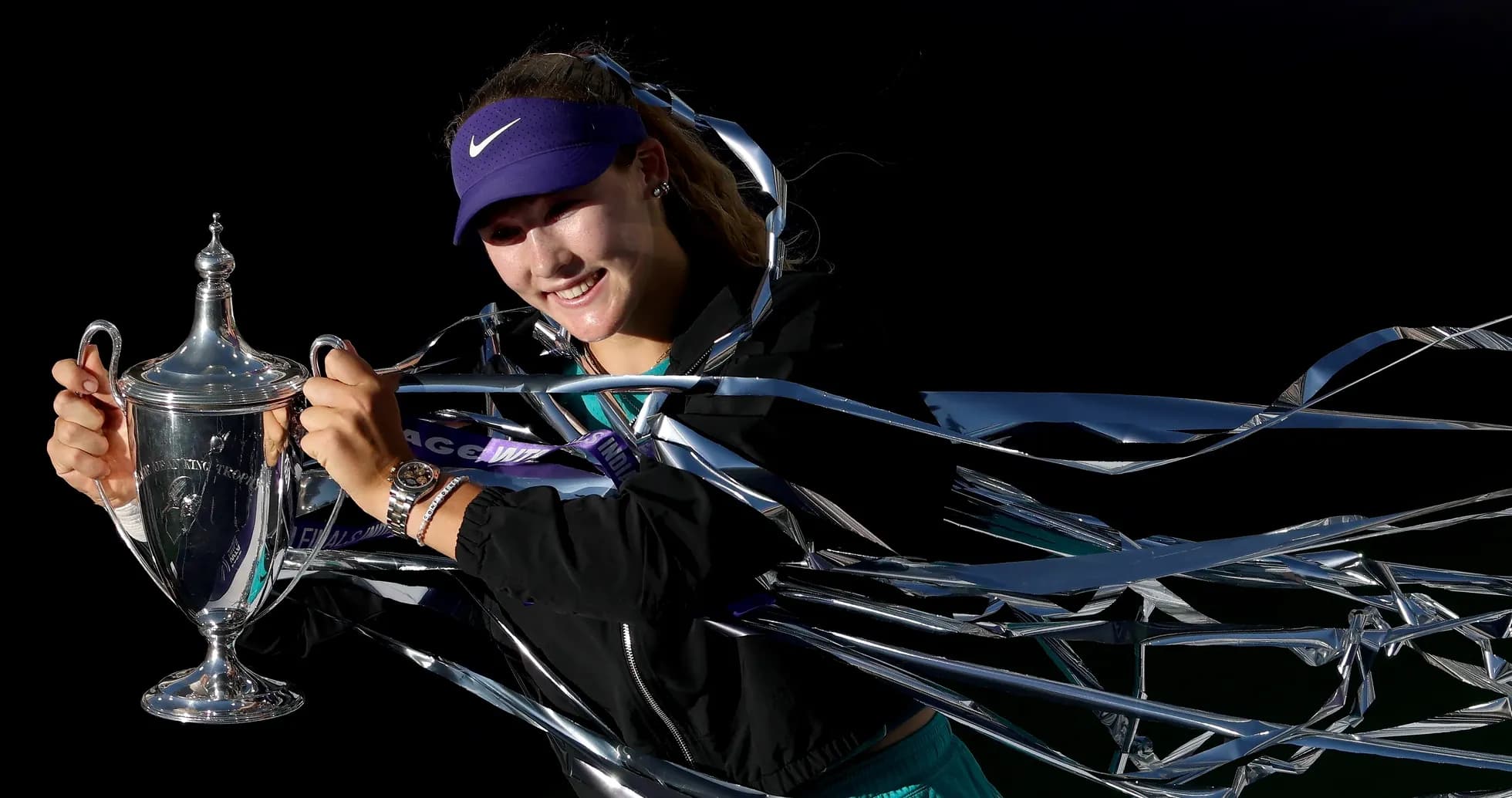
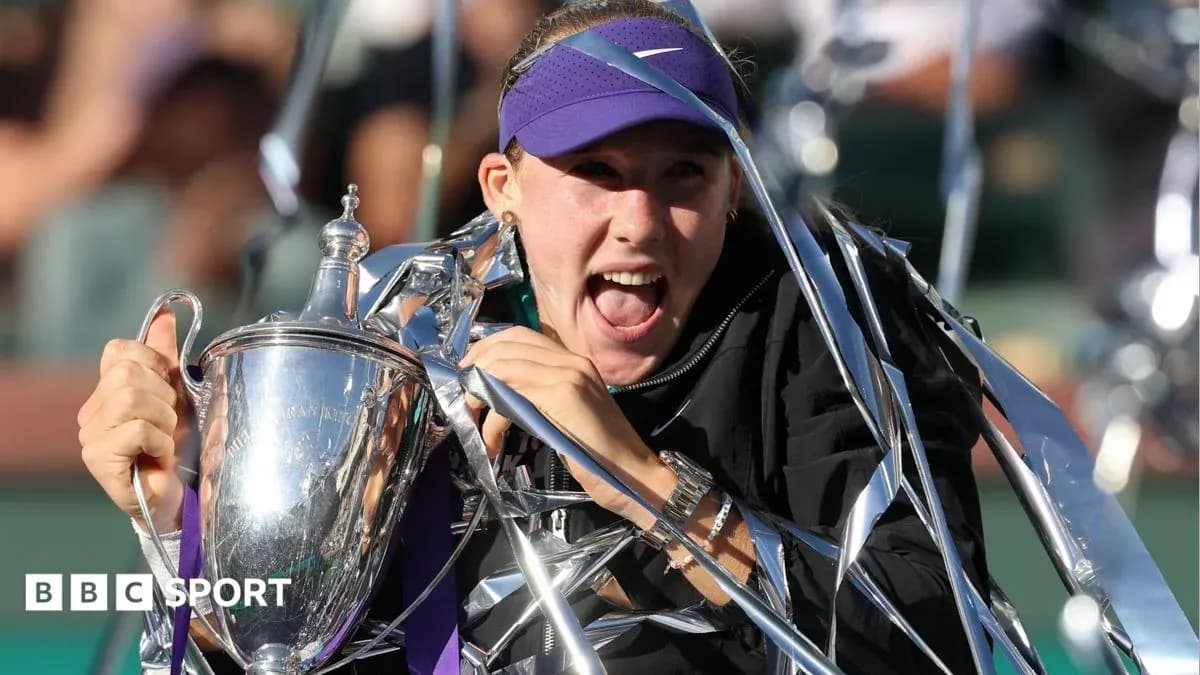
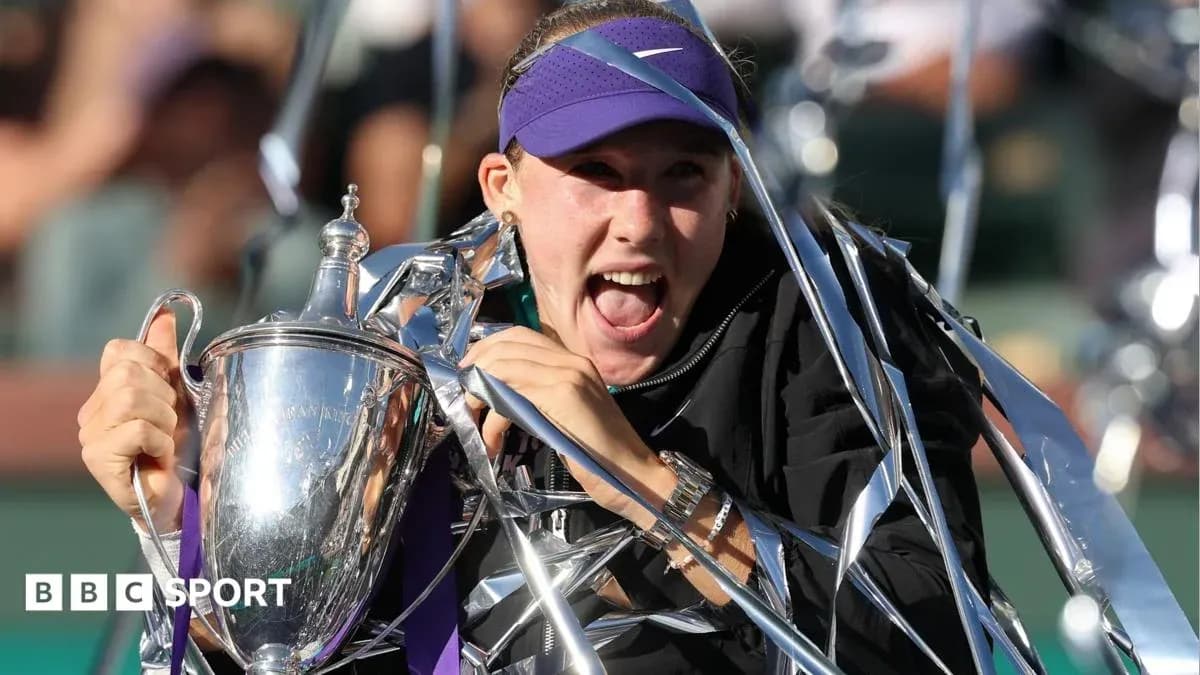
With one day left at the FAGE WTA Finals, the only real mystery is no longer who will lift the trophy, but whether anyone can even take a set off Mirra Andreeva.
Jessica Pegula briefly threatened to crack the code on Saturday. She went up 3–1 in the second set, a flicker of resistance that disappeared almost as soon as the numbers hit the scoreboard. Andreeva shut the door again, as she has all week, marching into Sunday’s final without once being dragged the distance.
If she does it one more time, in two clean sets, the 19-year-old will walk into a very exclusive club. Only Chris Evert and Serena Williams have won the WTA Finals on debut without dropping a set. Evert did it at the very first edition in 1972. Williams swept her first three matches in 2001, then collected the title by walkover. That’s the company Andreeva is chasing.
A rematch with history lurking
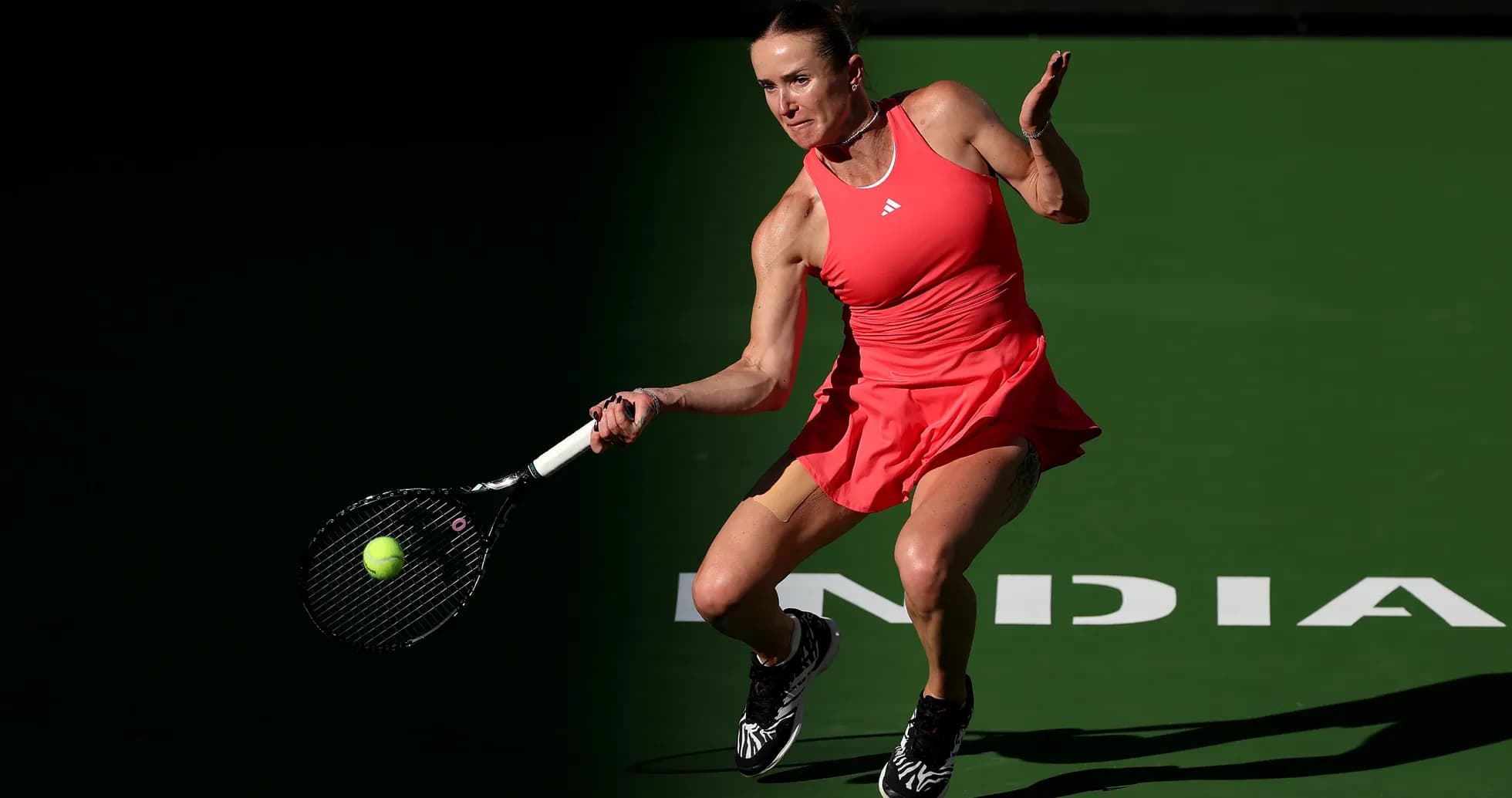
The last obstacle is a familiar one. Elina Svitolina was the first to face Andreeva this week and took the full force of the teenager’s early momentum: 6–4, 6–0. A bruising scoreline. On paper, it makes Andreeva look like the obvious pick.
But this tournament has a habit of ripping up the script. Since round-robin play returned in 2003, seven pairs have met in both the group stage and the final. Four times, the player who lost the first encounter came back to win the title. The first match is a clue, not a verdict.
Svitolina’s own week backs that up. She has grown into the event with each outing. She clawed back from a set down against Karolina Muchova. She ran away with the decider 6–1 against Aryna Sabalenka. Against Linda Noskova, she barely gave up any ground at all, dropping just three games. That surge has carried the 32-year-old into her third WTA Finals championship match in as many appearances.
So the question hangs over Sunday: can Svitolina turn that heavy opening loss into a second season-ending crown?
Two women who know this stage better than almost anyone have already weighed in. Martina Navratilova and Pam Shriver, owners of 10 WTA Finals doubles titles together, now find themselves on opposite sides of the argument.
Advantage Andreeva: a teenager in full flow
At 19, Andreeva is the youngest WTA Finals finalist since Maria Sharapova in 2004. This will be her sixth final of the season, tying World No.1 Elena Rybakina for the tour lead. She also holds a 2–1 head-to-head edge over Svitolina, both wins coming in Indian Wells — last year’s title run and this week’s group-stage meeting.
Navratilova sees a young player operating in a rare pocket of clarity and conviction.
“She’s just really confident right now. She’s hit her sweet spot, and maybe playing back-to-back matches helps because you’ve built up that momentum and you can still feel it. She looks really sharp,” Navratilova said.
The serve is the foundation. Andreeva isn’t just hitting it big; she’s using it like a scalpel. A 90 mph slice wide, then 115 mph down the T, stretching the court, especially on the deuce side. Returners are constantly guessing, constantly late.
“It’s hard to find an opening against her because she’s serving big and mixing it up,” Navratilova explained. “It’s hard to get into her service games, and then she jumps on your second serve. So maybe you take a little off your first serve just to get it in.”
That pressure bleeds into every rally. Opponents start aiming for smaller targets, taking risk off the first serve, bracing for the counterpunch. Andreeva, crucially, knows exactly what she wants to do and trusts herself to do it.
Navratilova believes there is still room to grow, literally and figuratively.
“I still feel like she’s not redlining it on serve. She’s still growing into her body,” she said.
The most telling snapshot of Andreeva’s week came not in a straightforward win, but in a moment of real jeopardy. Down 4–1 in the first set against Sabalenka, she looked headed for trouble. She turned the set around, made the World No.2 look ordinary, and never looked back.
“What impressed me was when she was down 4-1 in the first set against Sabalenka. I thought she was going to lose that set, and she didn’t. She made Sabalenka look silly, and that’s not easy. She’s peaking at the right time,” Navratilova said.
Peak form. Historic stakes. A surface and venue where she already owns Svitolina twice. The case for Andreeva is blunt and powerful.
Advantage Svitolina: scars, experience, and a rebuilt game
Svitolina, though, brings something Andreeva does not yet have: years of scar tissue at the very top and the memory of lifting this exact trophy.
Seven years after her last appearance in the final, she is back playing for a second WTA Finals title. At 32, she is the oldest finalist since Venus Williams in 2017. Her win over Noskova pushed her to a tour-leading 11 Top 10 victories this season, matching her career high. One of those came against Andreeva at the Australian Open — a crucial mental anchor if Sunday starts to resemble that lopsided round-robin defeat.
Shriver sees a very different Svitolina from the one who won here in her first career.
“Svitolina’s won it before,” Shriver said. “In the semifinals, where obviously her opponent Noskova wasn’t able to play her best tennis, Svitolina showed why she’s played her best tennis since coming back from maternity leave.”
The transformation starts with weapons that used to misfire. The forehand, once a neutral shot, now carries real bite. The serve, long criticized for its vulnerability, has hardened.
“Her forehand was super aggressive, and her serve is so much more improved,” Shriver noted. “Svitolina doesn’t have the holes in her game that she used to have, which were one of the weaker second serves in the game and a forehand that couldn’t hurt you. She’s a much more well-rounded player than she was in her first career.”
That completeness will matter against Andreeva, who thrives on patterns and predictable weaknesses. Svitolina’s task is to deny her those, to turn this into a match of adjustments and anticipation rather than raw first-strike tennis.
On that front, Shriver believes the Ukrainian holds one of the game’s quiet superpowers.
“She is one of the best anticipators of the ball. She reads the play beautifully,” Shriver said.
There is also the emotional undercurrent. Since returning from maternity leave, Svitolina has carried a heavier off-court load than most, yet she has used the lines of the court as a kind of sanctuary.
“Svitolina, like so many great players, is compartmentalizing and using the tennis court as her safe haven, where she focuses and leaves the storms off court. She goes into hyper-focus mode,” Shriver said.
Hyper-focus versus youthful fearlessness. A champion trying to reclaim the year-end stage against a teenager trying to storm it at the first attempt.
On Sunday in Indian Wells, one of them will walk off with a season-defining title. The other will leave with a clear message about where the balance of power is heading.