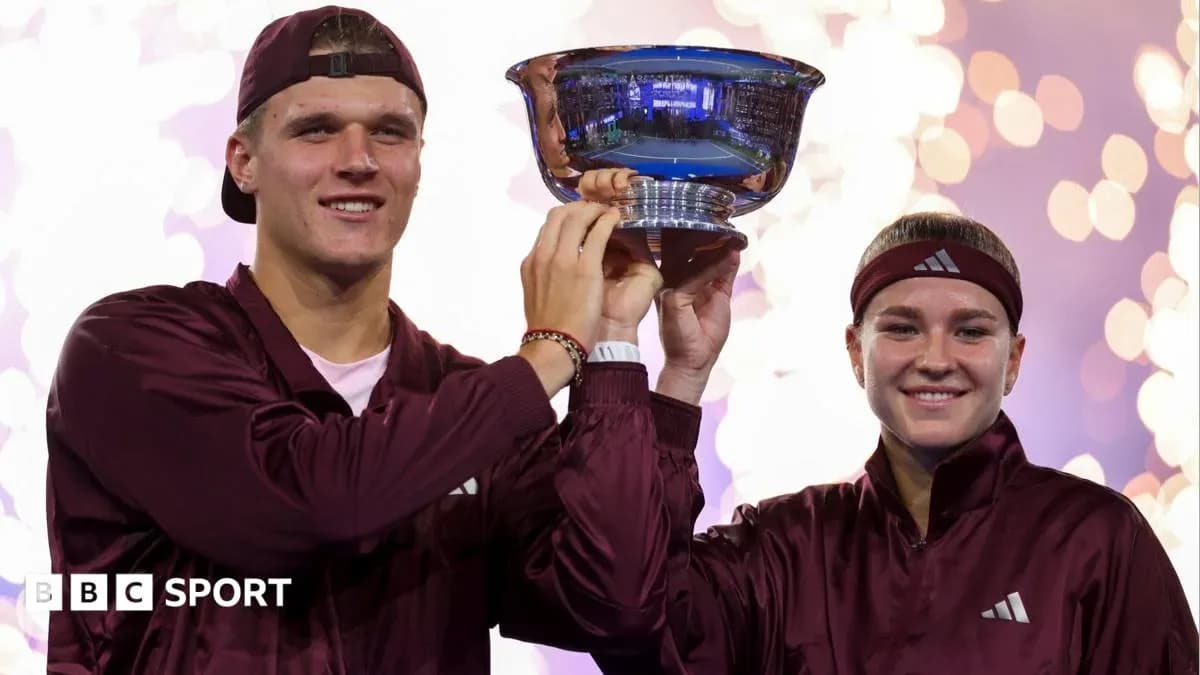
Karolina Muchova walked back into the spotlight in New York with stitches still fresh on her season and a rookie partner at her side. Two match points saved in the semi-final, two more in the final, and a 131mph ace to finish it. Mixed doubles rarely feels this dramatic. This week, it did.
Beside her stood Jakub Mensik, 20 years old, never before a mixed doubles player, now a Grand Slam champion and a million dollars richer. He ended it with that thunderbolt down the T, sealing a 6-3 1-6 10-6 win over Belinda Bencic and Flavio Cobolli in a final that swung wildly before the Czech pair grabbed it by the throat in the deciding tie-break.
First major title for both. First time together. First time Mensik had to be told what “maroon” is.
They had agreed to match outfits for this run, Muchova explaining the colour to her younger partner before they walked out under the lights. It was a small detail, but it fit the story: a hastily assembled team, learning on the fly, suddenly in sync when the pressure rose.
The pressure did rise. Their path to the trophy was anything but gentle.
In the semi-finals, Bencic and Cobolli had already played spoilers. They beat Elina Svitolina and Gael Monfils 10-5 in a match tie-break, ending the married couple’s bid to become the first husband-and-wife Grand Slam mixed doubles champions since 1939. There will be no second attempt. Monfils retires at the end of the season.
Muchova and Mensik followed them onto court and were immediately dragged into a knife-edge battle of their own. Across the net stood French Open champion Mirra Andreeva and Andrey Rublev, both fully capable of taking over a match with a single return game.
The Czech pair edged the first set 5-4, taking the tie-break 8-6. Andreeva and Rublev hit back 5-3 in the second. Then came the 11-9 match tie-break, the kind of short-form shootout purists still grumble about. Muchova and Mensik stared down two match points and survived, then stole the last three points to reach the final.
“It’s not probably the main fact that we won the title, but that we had really great matches to play,” Mensik said afterwards. “It’s good we tried a lot of things on the court. It gives you a little bit of boost of confidence.”
That confidence showed when it mattered most.
They raced through the opening set of the final 6-3, riding Mensik’s serve and Muchova’s feel at the net. Then the match flipped. Bencic and Cobolli tore through the second set 6-1, attacking returns, rushing the Czechs, forcing errors. For a few games, experience and rhythm looked like they would overwhelm the newcomers.
The format wouldn’t allow a slow reset. Straight into a 10-point tie-break. Blink and the title is gone.
This time, Muchova and Mensik didn’t blink. Mensik’s serve, already one of the big weapons on tour, became the anchor. Muchova picked off volleys, closed angles, and the pair surged ahead. At 9-6, with a third championship point in hand after saving their season repeatedly over the previous 24 hours, Mensik uncorked that 131mph ace. Match over. Title won. A million-dollar swing of the racket.
For Muchova, 30, it lands just weeks after the most painful defeat of her career, a Wimbledon final loss to compatriot Linda Noskova. She has barely played since, sidelined by what she described as a “small surgery.” In New York, she returned not as a singles favourite, but as half of the team redefining what mixed doubles can look like in the modern game.
Mensik arrives with his own momentum. A semi-finalist at this year’s French Open in singles, he stepped into mixed doubles cold. No prior experience. No familiar patterns. Just a huge serve and a willingness to experiment. That was enough.
The context around them is changing, too. This reworked mixed doubles event, condensed into under 48 hours, still grates on traditionalists who believe a Grand Slam title should be earned over a longer grind. Yet the numbers and the staging tell a different story.
The semi-finals and final were not tucked away in the afternoon for grounds pass holders. They were given prime-time slots in the night session, under the lights, in front of a far larger television audience. The United States Tennis Association has made its intentions clear: this is no longer a sideshow.
The money underlines it. The mixed doubles champions now collect a prize five times larger than under the old format. Even with a new qualifying competition, specialist doubles players face a squeeze, but those who do make the cut are suddenly playing for serious stakes. The men’s and women’s doubles purses have been boosted as well, brought in line with what’s on offer in mixed.
Singles stars like the format. It gives them a taste of the show courts, a chance to feel the noise and the air of Arthur Ashe and Louis Armstrong before the main draw begins on Sunday. It will never be their priority, and the withdrawals prove it: Iga Swiatek and Frances Tiafoe stepped away to rest after heavy schedules, Daniil Medvedev opted for more singles matches instead.
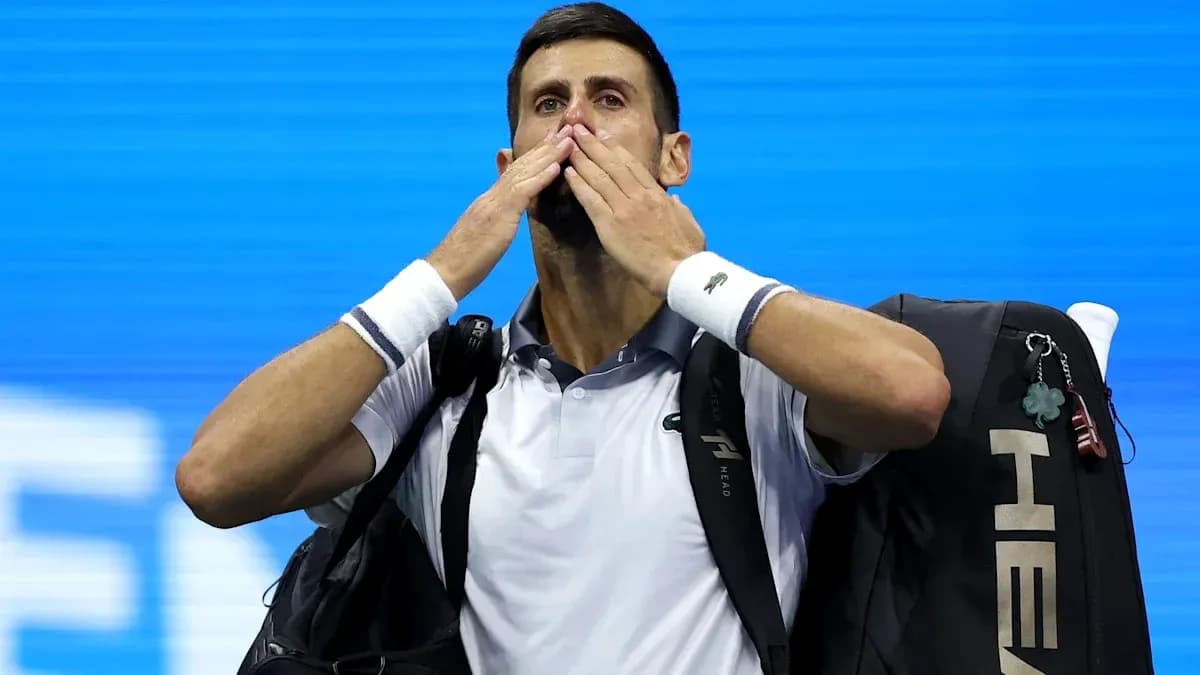
Yet the USTA’s ambition is obvious. If they can tempt pairings of the calibre of Serena Williams and Carlos Alcaraz, or Aryna Sabalenka and Novak Djokovic, the experiment becomes a headline act, not a curiosity.
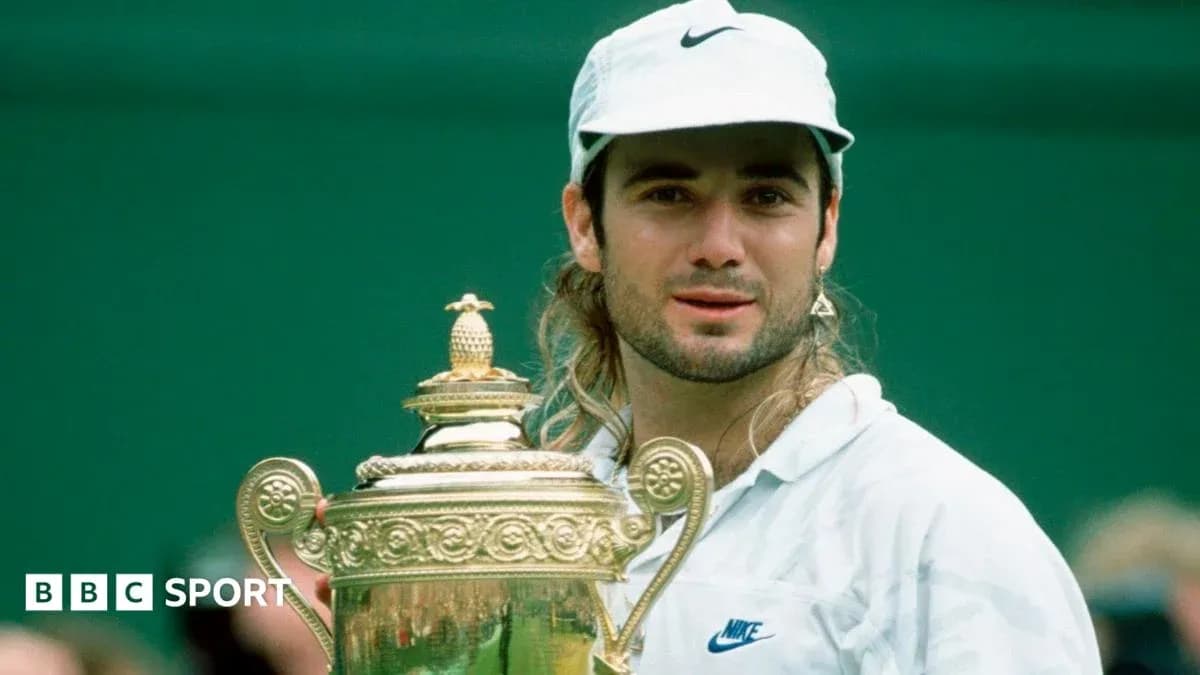
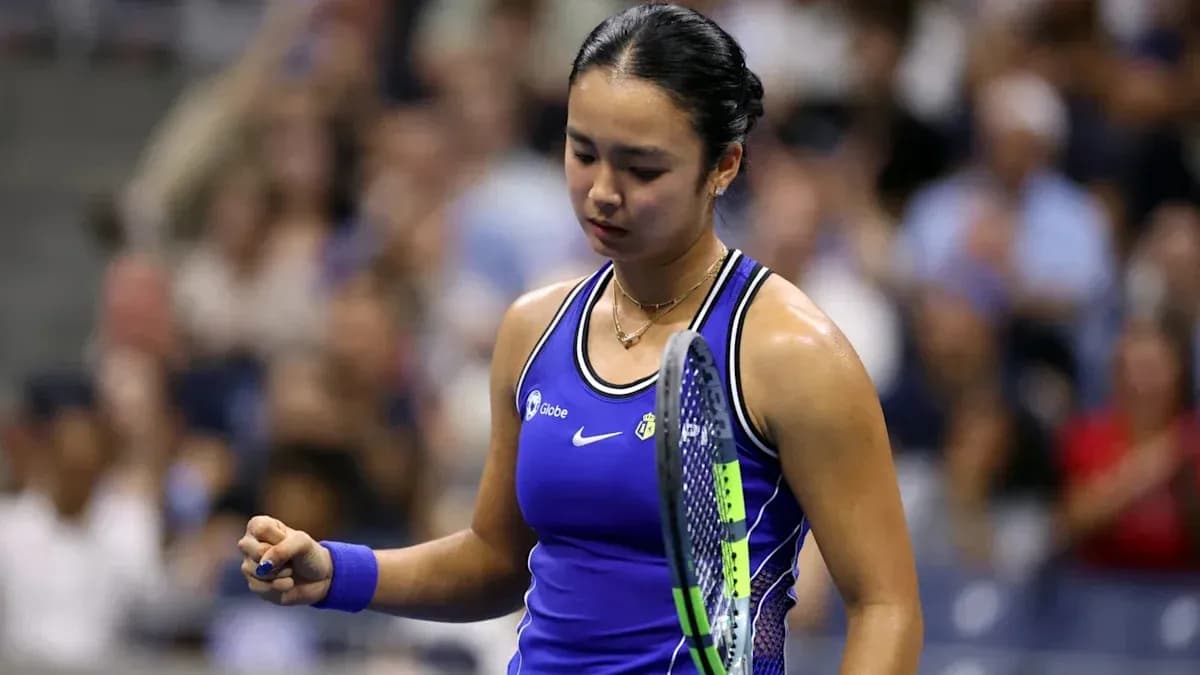
Around it, Fan Week has grown into a festival. Roger Federer shared the stage with Andre Agassi, John McEnroe and Andy Roddick in an exhibition. Amanda Anisimova and Alexandra Eala joined the cast for the “Stars of the Open” showcase. The Lumineers opened the tournament with a concert inside Louis Armstrong Stadium nine days before a single ball is struck in the main draw.
In the middle of that noise, Muchova and Mensik carved out their own story: two first-time champions, a patched-up veteran and an untested youngster, saving match points one night and serving out a million-dollar title the next.
If this is what mixed doubles looks like in its new era, how long before the sport stops treating it as an afterthought and starts building around nights like these?