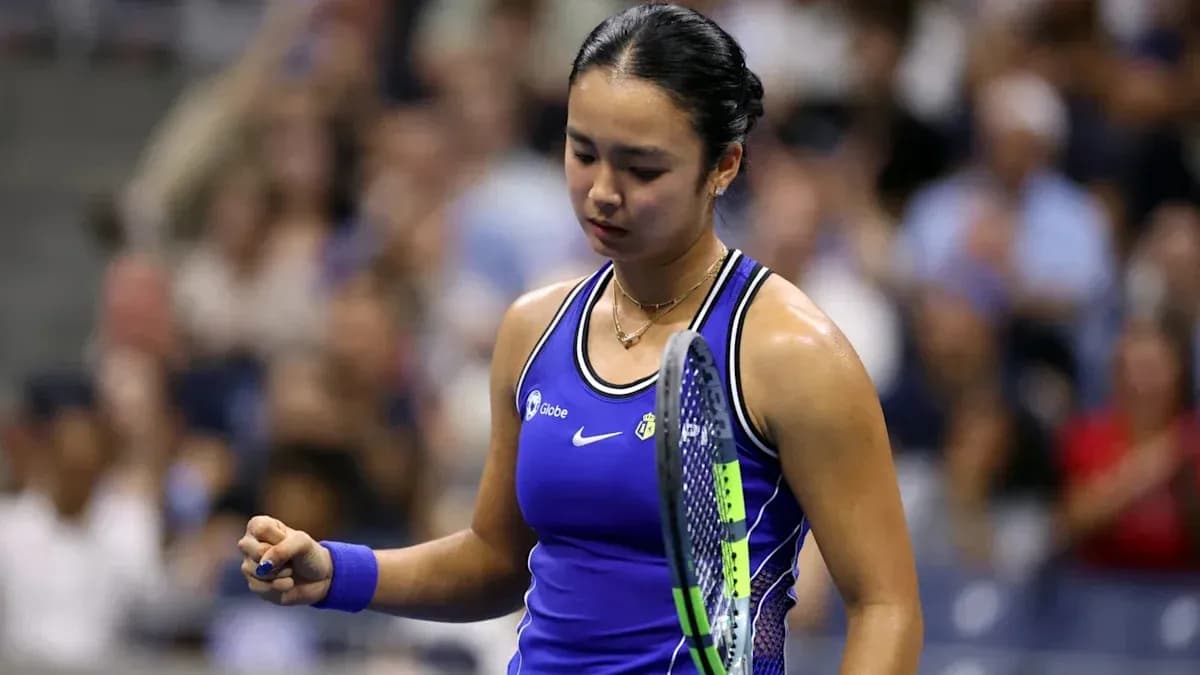
Naomi Osaka bends but does not break. On a bright, twitchy afternoon inside Arthur Ashe Stadium, the two-time US Open champion rode out a messy, nervy finish to the second set to beat Katerina Siniakova 6-2 6-3 and book her place in the third round.
For a while, though, Osaka’s straight-sets scoreline disguised a ragged closing act.
Osaka tightens grip, then wobbles
Osaka opened the second set looking very much like a player who “could see the finish line.” She held for 1-0 despite a double fault on game point, shrugging it off to reset and close out the game. The rhythm from the first set carried over: heavy, dictating groundstrokes, Siniakova scrambling, the pattern familiar and unforgiving.
Siniakova, though, refused to fold. She saved a break point in a huge early hold for 1-1, spending most of that game on the back foot yet clawing her way through deuce to stay in touch. It felt like a small win, but a necessary one for her belief.
Osaka answered with a routine hold for 3-2, barely offering a look on her own serve. On the other side of the net, frustration crept in for Siniakova. A faltered forehand and a flash of anger at herself left her 0-30 down in the next game. Soon, three break points loomed.
The Czech survived one with the help of a friendly net cord that sat up invitingly for a forehand, but Osaka simply reset the rally patterns. She dragged Siniakova from sideline to sideline, dictated every exchange, and finally ripped a winner to break for 4-2. The match, at that point, seemed to tilt decisively in Osaka’s favour.
“The two-time champ can see the finish line now,” felt less like commentary and more like a statement of fact.
Siniakova claws back, but Osaka slams the door
Just when Osaka appeared to be cruising, the second set turned scrappy. Serving at 4-2, Siniakova dug in again. Osaka’s level dipped, the unforced errors crept in, and after a long game that stretched to a third deuce, Siniakova finally seized her second break point of the match.
She converted. 4-3. Out of nowhere, game on.
Osaka had struck first in the set, but “not many saw that coming” summed up the mood in Ashe as Siniakova punished the lapse to pull back on serve. The Czech had waited all afternoon to make a breakthrough; to finally get it, only to face Osaka serving for the match two games later, underlined how thin the margin was.
Serving at 5-3, Osaka faced yet another test. For the fourth straight game, there were break points—this time two chances for Siniakova to deny her. The rallies turned tense, the errors from both players more frequent. The end of the set became a grind rather than a procession.
Siniakova saved one Osaka break point earlier in the set and had fought off the first of three when trailing 3-2, but when the pressure reversed, she couldn’t quite hold the line. She saw off one match-threatening moment, only to concede the second opportunity. Osaka shut the door, finally, and with it sealed her passage into the third round.
It was not pretty. It did not need to be. It was enough.
Crowd noise and frayed nerves
All afternoon, there was a background battle running alongside the tennis. More than once, the chair umpire had to remind the Ashe crowd to quieten down during points. The interruptions came at awkward times, including early in the second set when Osaka double-faulted on game point before recovering to hold.
The stop-start atmosphere only added to the sense of unease during that scrappy final stretch, as Osaka tried to close and Siniakova refused to go quietly.
Dart opens strongly as British hopes narrow
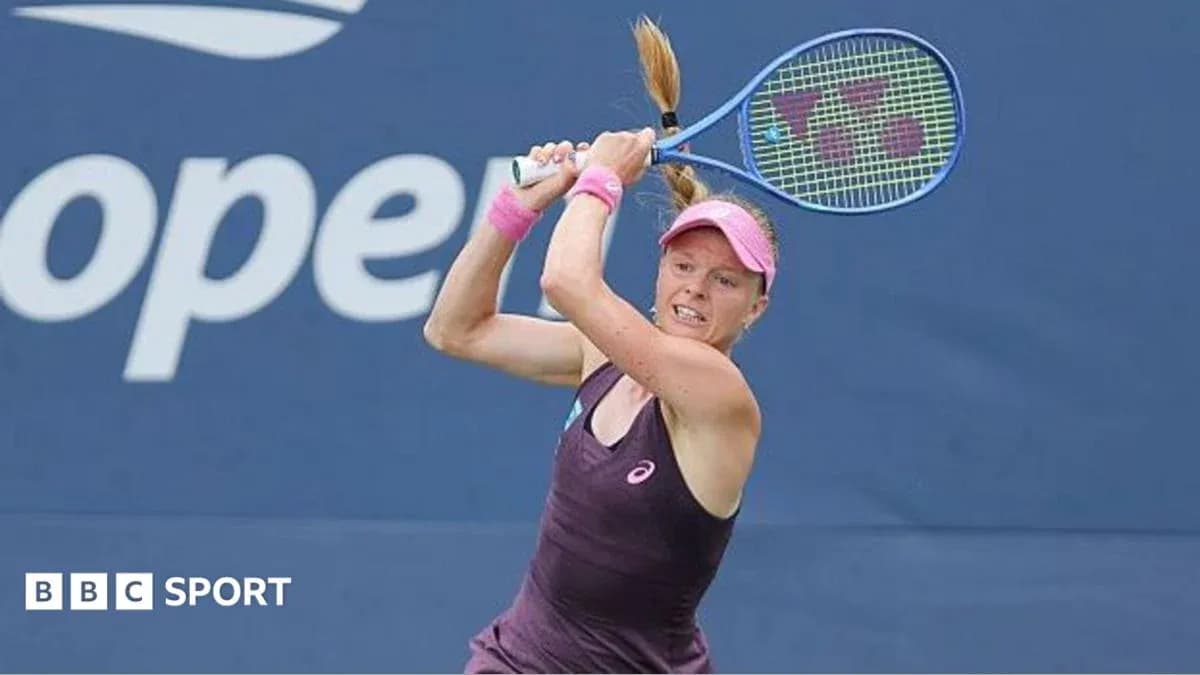
On the outside courts, Harriet Dart began her own US Open assignment with purpose. Facing 25th seed Marie Bouzkova on Court 11, the Briton—one of only two remaining British players left in the singles draw, alongside Fran Jones—started with a confident hold for 1-0.
Dart settled quickly from the baseline, winning a couple of solid rallies before stepping forward to finish the game at the net, leaving Bouzkova with no way past. The pair have history this season: Dart beat the Czech in three sets at Eastbourne in 2024, a result that will sit quietly in the back of both players’ minds as this contest unfolds.
Swiatek sharp, relaxed, and already building
On the Grandstand, Iga Swiatek delivered the kind of performance that underlines why she remains the standard-bearer at the top of the women’s game. She dismissed Nadia Podoroska 6-3 6-2 with a disciplined, controlled display.
Mark Woodforde, watching on BBC Radio 5 Sports Extra 2, praised the “much more disciplined approach” and the heavy spin that continues to trouble opponents. Swiatek saved one of her shots of the match for near the end, stepping around the ball to crash a forehand winner across court, then pummelling another forehand to bring up match point. Podoroska’s final error sealed it: Swiatek into the third round again.
Afterwards, Swiatek reflected on facing Podoroska, recalling their previous meeting at a key moment in her early career. “A lot can change in six years,” she said, explaining she prepared for this one as she would “any other match.” She added that she arrived in New York “with a better feeling probably than any other Grand Slam this year” and is “happy to have another opportunity to play here.”
Off the court, the world number one sounded just as content. Her chosen way to unwind? Lego. “It is a small set, so I think I will be done pretty soon,” she said, laughing that while she has fierce “competition on the court, Lego I can do slowly, just relaxing.” One rule, though: she only touches the 18+ sets.
Six Grand Slam titles already in the bag, a calmer mindset, and a box of bricks waiting back at the hotel. Swiatek’s New York campaign looks ominously settled.
Auger-Aliassime edges Khachanov in tight opener
In the men’s draw, Felix Auger-Aliassime and Karen Khachanov opened their contest with the kind of heavyweight baseline exchanges expected from two former US Open semi-finalists.
Auger-Aliassime, the third seed, surrendered an early break advantage but steadied himself when it mattered, edging the tie-break 7-5 to take the first set 7-6. Woodforde noted that against Khachanov “you don’t want to give him the same ball all the time,” and suggested a backhand slice as a smart change-up for the Canadian’s camp to consider.
One set to the good, but nothing close to settled between two players who know what it feels like to go deep in New York.
Back on Ashe, Osaka’s work is done for the day. It was uneven, occasionally fraught, but decisive. She is into the third round, the noise around her growing, the questions about how far she can go here only getting louder.