NEW YORK — For half an hour, Naomi Osaka looked like she had a train to catch.
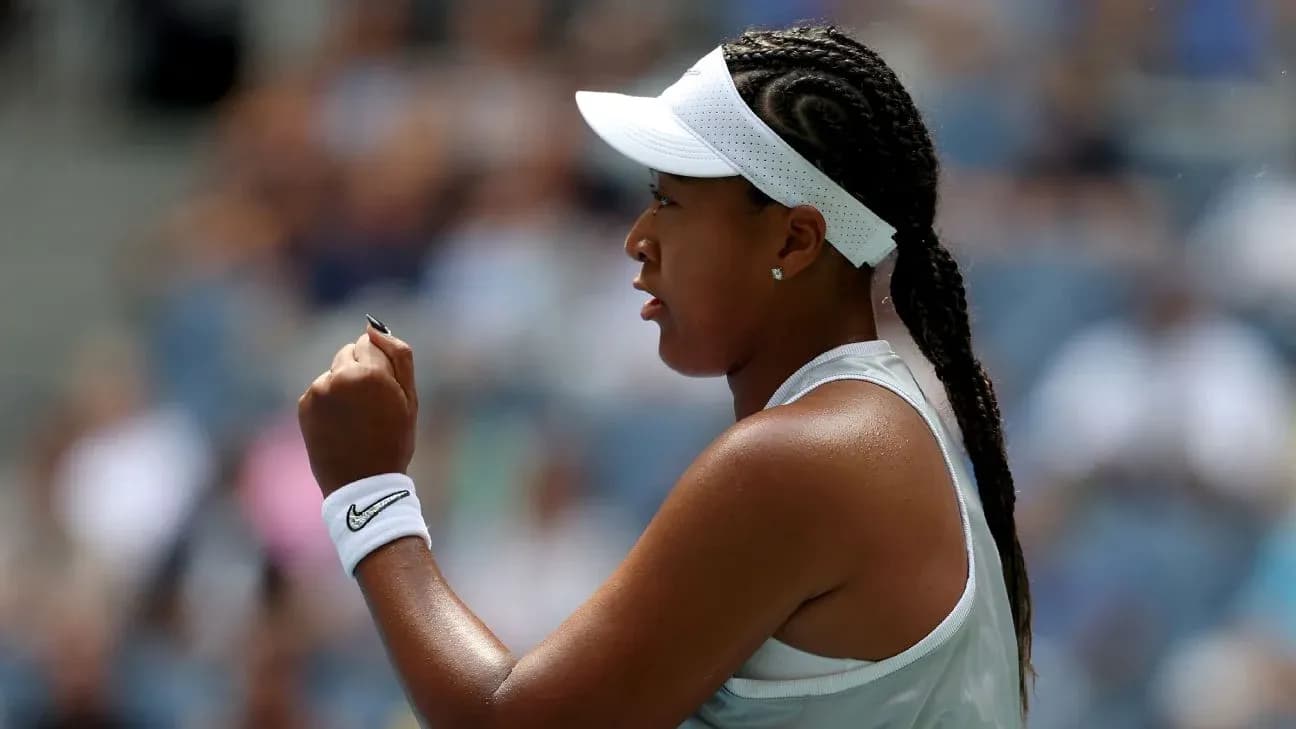
Silver and white kit, white visor, brisk stride to the baseline. One break, then another. A 6-2 first set pocketed in 30 minutes against Katerina Siniakova, and Arthur Ashe Stadium settled into the familiar rhythm of an Osaka afternoon: big serve, heavy strikes, scoreboard racing forward.
Then the match turned awkward.
The No. 13 seed, a four-time major champion and two-time US Open winner, lost her timing, her range and, briefly, her composure. Up 4-2 in the second set, she allowed Siniakova back in with a loose service game that stretched and stretched, the kind that drags doubt into a match. Her forehand flew long, her backhand leaked wide. After just four unforced errors in the opening set, she sprayed 20 in the second.
Siniakova, the world No. 1 in doubles but far less decorated in singles, did not need a second invitation. She dug into rallies, made returns, asked Osaka to hit one more ball. The Czech clawed her way to 5-5, then 7-5, stealing the set and all the momentum.
For a moment, the two-time champion looked vulnerable.
Osaka headed off court for a bathroom break, alone with the noise in her head and the weight of expectation. When she returned, the body language had changed. The shoulders loosened. The feet moved a little sharper.
The reset worked.
Osaka snapped back into gear early in the decider, breaking for 2-0 and finally reclaiming control of the baseline. Her serve, which had wobbled in the second set, began to hit its marks again. The errors thinned out. The winners started to land.
The rally that defined the match came soon after: 19 shots of angles, defense, and patience, Osaka refusing to pull the trigger too early. When she finally stepped in and finished at the net with a crisp volley winner, she did not roar or pump a fist wildly. She exhaled. The look was more relief than celebration.
From there, she did not let Siniakova back in. Osaka closed out the third set 6-1, completing a 6-2, 5-7, 6-1 victory and a place in the third round.
“The match was definitely really tough and I don't know, I just felt like I had to fight,” Osaka said afterward. “I definitely had a couple opportunities in the second set and I think I was a little bit too hard on myself. So I took the bathroom break, regrouped a little, came back and just tried to have no regrets.”
Her performance on Thursday was a contrast not only in tennis but in presentation. For her opening night match, Osaka had walked into Ashe dressed in black, hair in cornrows under a headband, a clear tribute to former NBA star Allen Iverson. Against Siniakova, she opted for a lighter palette: silver and white under a long white jacket, visor pulled low against the late-summer sun.
The day itself belonged to the women’s game. Osaka’s early-afternoon win came on a schedule that also featured Iga Swiatek and Alex Eala, with Coco Gauff set to take center stage under the lights.
Swiatek, the 2022 US Open champion, made far smoother progress. The top-tier Pole dismissed Nadia Podoroska 6-3, 6-2, a controlled performance that never truly flickered. No mid-match lapse, no need for bathroom-break resets.
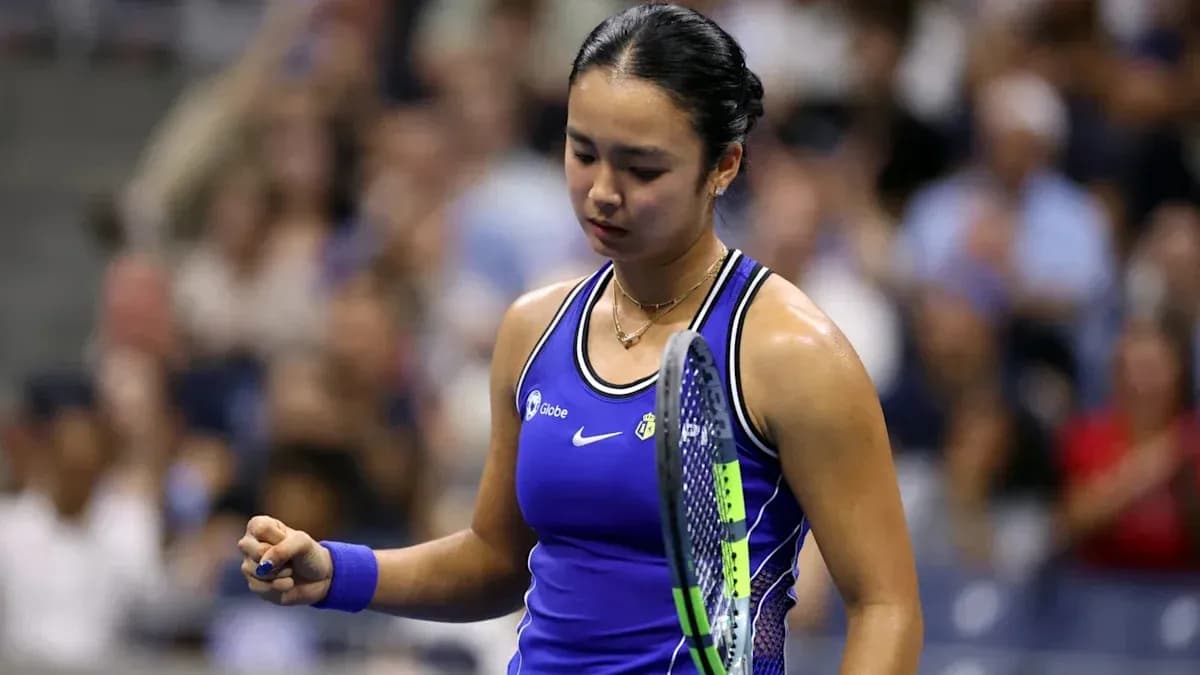
Eala, the No. 17 seed from the Philippines, had to wait her turn. Her match was pushed back when No. 3 seed Felix Auger-Aliassime was dragged into a fourth set by Karen Khachanov in the preceding encounter, stretching out what should have been a straightforward afternoon on Ashe.
The night session promised its own storyline. Gauff, who lifted her first major trophy at Flushing Meadows in 2023, was scheduled to face Paula Badosa in a marquee evening clash. Behind them, No. 1 seed Alexander Zverev was due to follow, hoping for a calmer outing against Quentin Halys after surviving a five-set scare against Lorenzo Sonego on Tuesday. That escape kept him from the wrong kind of history: no men’s No. 1 seed has lost in the first round of a major since 2003.
Badosa arrived on court with heavier legs than most. She had been forced to finish her rain-delayed first-round match on Wednesday after Tuesday’s schedule was washed out, part of a stop-start opening to the tournament. By Thursday, the clouds had cleared. The sun was back, the courts were dry, and the pace of the event finally felt like a Grand Slam in full flow.
Osaka, back in the third round at a place that has defined so much of her career, rode that shift. She wobbled. She reset. She advanced.
Now the question is no longer whether she can still fight through a bad patch. It is how far that resilience can carry her across the hard courts of Flushing Meadows this fortnight.