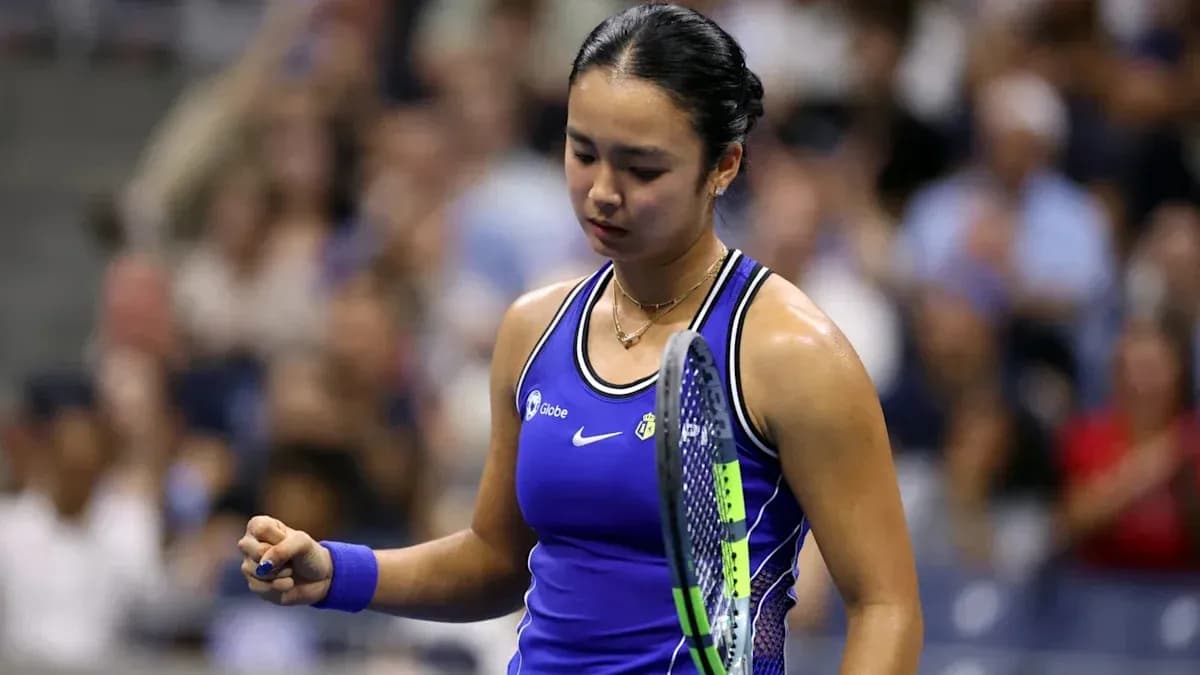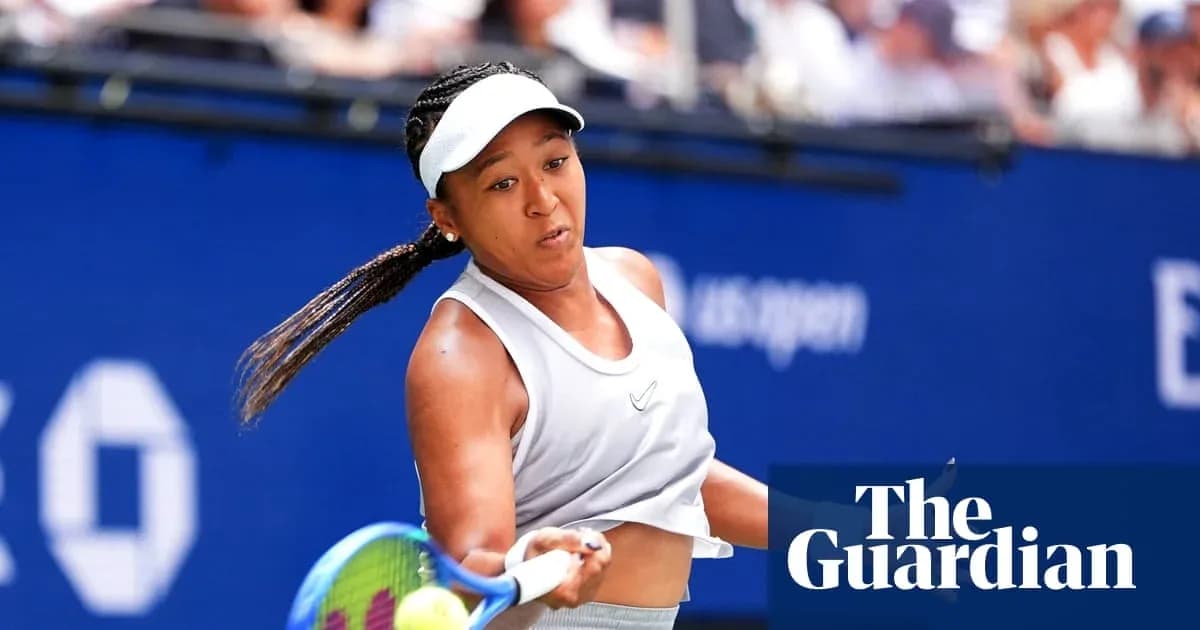
Naomi Osaka had the match in a headlock. Again.
For the second straight outing at this US Open, the two-time champion looked as if she might stroll into the next round without breaking stride. A set up, a break up on Katerina Siniakova, the evening drifting towards a routine return to the third round.
Then the tension walked in.
Osaka’s game, so clean and commanding early, tightened in the closing stages of the second set. The forehand that had been bullying Siniakova began to misfire. The first serve lost its bite. A match that had felt one-way suddenly opened up, and in a flash she was dragged into a deciding set.
That is where the story shifted.
Osaka reset, steadied, and then tore through the third set with the authority of a player who has lived these moments many times before, closing out a 6-2, 5-7, 6-1 win. The scoreline tells you she wobbled. The final set tells you she still knows how to slam the door.
A contender again
This North American hard-court swing has always been Osaka’s natural habitat. It gave her US Open titles in 2018 and 2020, and for the first time in years she arrived on these courts looking like a genuine grand slam threat again.
The difference this season is what came before it.
Instead of merely surviving clay and grass, Osaka produced the best results of her career on both surfaces: a run to the fourth round at Roland Garros, then the quarter-finals at Wimbledon. On grass, the surface that has so often exposed her discomfort, she delivered one of the standout wins of the summer by beating world No 1 Aryna Sabalenka in the fourth round.
She paid for that surge a week later. After reaching the final in Bad Homburg, fatigue finally caught up with her in the Wimbledon quarter-finals. Even so, the level she produced across that stretch was as sharp and aggressive as anything she has shown since her last major title at the 2021 Australian Open. She landed in North America with results behind her and a belief to match.
That belief, though, comes with a price. Expectations rise. So does the pressure.
Nerves, scars and the memory bank
Osaka’s opening two rounds in New York have carried that weight. Her first match, a 7-6 (6), 7-6 (3) win over Anastasia Zakharova, was a study in nerves. She earned breaks in both sets, lost them both, and had to claw her way through a pair of tight tie-breaks.
Against Siniakova, the nerves cost her more. This time she let an entire set slip.
The key, as she knows, is not perfection in week one. It is survival.
“I’m quite fortunate to have a lot of high-quality matches that went in my favour,” Osaka said afterwards. When a match stretches into a deciding set and the mind threatens to race, she goes back to one night in Melbourne. “Especially whenever I think of going into the third set and I need to regroup, I literally only specifically think of the [2019] Australian Open Final [a three-set win against Petra Kvitova]. Then it’s just like you can just pull from your memory bank for every certain situation that you need to get finished.”
Those scars and triumphs are her tools now. “I think that’s the best thing about being a more experienced player. You’ve been able to play so many different matches in different situations. Here, obviously, I’ve had a lot of good memories, and I hope to continue making them.”
In the third set against Siniakova, that experience showed. The errors shrank, the serve returned, the rallies shortened. She played like someone who has been here, suffered here, and still expects to win here.
More than forehands and serves
With Osaka, the conversation rarely stays on tennis alone.
Every major she has played this year has doubled as a runway. Walk-on outfits, match kits, bold reveals – each has generated its own wave of reaction. At this US Open, her look pays tribute to Allen Iverson, the NBA icon who reshaped the relationship between sport, culture and self-expression.
The response has been familiar. Applause and fascination from some corners, derision from others.
For a player as naturally shy and softly spoken as Osaka, the volume of criticism remains striking. She is painted by detractors as an attention seeker who should “stick to tennis”, her fashion choices held up as some kind of contradiction to the mental health struggles she spoke about in 2021. The context – that she is at a very different stage of her life and career half a decade later – often gets ignored.
Much of the backlash is not really about clothes. It tracks back to her outspoken anti-racist stance in the early 2020s, a line in the sand that some have never forgiven.
Osaka herself has grown into the noise. She is still introverted, still measured, but she has found in fashion a way to speak without a microphone. On court, she is an entertainer who hits tennis balls for a living. This is sport, not a morality play. Wearing an elaborate dress while ripping backhands is hardly an outrage.
A brutal road ahead
The draw, however, offers no sympathy.
Among the cluster of women with a realistic shot at the title, Osaka has landed one of the more unforgiving paths. Second seed Elena Rybakina looms as a possible fourth-round opponent, a heavyweight clash far earlier than either would ideally choose.
Osaka’s first task is simple and unforgiving: get there. Survive the nerves, sharpen the game, and hope that the clean, ruthless version of her hard-court tennis arrives in time for the biggest tests.
Swiatek smooth, Dart out, Auger-Aliassime falls
Elsewhere in New York, another former champion is quietly tightening the screws.
Iga Swiatek, seeded eighth and winner here in 2022, eased into the second round with a controlled 6-3, 6-2 victory over Nadia Podoroska. No drama, no detours, just the kind of efficient performance that has defined so many of her early-round appearances at the majors.
For British qualifier Harriet Dart, the night brought a harsh lesson. She was swept aside 6-2, 6-2 by 25th seed Marie Bouzkova, outplayed from the baseline and never allowed to settle.
The men’s draw delivered a surprise of its own. Félix Auger-Aliassime, the third seed and a semi-finalist here last year, battled dizziness and illness before falling 6-7 (5), 6-3, 6-2, 6-2 to Karen Khachanov. A contender on paper, undone by a body that would not cooperate.
The US Open has only just begun to shape its storylines. Osaka is still in the draw, still standing, but the real question hangs just ahead: can she turn these shaky early steps into the kind of hard-court surge that once made New York her stage?