Novak Djokovic has spent two decades turning Arthur Ashe Stadium into a stage for his defiance. On the first night session of this US Open, it became a theatre of his vulnerability.
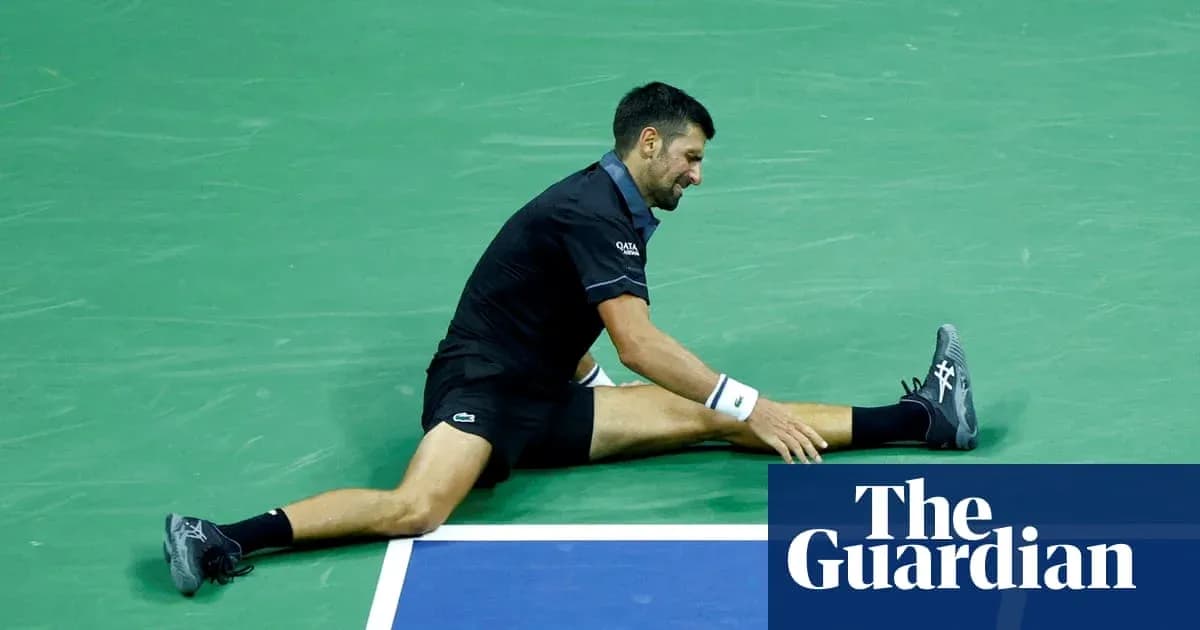
Three hours into his opening match, with the crowd restless and the New York humidity hanging thick under the closed roof, Djokovic walked briskly to the corner of the court, bent over the towel bin and vomited. Not once. Not for the last time. Just one scene in four hours and 36 minutes of visible, escalating distress.
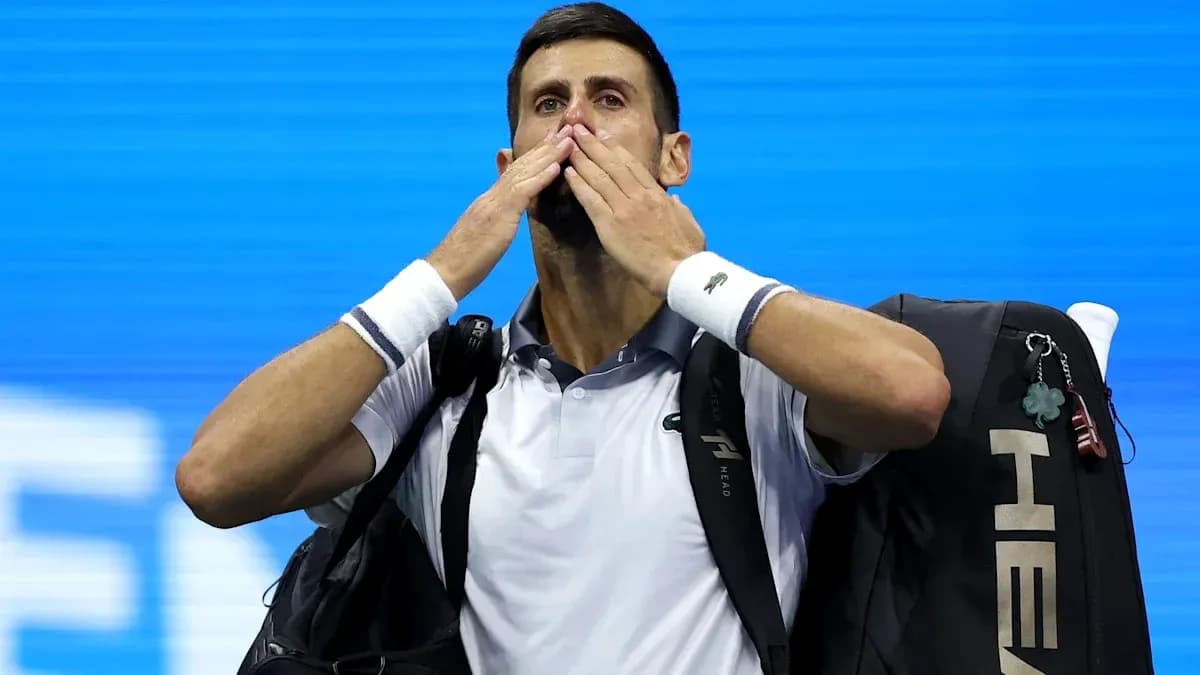
By midnight, the 24-time grand slam champion was in tears as he walked off beaten, 7-6 (5), 5-7, 4-6, 6-2, 6-1, by Mariano Navone in the first round. A record-extending 84th grand slam appearance had produced one of the most harrowing nights of his career.
A giant brought low
Djokovic does not lose early at majors. He simply doesn’t. This was only the third first‑round defeat of his grand slam life and the first since the 2006 Australian Open, when he was an 18‑year‑old still figuring out the tour. Now 39, he arrived in New York as the ultimate survivor, a man whose legend has been built on outlasting everyone else.
On Monday night, his body turned on him almost before the match had begun.
He broke Navone in the opening game, held for 2-0, and already he was gasping. Barely 15 minutes had passed. The Serb looked dazed, as if the air itself were suffocating. The conditions were not the brutal daytime extremes that have scarred previous US Opens, but the night-time humidity wrapped itself around him all the same.
From there, the pattern was relentless. Djokovic panting behind the baseline. Djokovic bent double, searching for breath. Djokovic staggering between points, vomiting into bins, fighting to stay upright. By the closing games, he was cramping, his movement jerky and uncertain, his balance gone. When it ended, he had nothing left.
This was not a random stomach bug. The warning had come in Cincinnati a couple of weeks earlier, when he laboured badly in similar evening humidity against another Argentinian, Thiago Agustín Tirante, and lost in three sets while his opponent looked fresh.
After that defeat, Djokovic spoke of a specific health condition that flares under heat and humidity. He repeated the explanation in New York.
“I think it was obvious that [it was] an awful feeling on the court for me,” he said. “It is something that I’ve been carrying, unfortunately, pretty much every match this year. You know, vomiting, throwing up, serious issue there, and then my whole body starts to collapse, basically cramping and pain, and the back just gave up in the end, and shoulder, and I couldn’t close it out, break up in the fourth, but just struggled all the way since the fourth game of the match. And again, don’t want to take too much out of his win. Congrats to him; he’s a nice guy, fighter, but you know, I didn’t enjoy myself.”
A dream draw turns into a nightmare
On paper, this was the kind of first-round assignment a great champion welcomes. Navone, 25, has rebuilt himself impressively into the top 50 after flirting with a slide out of the top 100, but almost all of his best work has come on clay. On a hard court, under lights, with the New York crowd in full voice, this looked like a manageable opening step for Djokovic, a chance to start fast and bank energy for the fortnight.
Instead, the drama arrived early and refused to leave.
Midway through the first set, Djokovic started to cough and splutter between points, repeatedly bending over in discomfort. At 4-3, rain forced the organisers to close the Arthur Ashe roof. The atmosphere thickened. The match turned into an ordeal.
From that moment, the contrast between the two men was stark. Navone moved freely, his shirt barely clinging with sweat. Djokovic drenched himself in ice towels, draping them over his neck at every changeover. At 5-4 in the first set, the doctor handed him pills as he tried to steady himself.
Yet even as his body betrayed him, his serve did not. For long stretches he served superbly, using first-strike tennis to cling to the match, to steal time, to avoid the kind of rallies his legs could no longer tolerate. It was stubborn, desperate, vintage Djokovic in everything but physical capacity.
The idol and the apprentice
For Navone, this was not just a breakthrough win; it was a surreal collision of past and present.
The Argentinian has long idolised Djokovic. When the draw came out, fans quickly unearthed old posts from his X account, showing a 13‑year‑old Navone in 2014 repeatedly cheering on the Serb. His parents had not even planned to come to New York this year. Once they saw the draw, they scrapped their Caribbean holiday and flew to Flushing Meadows instead.
On the biggest night of his career, Navone did not flinch. He played the match in the image of his hero: chasing down everything, refusing to yield an inch, hitting with depth off both wings, and dragging rallies into the kind of physical battle that would once have suited Djokovic perfectly.
Now, it suited only one man.
Djokovic, straining for air and stability, could not handle the extended exchanges. Navone kept making him hit one more ball, then another, and another again. The Serb’s competitive instincts kept him in the fight. He vomited repeatedly, then somehow steadied to win the second and third sets and edge ahead with a break in the fourth. For a fleeting spell, the old script seemed ready to reassert itself: Djokovic, suffering, finding a way.
Then the legs went.
By the fourth set, his movement dulled, his first serve lost its edge, and the points he had been stealing started to slip away. Cramps crept in. The rallies he once relished became ordeals he could not survive. Navone sensed it, pressed harder, and the scoreline swung brutally in his favour: 6-2, 6-1 to close.
Djokovic’s resistance finally broke. So did he. He left the court in tears, a 39-year-old giant forced to confront a question that no number of grand slam titles can silence: how long can even the greatest keep fighting a body that no longer obeys?