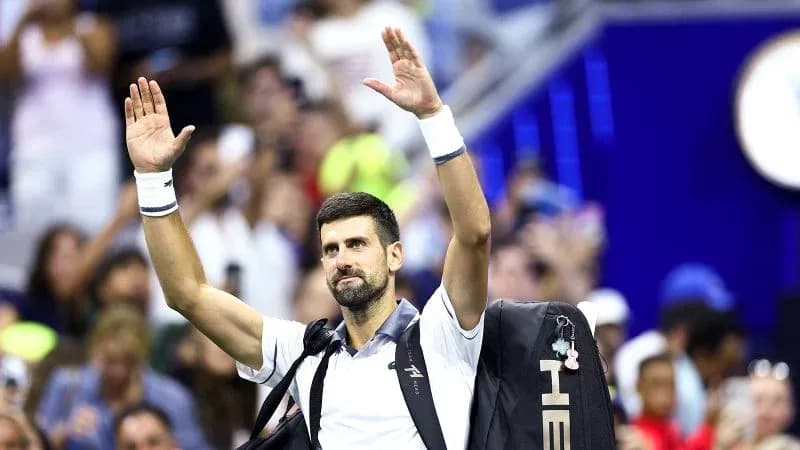
Novak Djokovic walked into Arthur Ashe Stadium on Sunday night chasing routine. A first-round win. A familiar rhythm. Another step in a Grand Slam he has ruled for a generation.
He walked out four hours and 36 minutes later with something he has not felt at a major in nearly 20 years: the sting of an opening-round exit and the unmistakable sense that the clock is finally, brutally, catching up.
On the 21st anniversary of his US Open debut, Djokovic lost in the first round in New York for the first time, beaten 7-6 (5), 5-7, 4-6, 6-2, 6-1 by Mariano Navone, a 25-year-old Argentine who grew up idolizing him and then, under the lights, dismantled him.
It was the longest opening match of Djokovic’s Grand Slam career. It may yet prove one of the most consequential.
A legend diminished, a newcomer unafraid
From the start, something was off.
Djokovic, the No. 4 seed and owner of 24 major titles, jumped to 3-0 and 4-1 in the first set, the kind of early stranglehold that has broken opponents for years. This time, it slipped away. He bled errors, 70 unforced in all, and for the first time since 2006 at this tournament, he lost a first-round opening set after leading by a double break.
Navone did not blink. He did not bow to the name on the other side of the net or the history wrapped around it.
“(It) was very tough for me because you are playing with the ‘GOAT’ on this court,” Navone said on court, still processing the scale of what he had done. “For sure it’s the best thing I’ve had on court. This is an amazing court and the biggest stage. It’s amazing, the way we play. I mean, five sets. … I’m very happy. I don’t know. What can I say?”
He had said enough with his racket.
Earlier this year, Navone claimed his first ATP singles title. On Sunday night, he claimed his first five-set victory, and it came against the man whose posters once hung on his wall.
A body that would not cooperate
Djokovic’s defeat was not just tactical. It was physical. It was raw.
At various points he appeared to throw up. He clutched at his left foot, the telltale signs of cramping flashing through his movement. A doctor brought him pills. His lower back received treatment during a medical timeout between the fourth and fifth sets. He grimaced after routine shots that, for most of his career, have flowed from him with mechanical certainty.
The effort to hide it didn’t last long. The wear and tear of sickness and soreness sat on his shoulders, heavy and obvious. The timing was off. The legs were late. The aura, that suffocating Djokovic presence, flickered.
His wife, Jelena, watched with a worried stare from the stands as the match twisted and turned. There were glimpses of the old menace: the second-set surge, the clenched fist, the familiar roar. In the third, he cupped his hand to his ear, asking the crowd to rise with him, and they did. For a brief stretch, it felt like the script would revert to type: Djokovic finds a way, the challenger fades.
Navone refused the role.
The turning of a match – and maybe a page
Djokovic took the second set. Then the third. The night seemed to be bending back toward the player who has built a career on bending majors to his will.
Then came the fourth.
After firing a shot wide, Djokovic landed awkwardly and dropped his racket, his body language sagging with it. The set slid away. He all but surrendered it, saving what he could for a deciding fifth that has so often been his personal kingdom.
This time, there was nothing left. No 43rd career five-set win. No late escape.
Navone surged through the decider as Djokovic’s resistance crumbled, the scoreline tilting brutally to 6-1. The Argentine’s composure never wavered; if anything, it grew stronger as Djokovic’s game frayed.
“It’s unbelievable,” Navone said. “This means a lot. It’s a dream come true.”
For Djokovic, it extended a nightmare run.
He had arrived in New York on the back of a first-round loss at the hardcourt tuneup in Cincinnati, his first match since losing to world No. 1 Jannik Sinner in the Wimbledon semifinals. He had hoped the early Cincinnati exit would buy him recovery time, a chance to sharpen and reset. Instead, it underlined a new reality he himself acknowledged: the first match at any tournament has become a hurdle, not a warm-up.
On Sunday, he did not clear it.
An uncertain road ahead
This defeat was his earliest exit at a Grand Slam since the 2006 Australian Open. Then, he was a teenager learning the tour. Now, at 39, he is the most decorated men’s player in history, staring at questions that no number of titles can answer.
Was this his final match at the US Open? His last at any major?
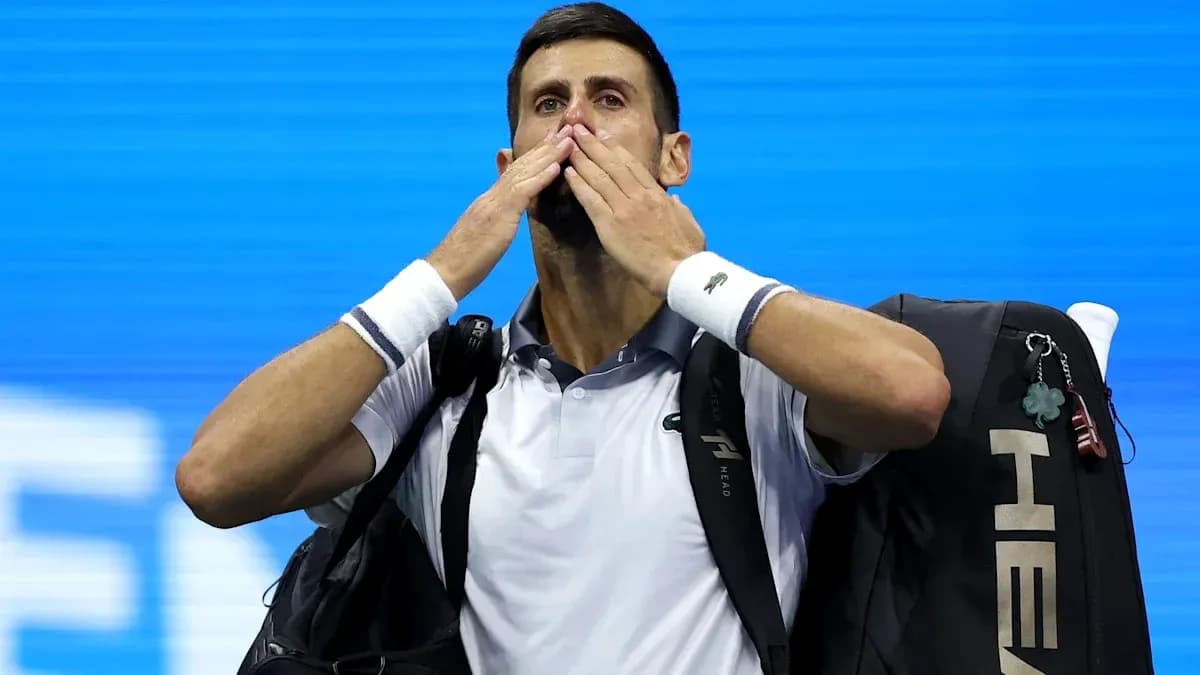
No announcement came. No farewell wave. Just a long, punishing night that ended minutes before midnight, with Djokovic leaving the court beaten by a player who once only dreamed of sharing it with him.
The numbers will record a five-set epic and a first-round shock. The images will tell a sharper story: a great champion grimacing through pain, fighting his own body, and a younger opponent stepping through the gap that opened.
At some point, the era of Novak Djokovic at the Grand Slams will close. On Sunday in New York, it felt, for the first time, like the sport had caught a glimpse of how that ending might look.