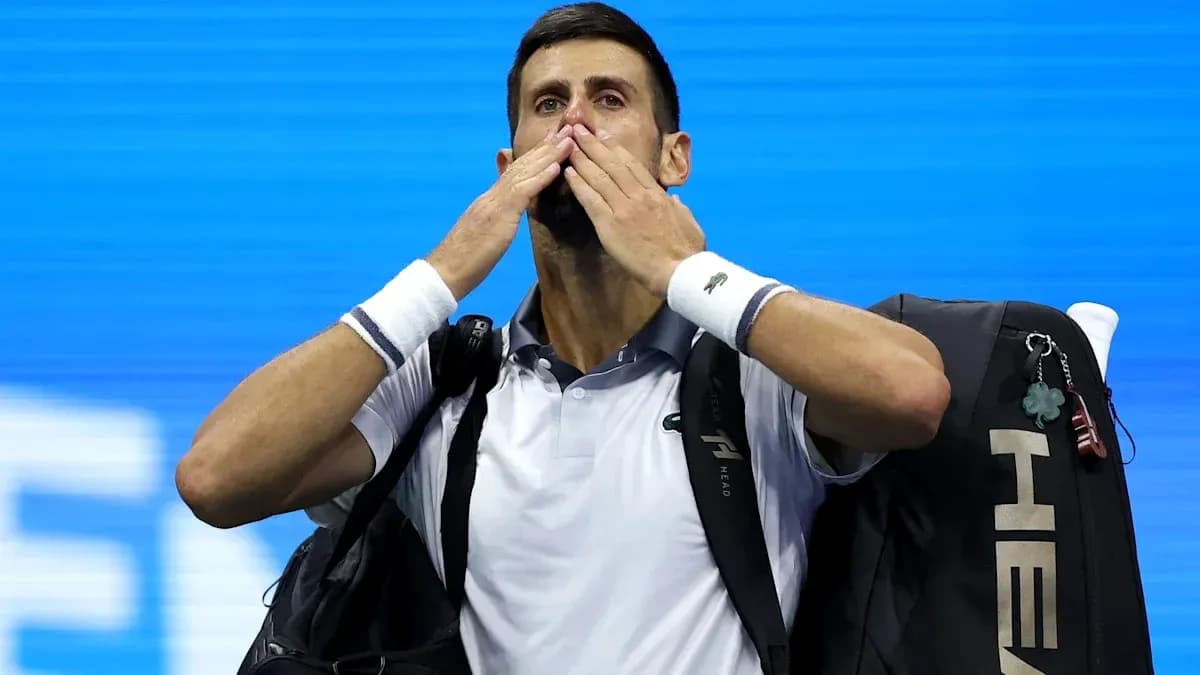
Novak Djokovic walked into Arthur Ashe Stadium on Sunday night looking strangely flat. By the time he walked out, waving, drawing a heart in the air and signing autographs, he had suffered one of the most jarring defeats of his career.
On the 21st anniversary of his U.S. Open debut, the 24-time major champion was pushed out in the first round by Mariano Navone, a 23-year-old Argentine without a single ATP Tour title to his name. The scoreline – 7-6(5), 5-7, 4-6, 6-2, 6-1 in 4 hours, 36 minutes – tells only part of the story. The rest was written on Djokovic’s face, in his labored movement, and in the towel bin where cameras caught him throwing up. More than once.
A Giant Looks Human
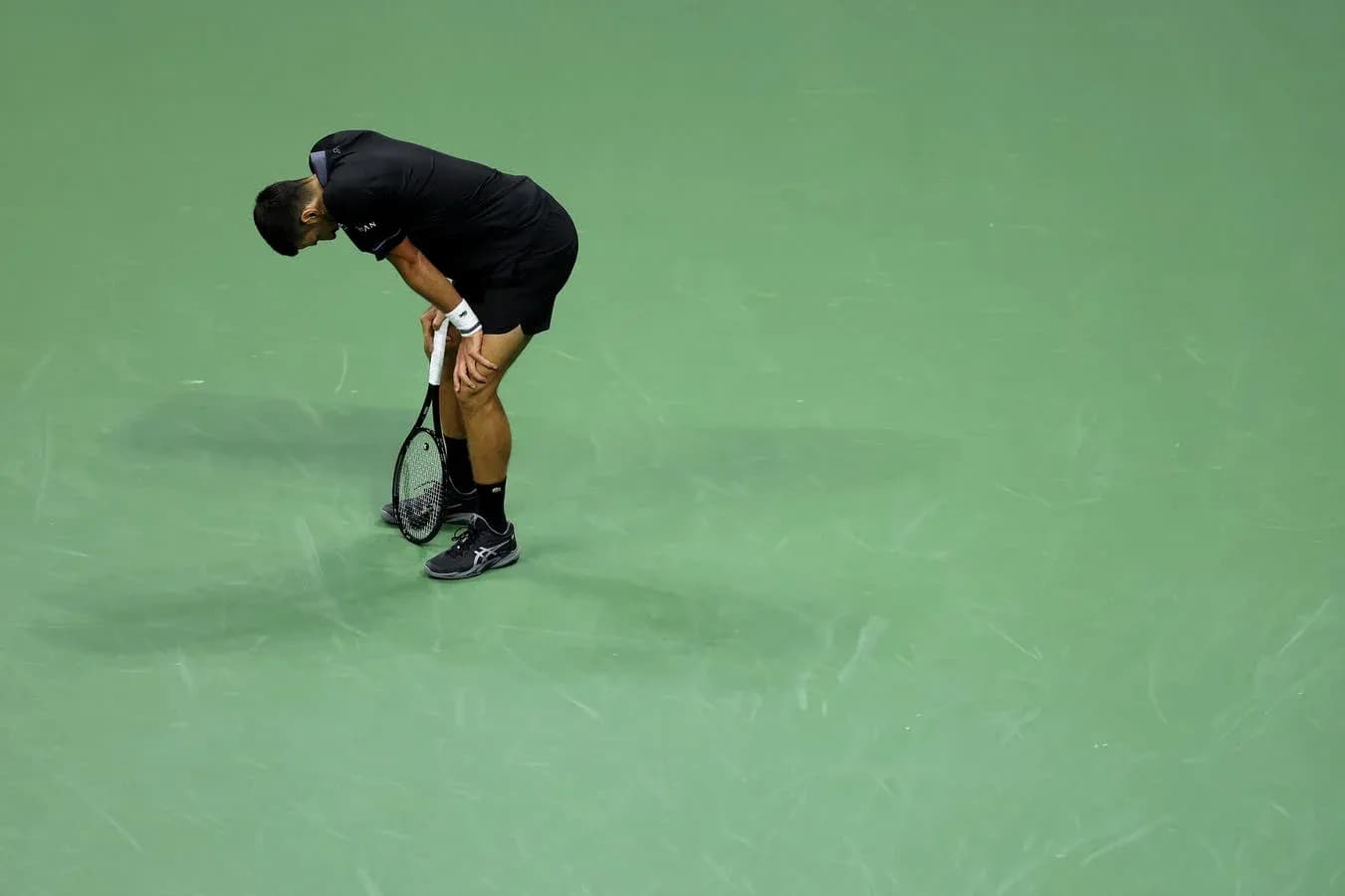
Djokovic, 39, looked distressed from the opening games. The familiar intensity, the constant dialogue with the crowd, the defiant body language – all missing. He moved heavily, often expressionless, and for long stretches barely acknowledged the packed Ashe stands under the closed roof.
He reached for an inhaler. He took tablets on changeovers. He has spoken before, after his first-round loss in Cincinnati, of “dealing with [a health issue] for many years now.” On this night, that struggle was brutally visible.
“This is not much fun for him tonight at all,” Chris Fowler said on ESPN, as Djokovic stretched his legs and back mid-game, fighting off what looked like cramping and stomach distress.
John McEnroe, watching a man he has long called the ultimate competitor, saw something else: vulnerability.
“I think it actually turns out better for him because it shows he’s human,” McEnroe said on air. “It gives you an even greater sense of how amazing his accomplishments were.”
Djokovic hadn’t lost in the first round of a major since 2006, back when he was still just a promising youngster trying to carve out a place in the sport. On Sunday, his wife Jelena and their children, Stefan and Tara, sat courtside and watched him stagger through one of the roughest nights of his professional life.
Navone’s Dream, Djokovic’s Ordeal
Across the net, Navone played the match of his life. Ranked No. 49 in the world, he grew up idolizing Djokovic. Now he was trading blows with him on the biggest stadium in tennis, under the lights, with rain hammering the closed roof.
“This is [an] amazing court on the biggest stage,” Navone said in his on-court interview. “It’s amazing the way we played, I mean five sets against the GOAT is nothing to every day. I’m very happy, what can I say.”
He knew exactly what he’d just done.
“Novak means a lot for me,” he added. “It was very tough for me because you’re playing with the GOAT on this court here and he is here every day in this court when he plays the U.S. Open. This means a lot, it’s a dream come true. It’s certainly 100%. Now I have to recover, I think it’s almost 12 o’clock, we have to go to sleep.”
The Argentine’s game was simple but fearless: heavy, consistent groundstrokes, solid serving, and a refusal to shrink from the moment. He stayed present as Djokovic’s level swung wildly with his physical condition.
Momentum Swings and a Body Breaking Down
Djokovic actually had the match in his hands early. He led 4-2 in the first set, seemingly settling into a familiar script. But the energy drained quickly. Navone clawed back and snatched the tiebreak, 7-5, as Djokovic’s footwork slowed and his shoulders sagged.
The Serb responded with the kind of surge that has defined his career. In the second set, Navone held for 5-4 with a 100-mph ace, but Djokovic dug in. He broke at love for 6-5, then held at love to level the match. For a few games, the old aura returned.
“And now all of a sudden, he’s starting to look like Novak Djokovic,” McEnroe said, sensing a familiar turn.
The third set brought the strangest contrast of the night. Cameras caught Djokovic throwing up in the towel bin, prompting “Boot and rally” jokes from James Blake and the ESPN crew. Yet on serve, he was untouchable. He didn’t face a single break point in the set, finally breaking Navone for 5-4 when the Argentine netted a forehand on break point.
Only then did Djokovic raise his hand to his ear, asking the crowd for noise, for energy, for one more push. He closed out the set 6-4. From two sets to one up, even in visible distress, it felt like he might grind his way through as he has so many times before.
The match turned again in the fourth. Djokovic was shown vomiting yet again. His movement stiffened. He bent over, stretching his legs and back, trying to coax his body through another hour. The points grew shorter, his errors more frequent.
Navone sensed the opening and pounced. He broke for 4-2 when Djokovic sailed a forehand wide and ran away with the set, 6-2. For perhaps the first time all night, the upset felt likely rather than merely possible.
The Fifth Set and the End of an Era Stat
The decisive set began with Djokovic already on the edge. Serving at 0-1, he fell behind 0-40. He saved two break points but not the third, as Navone ripped a passing shot that Djokovic, lunging forward, couldn’t reach. The Argentine led 2-0. Ashe buzzed, half in disbelief, half sensing history.
Djokovic held for 1-3, and the crowd tried to lift him, roaring as he sat down, his eyes glassy, on the changeover. He looked close to tears, fighting his body and the scoreboard at the same time.
There would be no final escape. Navone, remarkably composed, kept his level high as Djokovic’s collapsed. The fifth set raced by, 6-1, the final games playing out like a slow, painful farewell to a match he simply could not win in his condition.
When it ended, Djokovic didn’t rage or argue. He waved. He sent the now-familiar heart signal to all corners of Ashe. He signed autographs. A historic loss, handled with the grace of a man who knows his place in the sport is secure, even as his body betrayed him on one more humid New York night.
The defeat also delivered a stark statistical marker. According to ESPN, this is the first time since Roland Garros 2003 that none of the sport’s “Big 3” – Djokovic, Roger Federer, Rafael Nadal – will reach the second week of a major. For two decades, at least one of them has been a fixture deep into every slam. That streak is gone.
What Comes Next
Djokovic is a 10-time U.S. Open finalist, losing six of those championship matches. His last major title here came in 2023, yet he arrived this year still chasing a record 25th major, three years on from that triumph, still pushing against time and history.
He remains a player capable of beating world No. 1 Jannik Sinner, as he did en route to the Australian Open final earlier this season, and of making the semifinals at all four majors in a single year, as he did last year. The pedigree hasn’t changed.
What has changed is the margin for error. On Sunday night, under a closed roof and under the weather, that margin vanished. Navone seized his dream. Djokovic walked off into an uncertain stretch of his career, his next move – and his next great run – no longer a given.