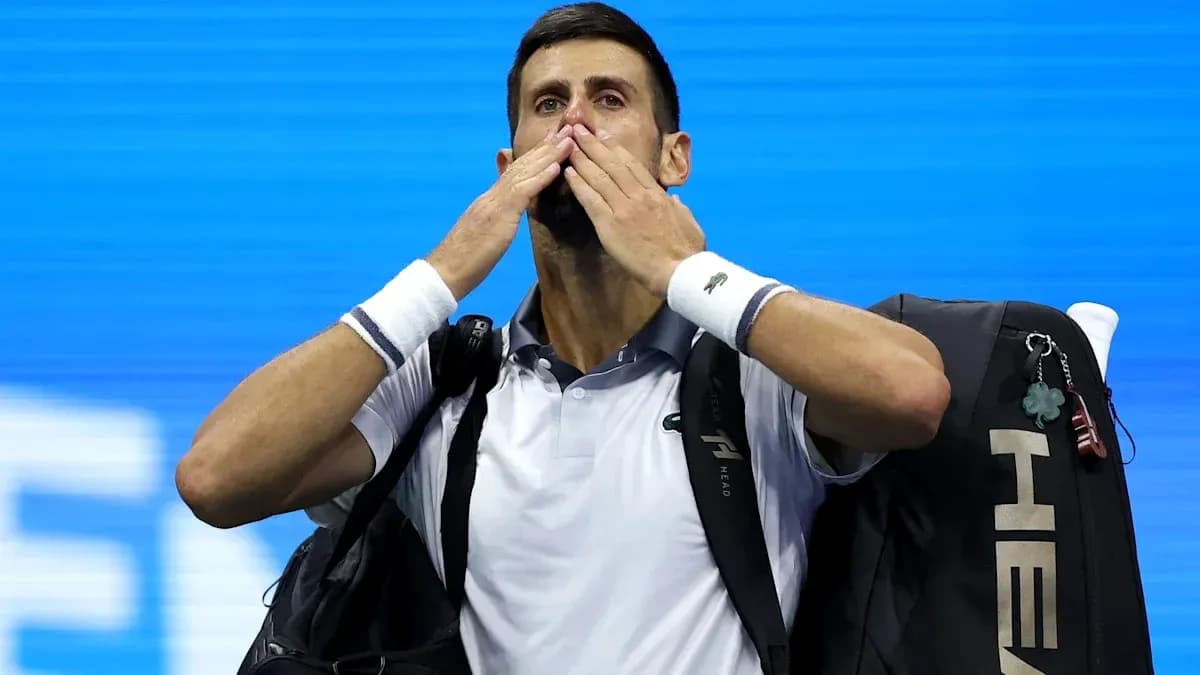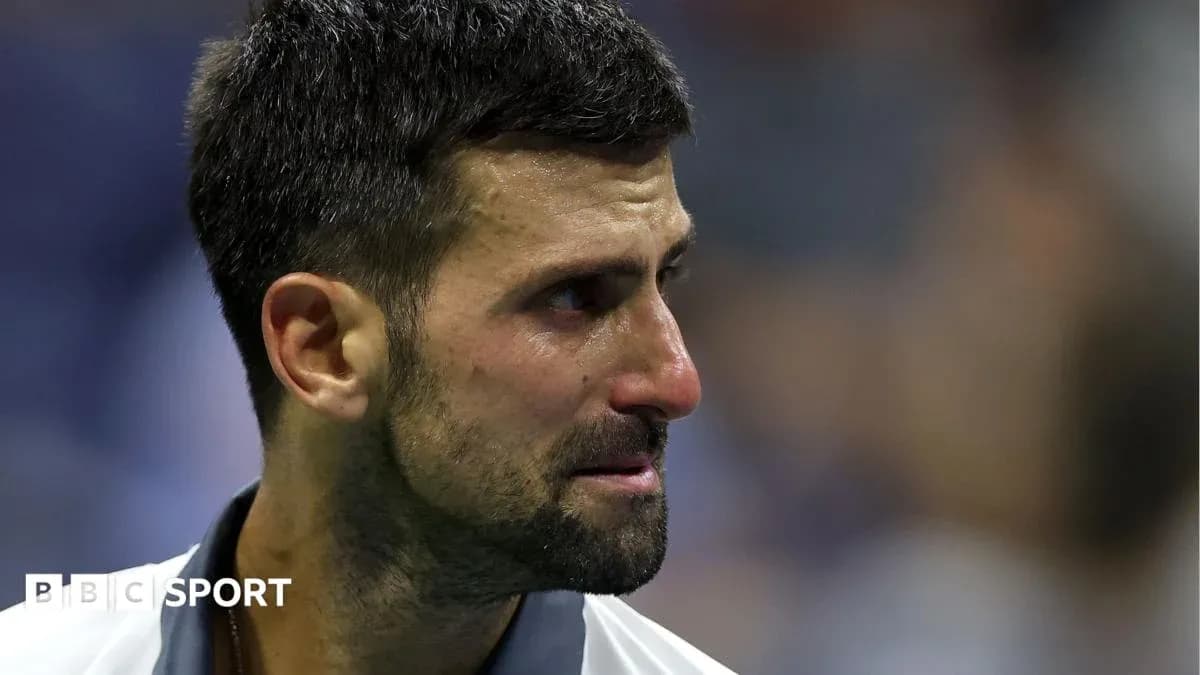
Novak Djokovic walked into Arthur Ashe Stadium chasing history. He walked out in tears, bent by the night, the heat and a 25-year-old Argentine who refused to blink.
On a draining, unsettling evening in New York, the 24-time Grand Slam champion fell 7-6 (7-5) 5-7 4-6 6-2 6-1 to Mariano Navone in the US Open first round, a result that felt less like an upset and more like a turning of the page.
At 39, Djokovic has made a career of defying time. On this night, time hit back.
A giant unravels
The warning signs came early, buried beneath a familiar script. Djokovic broke at the first opportunity, surged 2-0 ahead and looked set to impose the usual order on a player ranked 49 in the world and with no record beyond the second round at Flushing Meadows.
Then the New York humidity wrapped itself around him.
One gruelling rally seemed to drain the life out of the former world number one. His movement dulled. The pop on the serve dipped. He started to look human, and not in the romantic, indomitable way that has defined so many of his escapes, but in the way of a 39-year-old body being pushed to its limits.
By the ninth game, Djokovic was calling for the doctor, taking tablets, staring into the middle distance between points. His shoulders sagged. His feet grew heavy. The tie-break became a test of survival, not dominance.
Navone sensed it. Calm, compact, unflustered, he held his nerve through a first set that lasted an hour and 13 minutes, then snatched the breaker 7-5. Around Arthur Ashe, a strange silence settled. This wasn’t the roar of a crowd smelling an upset; it was the hush of a stadium watching a legend struggle to stand upright.
The old fight, one more time
Djokovic has built an empire on nights like this. Cramping, trailing, jeered, doubted – and then somehow finding a way. For a while, it looked like he might script another escape.
The roof closed, the air cooled and with it came a flicker of the old defiance. Djokovic began to move a little lighter, to growl at himself, to glare at his box. He created all the break points in a finely balanced second set, missed a couple of chances early, then dug his heels in at 5-5.
He broke for 6-5 and, with a familiar steel, served out to love. One set all. The crowd rose, sensing the comeback they had paid to see. Djokovic pumped his fist. The match, and maybe the myth, had life again.
In the third set, his body language sharpened. He barked at errors, chased balls that had looked out of reach an hour earlier, whipped the forehand with more conviction. At 3-3, though, the legs betrayed him again. He wobbled between points, eyes fixed on the court, as if willing his body to cooperate.
Navone blinked first in that passage, throwing in a poor service game. Djokovic pounced, broke for 5-4 and then held to take a two-sets-to-one lead. These are the positions from which the prime Djokovic closed the door, even when limping, even when gasping for air.
This time, the door swung back on him.
When the body says no
The fourth set turned quickly and brutally. Whatever reserves Djokovic had found under the roof evaporated. The rallies shortened, not by design but by necessity. His serve lost bite, his groundstrokes lost depth. The Serb’s shoulders drooped between points; the trademark elastic defence simply wasn’t there.
Navone, to his immense credit, didn’t flinch. He didn’t overreach, didn’t chase highlight shots. He stayed solid, made balls, moved Djokovic from side to side and watched the four-time US Open champion struggle to respond. The Argentine ran away with the set 6-2.
By now, concern had replaced anticipation in the stands. Djokovic, at times, looked distressed. At one changeover he vomited into a towel bin, a stark, uncomfortable image of a champion’s body rebelling on one of the sport’s grandest stages.
The fifth set was not a contest. It was a slow, painful unraveling. Navone surged to 6-1, his composure never cracking, his level never dropping. Djokovic’s legs no longer chased lost causes. His eyes told the story: he knew this one was gone.
Tears in the night
When the final point landed out, Djokovic managed something few could in that moment: he smiled. He walked to the net, embraced Navone and congratulated him with the grace and class that have long underpinned his ruthless edge. For Navone, this will stand as one of the defining wins of his career.
For Djokovic, it was something else entirely.
As he left the court, the façade slipped. The tears came again. He trudged towards the locker room, head bowed, the roar that has followed him for two decades replaced by a subdued murmur. This was his first opening-round defeat at the US Open. His first first-round loss at any Grand Slam since 2006.
The numbers matter. So does the context. This defeat halts, for now, his pursuit of a standalone 25th major singles title, leaving him still tied with Margaret Court. More than that, it adds weight to the question that has hovered over him for the past two seasons: how long can he keep asking his body for one more miracle?
On this heavy New York night, the answer was brutally simple.