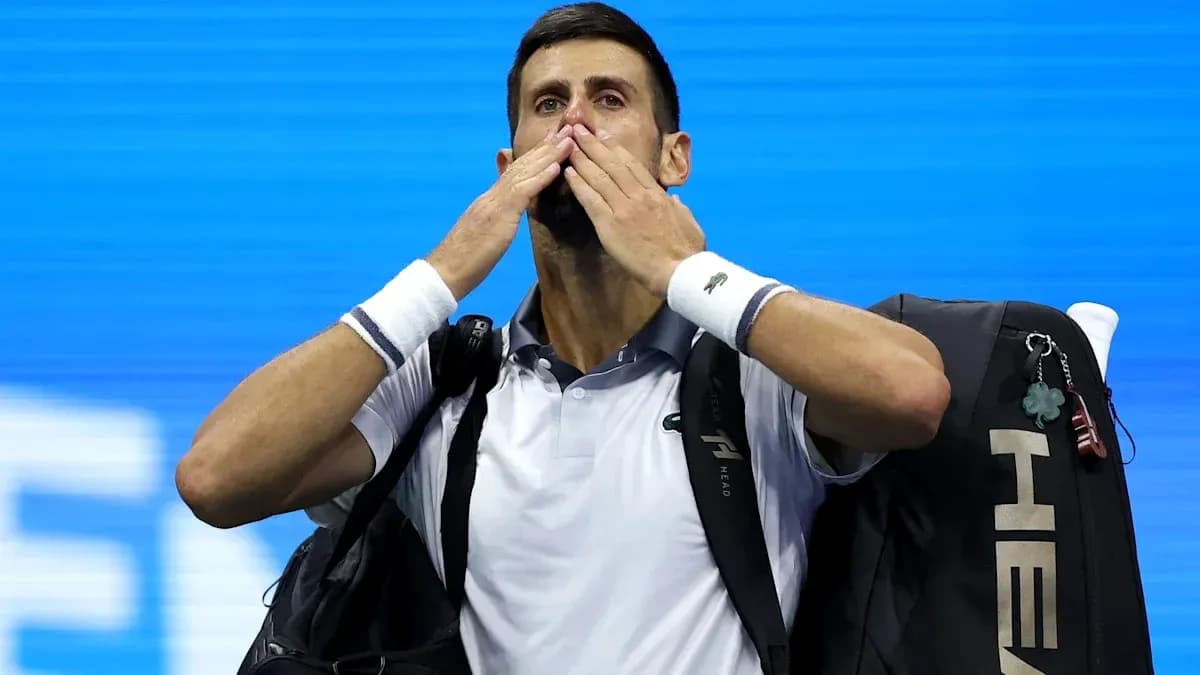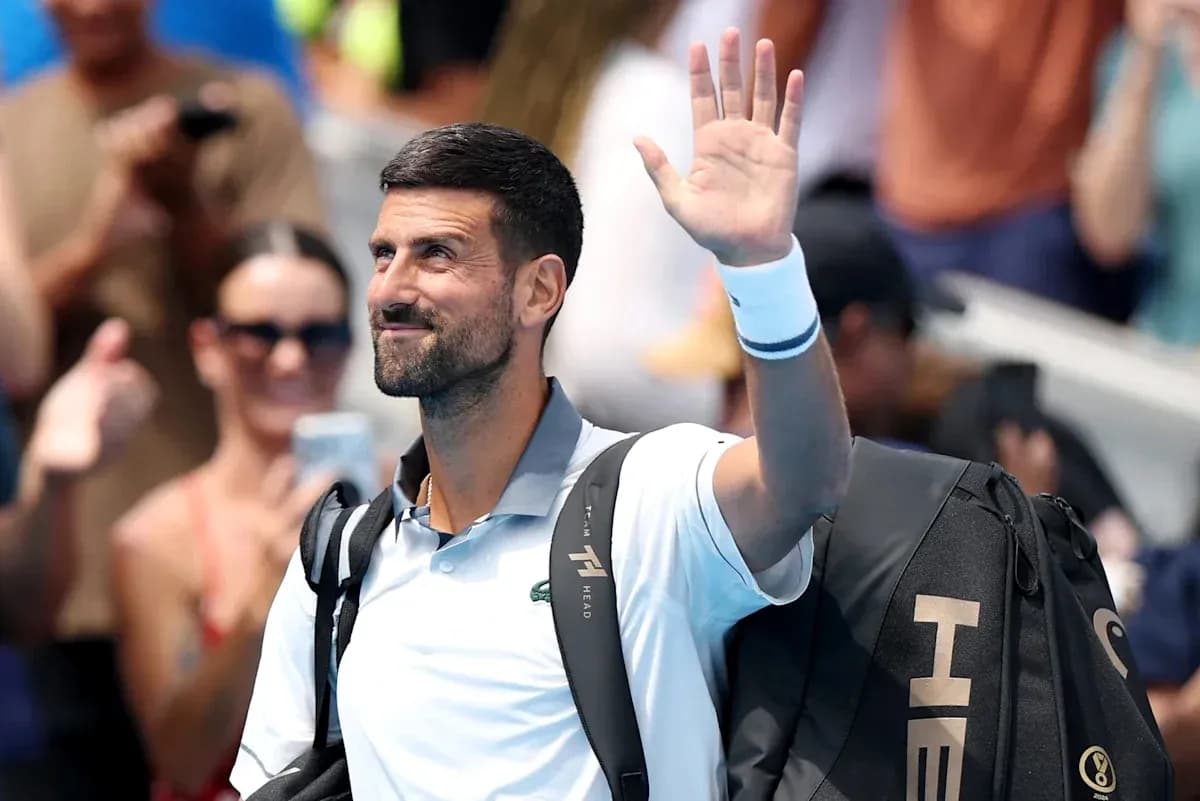
Novak Djokovic walked into Flushing Meadows chasing history. He walked out with one of the most jarring defeats of his career and a season suddenly hanging in the balance.
Beaten in the first round of the 2026 US Open by Mariano Navone, the world number 48, Djokovic suffered a result that cut far deeper than a routine early exit. This was supposed to be the 39-year-old’s last realistic shot at a 25th Grand Slam title. Instead, it became his earliest departure at a major since 2006 and the full stop on a remarkable streak of 77 consecutive first-round wins at Grand Slams.
The numbers tell you how rare this is. The feeling around the tour tells you how seismic.
An era slips out of the top ten
The loss did not just bruise Djokovic’s pride; it ripped through the rankings. With the defeat in New York, he slid out of the ATP top ten for the first time since 2018, dropping to 12th in the world. That change carried a wider symbolic weight: for the first time since 2002, none of Novak Djokovic, Roger Federer or Rafael Nadal sits inside the top ten.
A generation-defining axis has finally shifted. The rankings page, once dominated by the same three names for nearly two decades, suddenly looks unfamiliar.
For Djokovic, the slide comes at a delicate moment. He has been managing his schedule carefully in the twilight of his career, picking his spots, prioritising the Slams and the biggest stages. That approach worked magnificently in the past. This time, the margin for error has narrowed.
A race against time for Turin
The implications stretch beyond prestige and nostalgia. They run straight into the race for the ATP Finals.
Djokovic is 12th in the ATP rankings, but more importantly, he now sits 15th in the Race to Turin following his early US Open exit. Only eight men qualify for the season-ending showpiece. Right now, the eighth and final spot is held by Daniil Medvedev on 2,780 live points.
Djokovic is stuck at 2,330.
Most of those points came from deep runs earlier in the season: a charge to the Australian Open final and a semifinal showing at Wimbledon. Strong, consistent results by any normal standard. For Djokovic, they are no longer enough.
A record seven-time champion at the ATP Finals, he suddenly finds himself in danger of missing out for only the second time since he first qualified in 2007. The only previous absence came in 2017. The tournament has long felt like his private domain; now he is on the outside, trying to fight his way back in.
Shanghai, Paris, and a thin path ahead
The calendar does offer him a route. It is just a narrow one.
Two Masters 1000 events remain: Shanghai and Paris. Each title is worth 1,000 points. Djokovic knows these tournaments as well as anyone, and he will likely need at least one big run, if not a trophy, to claw his way into the top eight.
He is also scheduled to return to the China Open during the Asian swing. That event carries 500 points for the champion. On paper, it is another chance to close the gap. On court, it is another high-pressure week in a season that has already demanded plenty from a 39-year-old body.
And he cannot do it alone. Even if he hits form again, he needs help. Players above him in the race must falter, stumble, or simply cool off. Medvedev and the rest of the pack control more of Djokovic’s fate than he would like.
The margin is clear. The clock is loud.
The shadow of past dominance
All of this feels even more surreal when set against Djokovic’s history at the ATP Finals.
He has not appeared at the year-end event for the past two seasons, a consequence of a deliberately shortened schedule as he manages the final stretch of his career. The last time he did show up, in 2023, he turned Turin into a personal showcase.
That year he capped one of his finest campaigns by beating both Carlos Alcaraz and Jannik Sinner on his way to a seventh ATP Finals crown. It was his second straight title at the event, coming 12 months after he defeated Casper Ruud in the 2022 final. At his peak, he did not just win the tournament; he owned it, lifting the trophy four years in a row from 2012 to 2015, a record that still stands alone.
Those memories now sit in sharp contrast to the current reality: a champion chasing, not defending; a perennial favourite trying simply to qualify.
The story of Novak Djokovic’s 2026 season is no longer about how many more titles he can stack on an already absurd legacy. It has become something starker, more human: can one of the game’s greatest problem-solvers find one last answer in Shanghai, in Beijing, in Paris, to earn himself a ticket back to the stage that once felt like his home?