Novak Djokovic has flirted with sporting immortality for so long that even his failures have usually felt temporary, just another plot twist before the inevitable resurgence.
Sunday in New York did not feel like that.
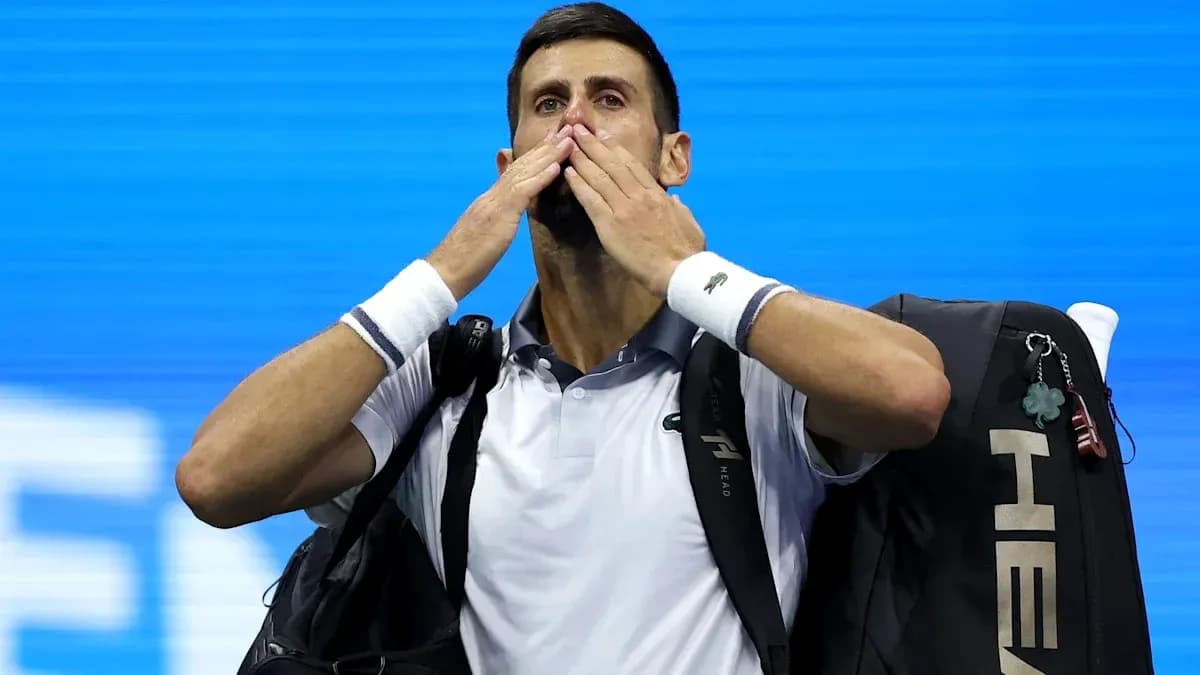
On a suffocating afternoon at the US Open, Djokovic’s body finally said no. His first-round defeat to Mariano Navone was his worst grand slam result in two decades, but the scoreline barely scratched the surface of what unfolded on Arthur Ashe. This was not just a great champion losing a tennis match. This was a great champion looking, for once, unmistakably human.
His movement, once the gold standard of the sport, looked heavy. The familiar elastic spring in his legs had gone. The shoulders that had carried 24 major titles slumped between points. At times he could barely stand upright, let alone summon the defiance that has defined his career.
This defeat felt different. It felt final in a way previous setbacks never quite did.
Only seven months ago, Djokovic was in the Australian Open final, still the man most likely to spoil the coronation of Carlos Alcaraz and Jannik Sinner. In July, he was back in the Wimbledon semifinals, again nudging close to that record-breaking 25th major. Even at 39, he seemed to live in that rare space where age is an obstacle, not a barrier.
Now that dream looks as distant as it has ever been.
Djokovic has not been a week‑in, week‑out tour regular for some time. He has become a grand slam specialist, picking his spots, managing his schedule, using smaller events as tune-ups rather than targets. It has been a clever, calculated way to stretch his prime beyond normal limits.
But there are some battles no schedule can win.
Earlier this month, Djokovic revealed he has been dealing with an underlying health issue, one that flares in heat and humidity. In New York, under the weight of the conditions and the occasion, it roared back. He vomited between points. His legs cramped. His back and shoulder seized. By the end, he was barely able to move.
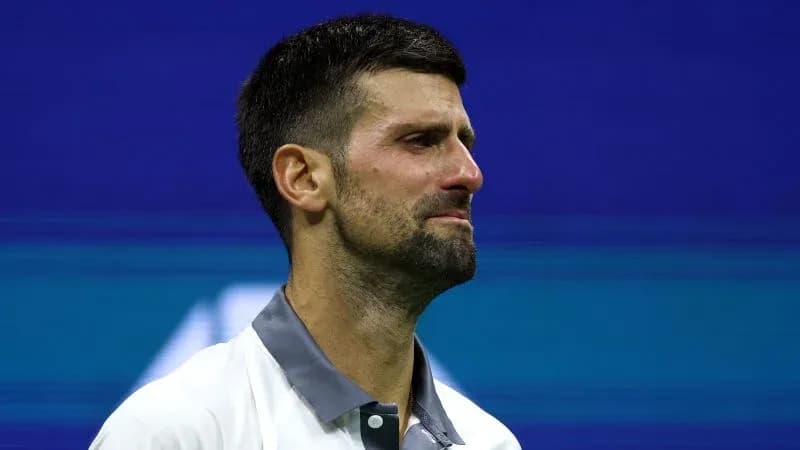
The tears in the final set told their own story. This was not frustration at a bad day, or anger at missed chances. It looked like a man confronting the possibility that his body might finally be beyond negotiation.
“I didn’t enjoy myself,” he admitted afterwards. “I think it was obvious that it was an awful feeling on the court for me.”
He did not sugarcoat the problem.
“It’s something that I’ve been carrying, unfortunately, pretty much every match this year: vomiting, throwing up, a serious issue there.
“Then my whole body starts to collapse, basically cramping and pain. Yeah, the back just gave up in the end and shoulder.”
When a player like Djokovic talks about his body “collapsing,” it lands differently. This is an athlete who has built an empire on resilience, on bending his body and mind to impossible demands. For years, he has turned pain into fuel and pressure into oxygen. In New York, pain simply won.
He left the tournament saying he needed time to think about his future, to decide whether he can keep putting himself through this. After what the world saw on Sunday, how could retirement not be in his thoughts?
Yet this is Djokovic. The same man who has spent a career turning doubt into motivation. He has spoken before about wanting to keep playing until the Los Angeles Olympics in 2028, signing off after one last campaign in national colours. After Sunday, that timeline looks wildly ambitious. But history urges caution before writing his sporting obituary.
In 2017, an elbow injury had him drifting, his aura punctured, his dominance questioned. Some wondered if the era was over. By the end of 2018, he had two more grand slams in his pocket and the No. 1 ranking back under his control. The retirement narrative has stalked him for years; time and again he has sent it packing.
Even this season, he has found ways to remind everyone who he is. That five-set epic against Sinner at the Australian Open was classic Djokovic: stubborn, strategic, unyielding. The kind of match that makes you think he can play this game forever.
But the facts are harder to ignore now. He has not won a major since 2023. His great rivals Roger Federer and Rafael Nadal both lifted their last slams at 36. Djokovic is 39, operating in an era where the physical demands have only intensified and the next generation is no longer emerging — it has arrived.
For him to consistently beat players like Alcaraz and Sinner over five sets, seven times in two weeks, he will need more than brilliance. He will need good days from his body, kind draws, forgiving conditions. He will need luck in a way he never used to.
That is why Sunday felt so heavy. It may yet prove another false alarm, another chapter in the long saga of “is this the end?” that has followed him around for years. But it is harder than ever to shake the sense that this really might be the beginning of the final act.
Look at his face in those last games. Djokovic has always been the conductor on court, dictating tempo, controlling chaos, bending matches to his will. Against Navone, he looked like a man fighting simply to stay upright. For the first time, he seemed defeated not by an opponent, but by the limits of his own body — and perhaps he understood that, too.
Whatever comes next, his place in history is not up for debate. Twenty-four grand slam singles titles. Years spent at No. 1. A career spent in constant combat with Federer and Nadal, and then with the generation that followed. He will leave, whenever he chooses, as one of the greatest to pick up a racket, and arguably the greatest of them all.
The question now is not about legacy. It is about appetite. How does a player who has defined success by trophies and dominance adjust to a reality where deep runs might be the ceiling, not the norm? Can Djokovic reframe what victory means — quarterfinals, a big win here or there, the chance simply to compete — and still feel satisfied?
He might need to, if he wants to squeeze another year or two from this extraordinary career.
Whether a man built on chasing the impossible will accept that kind of compromise is the dilemma that now hangs over the rest of his story.