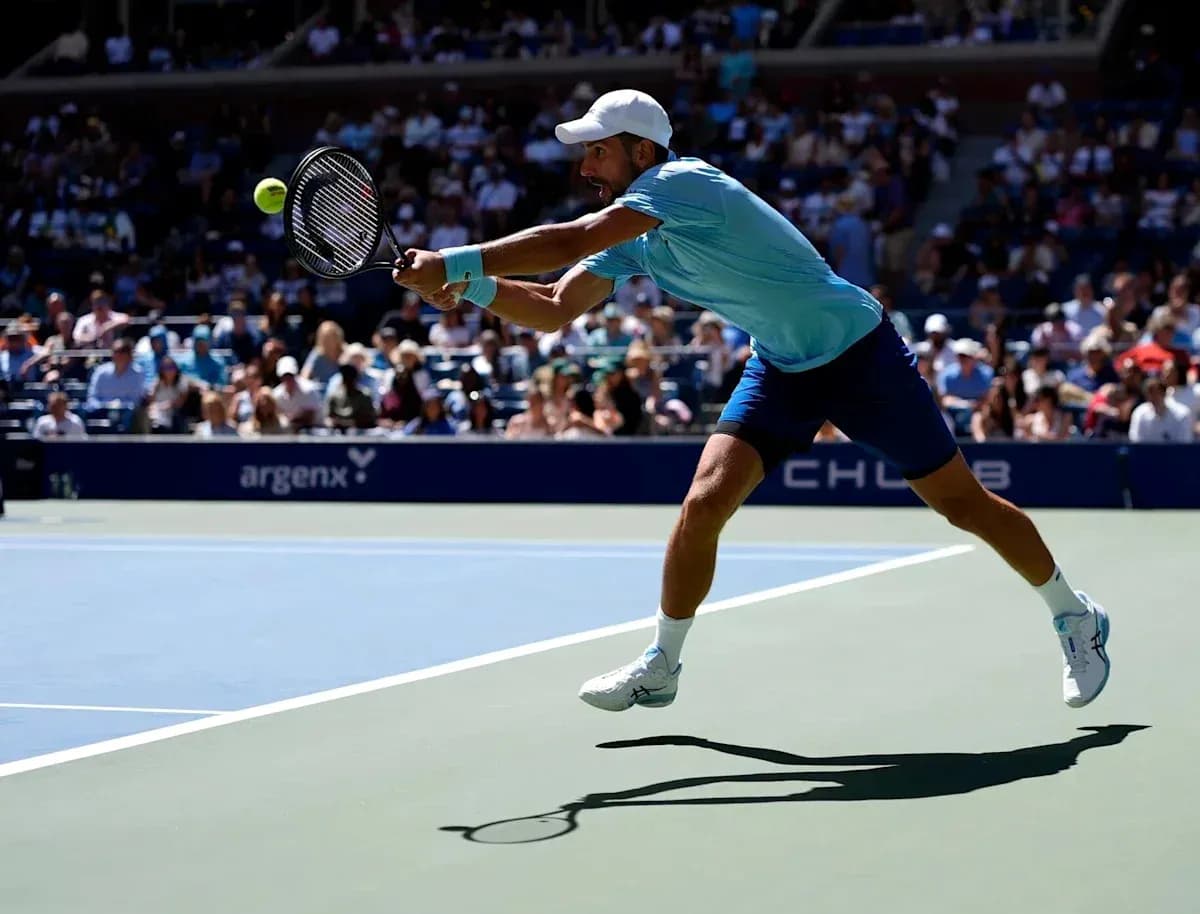
Novak Djokovic has spent two decades turning fifth sets into his private stage. On Sunday night in New York, that script finally tore.
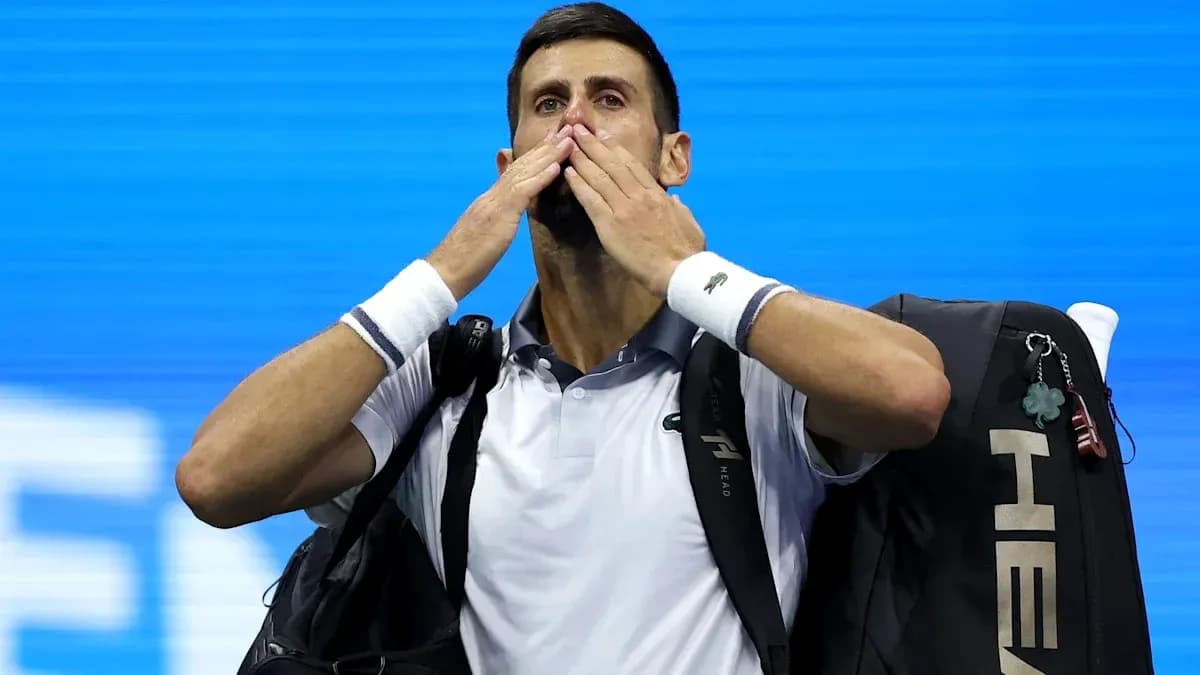
Serving late in the decider, eyes glassy and body rebelling, the 24-time Grand Slam champion looked less like the sport’s relentless closer and more like a man trying to coax one last surge from a frame that would not respond. The tears said what the scoreboard soon confirmed.
Djokovic, 39 years old and still ranked among the game’s giants, lost 7-6 (5), 5-7, 4-6, 6-2, 6-1 to Mariano Navone in the US Open first round. It was his first opening-round exit at a major since 2006. He will now slide out of the Top 10, and into a new, unfamiliar reality.
A Body That Wouldn’t Obey
The conditions looked kind at first. A night session in New York, the worst of the late-summer heat burned off, the kind of stage Djokovic has ruled for years. He raced to a 3-0 lead in the opening set. It felt routine.
Then his body turned on him.
Less than an hour in, Djokovic felt sick. The early lead vanished. The nausea didn’t. He vomited during the third set. His legs and arms began to seize in the fourth and fifth. The serve that once pinned opponents to the back fence lost its bite; he simply couldn’t hit at full pace.
By the time Navone sealed the match after four hours and 36 minutes, Djokovic’s game had frayed to a level almost unrecognizable. There were flashes of his old brilliance early on, but they drowned in a tide of errors. He finished with 70 unforced mistakes, an astonishing number for a player who built his empire on precision and control.
“I think it was obvious that it was an awful feeling on the court for me,” he told a small group of reporters, speaking outside the traditional press conference format. “This is something that, unfortunately, I’ve been dragging along in practically every match this year.”
Then came the blunt admission: “My whole body starts to collapse, basically cramping and pain,” he said, adding that his back and shoulder “gave up.”
For most of his career, Djokovic’s body has been his most obedient weapon. On Sunday, it was his loudest opponent.
Navone’s Night, Djokovic’s Alarm Bell
None of this diminishes what Navone produced. The 25-year-old, who claimed his first ATP Tour title in 2026, showed the poise of a man who believed this could be his night and refused to blink when it was. He struck his groundstrokes deep, took time away from Djokovic, and won more than 70 percent of his first-serve points. When the break chances came, he took them.
But the story still revolved around the man across the net.
Just a year ago, Djokovic pushed into the second week in New York and bowed out in a respectable straight-sets semifinal defeat to eventual champion Carlos Alcaraz. Few expected him to trouble the Spaniard, but he still navigated the draw with his usual authority. The warning signs were there, though. As one piece put it then, “Father Time is an opponent that no one can beat.”
Twelve months on, the ticking has grown louder.
This is not a player losing tight matches at the business end of tournaments. This is Djokovic struggling physically 30 minutes into a best-of-five match, in a season where he has only entered seven events. The workload is lighter, the body still looks heavy.
The pattern isn’t isolated to New York. In August, he wilted in brutal conditions in Cincinnati, losing his opener at the ATP 1000 event to Thiago Agustin Tirante, 2-6, 6-4, 6-4. He tried to spin that defeat as a blessing in disguise, a chance to reset and prepare for the Slam that matters most to him.
Grand Slams have always been his north star. He has said it often: these are the tournaments that define his season, his legacy, his priorities. At 39, though, the old calculation — skip events, save the body, peak for best-of-five — no longer looks so simple. To withstand four-and-a-half hours under Grand Slam intensity, you need matches in your legs, not just practice sets and belief.
On Sunday, belief was the only thing that didn’t cramp.
The Cost of Staying in the Fight
So what now?
Over the next two weeks, as the tournament rolls on without him, the grounds will hum with the same questions. Will he be back next year? Is this the beginning of the end, or just a brutal chapter in a longer farewell?
Only Djokovic will decide how this story closes.
He could choose to grind on as a top-20 player, no longer the inevitable favorite but still a box-office presence who plays for the love of the game and the roar of the crowd. That version of Djokovic — a legend embracing the twilight, still dangerous but no longer defined solely by titles — would be cherished by fans and good for the sport.
Or he could look at nights like this and decide that competing without a realistic Grand Slam chance is a line he doesn’t want to cross. The thought of him walking away this week is dramatic, but it lingers in the background now in a way it never has before.
For the moment, the calendar offers a clue: Djokovic has been confirmed on the entry list for the ATP 500 event in Beijing. He is not done yet. He is not ready to let this loss be his final word.
Still, the message from this defeat is hard to ignore. At this stage of his career, being a serious Grand Slam contender leans more on physical resilience than on the mental steel that once separated him from everyone else. In recent years, he won countless big matches by simply refusing to crack. On Sunday, his mind stayed firm. His body did not.
“Forever grateful, New York,” he wrote on social media after the loss.
The gratitude is real. So is the question now hanging over every step he takes: how many more nights like this does he have left in him — and how many is he willing to endure?