In Norman, they have long believed they owned one of the jewels of college tennis. Now the rest of the sport has caught up.
The University of Oklahoma’s Headington Family Tennis Center and Gregg Wadley Indoor Tennis Pavilion has been named a 2026 USTA Outstanding Facility, a national stamp of approval from the sport’s governing body in the United States. The award, presented during a ceremony at the U.S. Open in New York, places OU among an elite group: just 12 educational institutions across the country received the honor, and only six of those sit on a college campus.
For a program that leans hard on its home-court identity, the recognition lands like validation.
“We are incredibly proud to call the Headington Family Tennis Center our home,” OU head women’s coach Audra Cohen said. She pointed not only to the competitive edge the complex provides, but to the day‑to‑day experience for “our student-athletes and everyone who walks through our doors,” while singling out longtime tennis club director Dawna Johnston for her “heart, dedication and many years of service to OU Tennis.”
On the men’s side, head coach Nick Crowell sees the award as the culmination of a long build. “It’s incredible to walk into our facility every day and see the very best in college tennis,” he said, crediting donor support and the athletics department for upgrades and renovations that, in his words, have “transformed the Headington Family Tennis Center into the finest collegiate tennis facility in the nation.”
The USTA did not hand out that praise lightly. Facilities were measured on a broad slate of criteria: how smartly they used their footprint, the quality and consistency of the court surface and lights, ease of maintenance, and the way they catered to players, spectators, media and officials. Judges looked at aesthetics and graphics, from signage to landscaping, and weighed amenities such as casual seating, food service and social spaces. They also examined each site’s commitment to grassroots tennis, a key pillar for the association.
From there, nominees were sorted into four categories. “Public Courts” covered both small (2–11 courts) and large (12 or more) centers. “Private Facilities” needed to host both USTA and public programming aimed at growing the game, again split by size. “Educational Institutions” brought together colleges, universities and schools at every level. An “Innovation” category highlighted venues that have pushed new ways of delivering tennis. All 2026 winners receive a wall plaque and an all‑weather sign to display on site, a permanent marker of their place on that list.
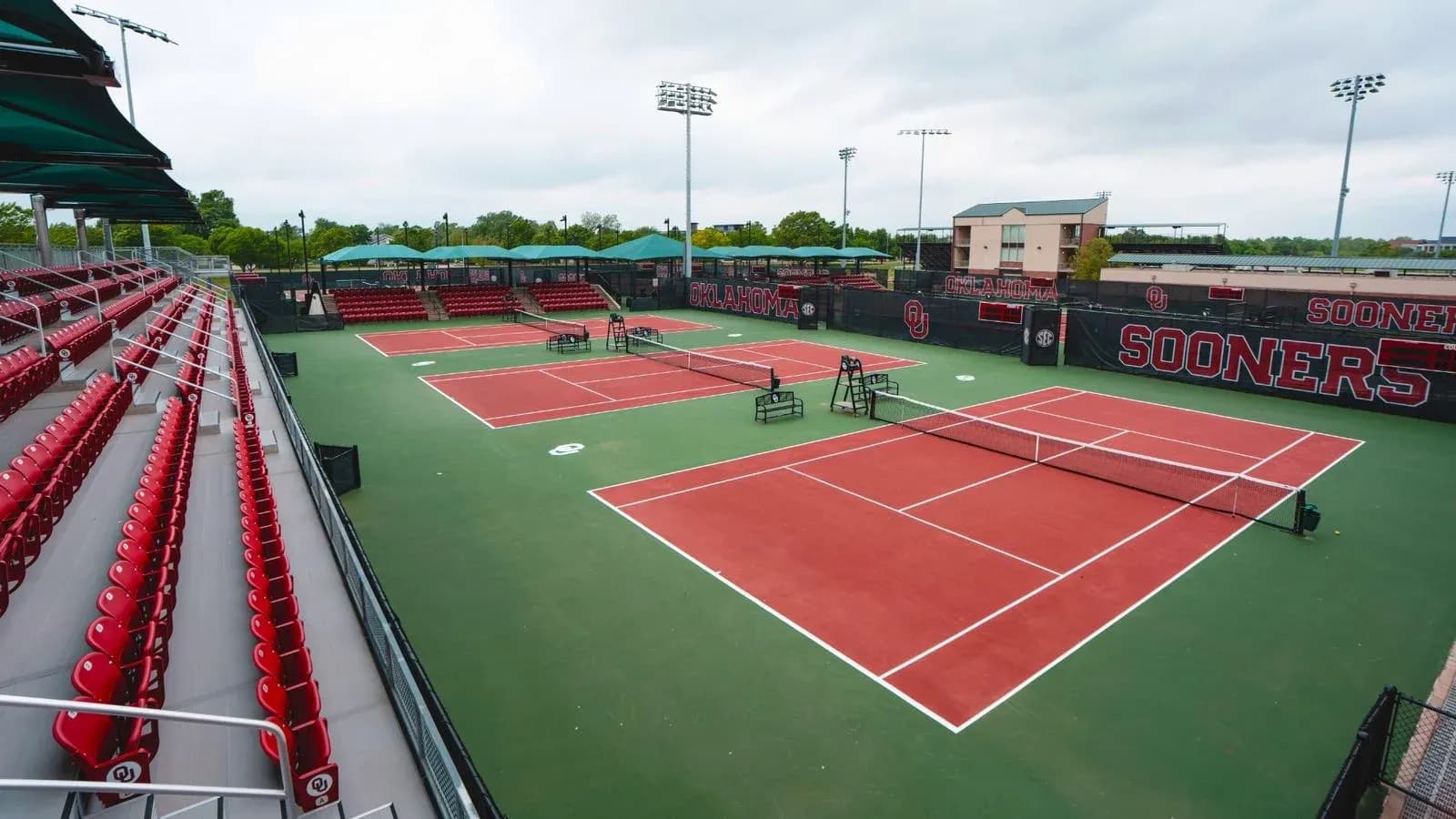
OU’s complex checks boxes in every direction. The Headington Family Tennis Center and Gregg Wadley Indoor Tennis Pavilion serve as home to both the men’s and women’s programs, anchored by 12 outdoor courts arranged in four three‑court quadrants that make movement and viewing easy. Championship‑level lighting, a modern playing surface, a full sound system, electronic scoreboards and benches on every court turn dual matches into full‑scale events rather than just another date on the schedule.
Fold in the indoor pavilion and the scale becomes clear: 18 courts in total, with locker rooms for home and visiting teams, storage for trainers and equipment staff, and indoor amenities designed to keep fans engaged no matter the weather. It is a facility built not just to host matches, but to stage occasions.
The USTA has taken notice before. So has the NCAA. The Headington Family Tennis Center has already been a regular stop on the postseason map, hosting NCAA First and Second Round play 15 times: 2003, 2004, 2010–14, 2016–18 and 2022–26. Those repeated assignments underscore how often national tennis has flowed through Norman.
At the heart of it all is a name etched into the complex and into OU’s tennis history. The center honors Timothy C. Headington, a 1972 University of Oklahoma graduate and tennis letterwinner whose support helped turn a solid facility into a standard‑setter.
Now, with a USTA Outstanding Facility Award on the wall and another NCAA hosting run already on the books, the question for Oklahoma tennis is no longer whether its home can attract the sport’s biggest days.
It’s how many more of them will be played on these courts.