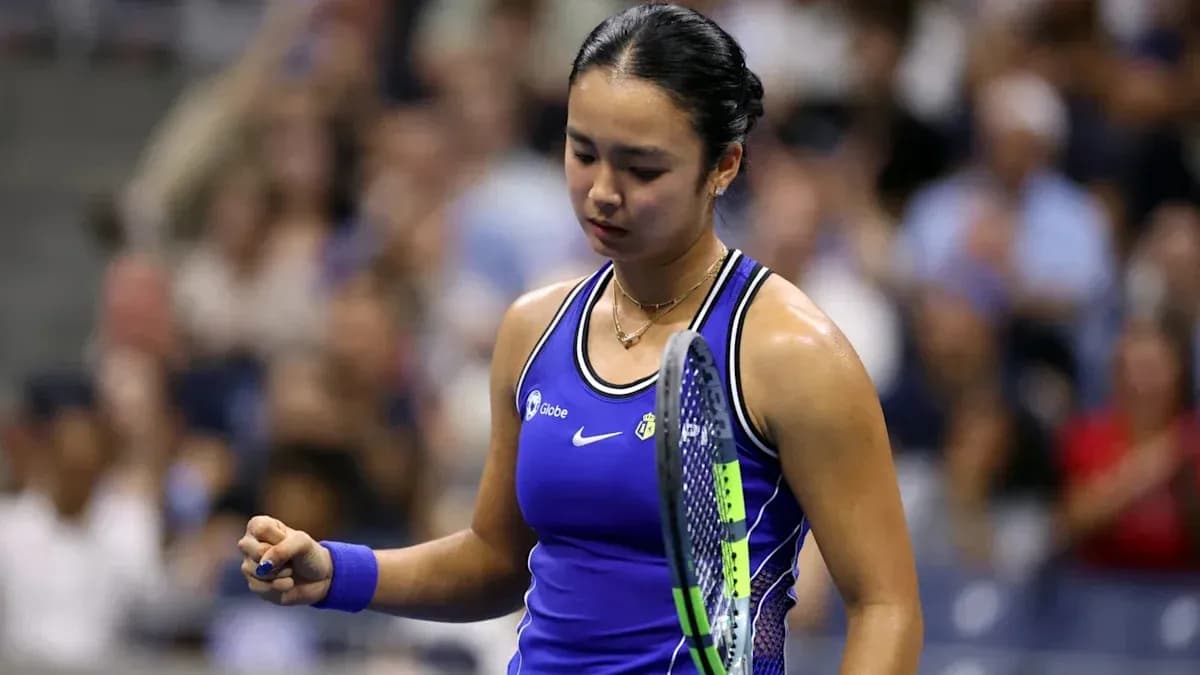
Qinwen Zheng was staring at the Arthur Ashe scoreboard again, and again it told her the same brutal story: 0-5 down.
Two days earlier, that deficit had been the prelude to one of the great escapes of this US Open, a seven-game surge to stun Madison Keys. This time the opponent was Iga Swiatek, a six-time grand slam champion, former US Open winner, and the sport’s most relentless front‑runner.
Same court. Same hole. Same answer.
Zheng ripped off seven straight games to steal the opening set 7-5, then shut the door in the second to win 7-5 6-3 and march into the quarter-finals in New York for the third time. A qualifier, ranked No 121 after an injury-ravaged year, had just bulldozed the eighth seed and one of the game’s dominant forces.
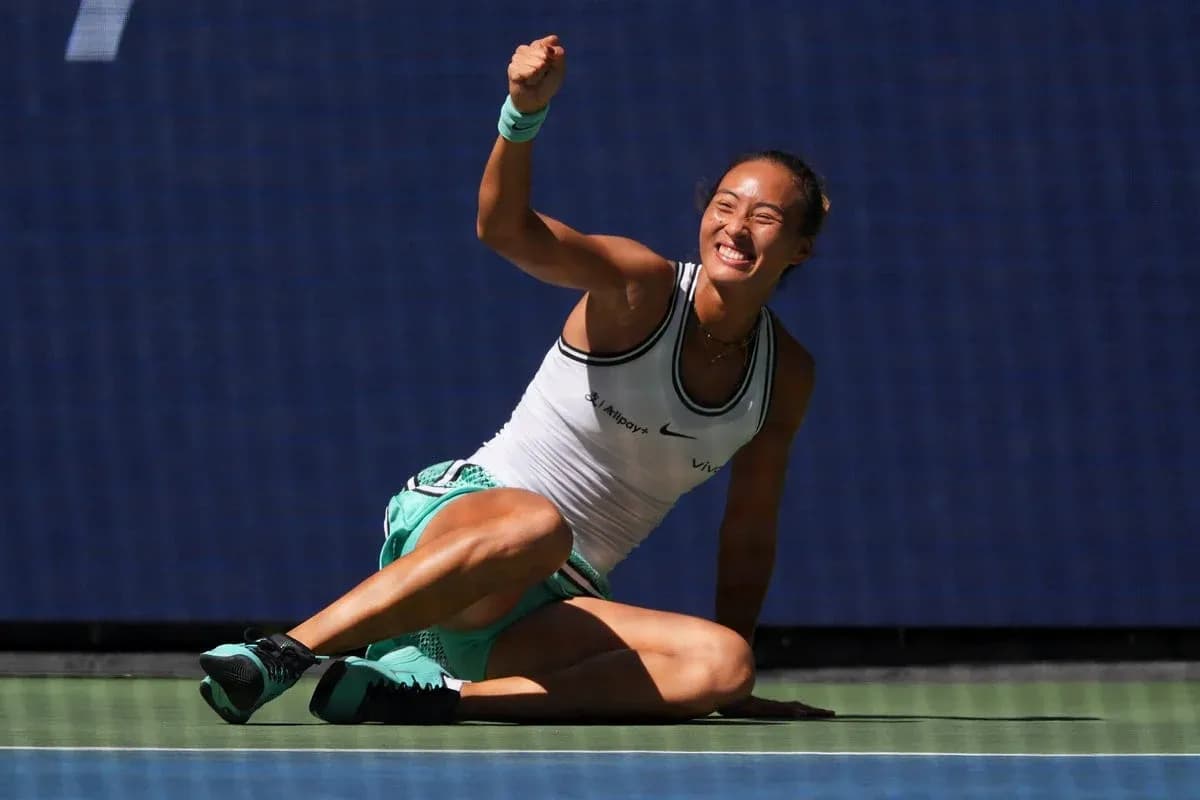
When the fourth match point finally landed, Zheng crashed onto her back, eyes to the sky, letting the roar of Ashe wash over her. Seven wins in a row in New York. From the qualifying rounds to the last eight, via two miracles from 0-5.
“I started the match not so well,” she admitted on court, a smile finally breaking through the disbelief. “Little by little I found my rhythm on the center court because it's been a long, long time. I just really appreciate it to be here in the Ashe Stadium.”
The turning point came not with some thunderous winner, but with her mind narrowing in on the next point and nothing else. “I just focused point by point and little by little I start to play better tennis, I start to find my game and in one moment I even forgot the score in the first set at 4-5,” she said. “That shows how I'm focused.”
For anyone tempted to write off back‑to‑back comebacks as fortune, she offered a sharp reminder. “I guess to come back 0-5 yesterday is not lucky, that's all I can say.”
This run felt a long way from where she had been. The former Olympic champion from China missed long stretches of the 2025 season with an elbow injury that dragged her ranking down and forced her into the grind of qualifying here. She played her way into the main draw, then into rhythm, then into something far more dangerous: belief.
Keys, the 22nd seed and former Australian Open champion, had already felt the full force. Zheng trailed 0-5 and faced match point in the deciding set before storming back to win 1-6 7-6 (7-3) 7-5, reeling off seven games in a row against the American on home soil.
Swiatek arrived with the scars of Paris still fresh. Zheng had denied her Olympic gold in the final two years ago, and this rematch carried the same jagged edge. Swiatek came out flying, dictating early, racing to that 5-0 lead in the first set as Zheng sprayed errors and struggled with timing.
Then the match flipped.
Zheng began to land first serves, step inside the baseline, and lean into her forehand. The rallies lengthened. The crowd sensed it. Swiatek’s error count started to climb, her forehand leaking balls long and wide. The Pole, once so assured in these moments, could not halt the slide.
By the end, Swiatek had piled up 28 unforced errors, her frustration written across every changeover. She has not won a major since Wimbledon 2025, and her last five exits from grand slams have all come in straight sets. As Zheng celebrated, Swiatek left Arthur Ashe Stadium in tears, another campaign ending abruptly, another chance gone.
Zheng, by contrast, sounded like a player rediscovering her place among the elite. “I'm just really happy to win this match cause it's not easy and it's been a while really. I didn't beat any top 10 player,” she said. “I just really, really appreciated this win for me, and I want to say thank you for all the fans who come to support me today.”
Next comes a heavyweight quarter-final: either second seed Elena Rybakina or Naomi Osaka, the two-time US Open champion. Zheng has already survived qualifying, injury doubts, and two impossible scorelines. One more marquee name will not intimidate her now.
Andreeva advances as Potapova breaks down
Earlier in the day, another comeback reshaped the women’s draw, but this one ended with a grimace rather than a grin.
French Open champion Mirra Andreeva fought past Anastasia Potapova 5-7 6-4 6-3 to reach her first US Open quarter-final, but the closing act left the crowd subdued. Potapova, representing Austria and playing some of the sharpest tennis of her career, had taken the first set and was battling hard in the third when disaster struck.
Trailing 5-3 in the decider, she chased a forehand and twisted her knee badly. The 25-year-old went down in clear pain. After treatment, her knee heavily strapped, she chose to continue, determined to finish what had been a fierce contest.
Her body refused. Potapova did not win another point.
Andreeva, still only a teenager yet already a Roland Garros champion, struggled to celebrate. “Anastasia is a good friend, and seeing what a battle we have and then seeing her fall is not easy,” she said. “It’s not the way you want to finish the match. I just told her she is playing amazing and I’m sure she’ll come back even stronger, she’s a warrior.”
On a day when one player lay on her back in triumph and another stood barely upright in anguish, the US Open reminded everyone how thin the line is between glory and heartbreak. For Zheng, that line now leads straight into another massive night on Ashe, with the draw suddenly open and her confidence finally matching her talent.