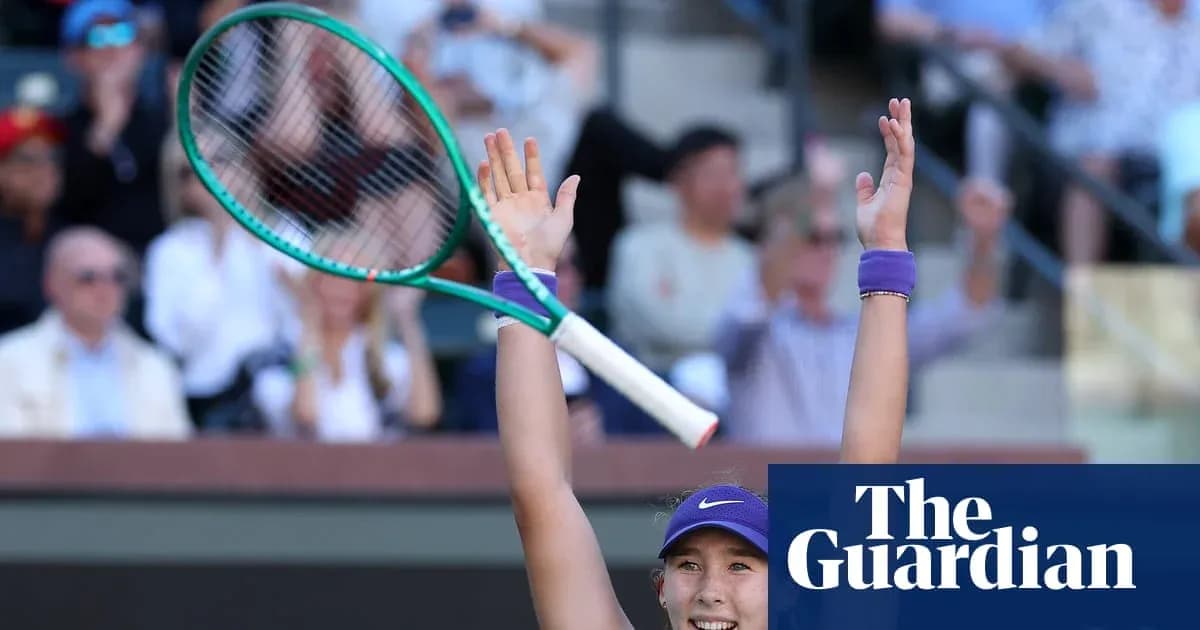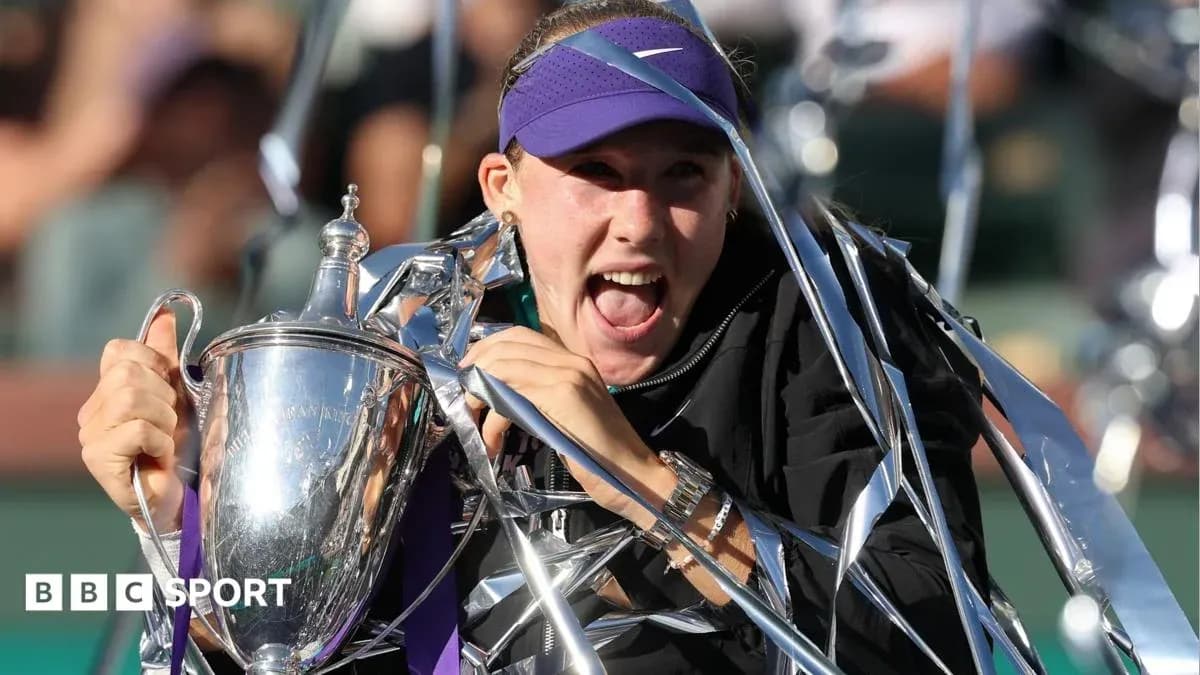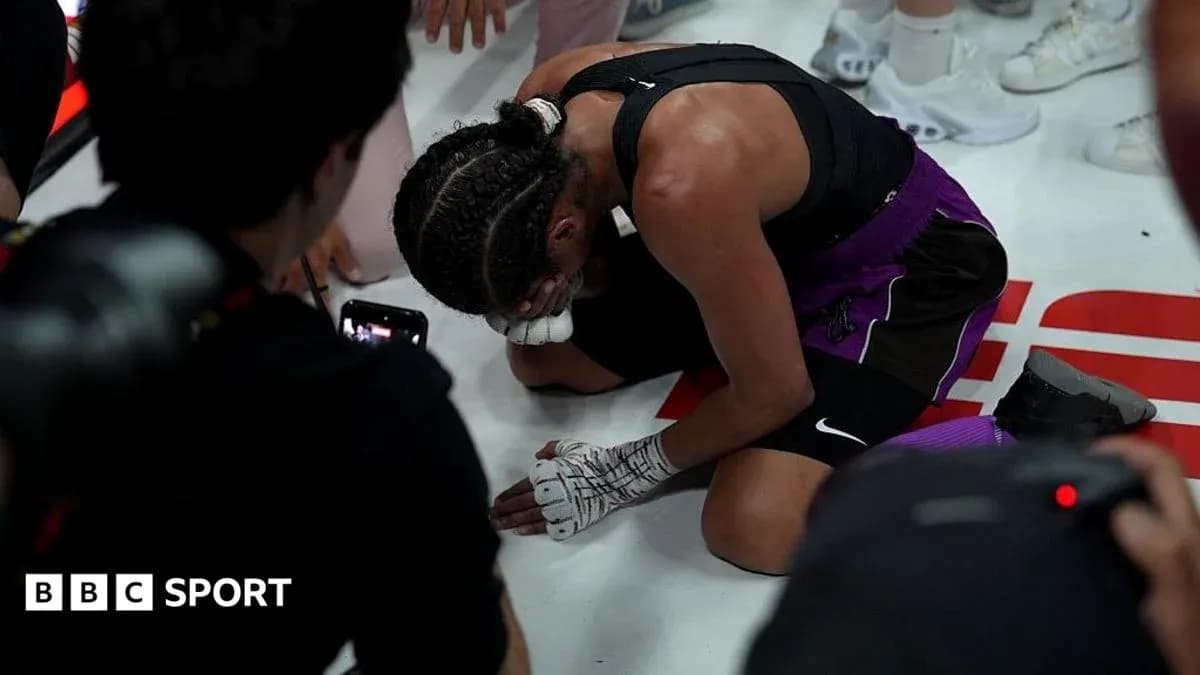
Ramla Ali dropped to her knees in the middle of a Texas ring, tears pouring, gloves still raised. At 36, after a life spent outrunning war, doubt and defeat, she finally had what she had chased for years: a world title. Two of them.
In Arlington, Ali edged American Mikiah Kreps on a split decision to become WBO and IBF super-bantamweight champion, a landmark night for a fighter who once wondered if she even belonged in this sport.
The scorecards told the story of a divided ringside. Two judges went heavily for Ali – 97-92 and 96-93 – while a third saw it 98-91 for Kreps. The margins were wide, the verdict tight. The reaction in the ring said everything: Ali collapsed in sobs, Kreps stared in disbelief.
This was not just another belt ceremony. It was the culmination of a journey that began when Ali’s family fled war-torn Somalia while she was still a baby, found refuge in London and watched her carve out a place in British boxing history. Olympian. Activist. Author. Now, unified world champion.
Her biopic has just been released. The script on Saturday night could hardly have been written cleaner.
But inside the ropes, nothing came easy.
Ali produced the fight’s defining moment in the third round. Kreps, unbeaten coming in and brimming with confidence, walked straight onto a sharp left hook. The shot jolted her, sent her glove skimming the canvas as she tried to steady herself. The referee ruled a knockdown. Kreps protested, but the replay was cruelly clear: the glove touched, the 10-8 round stood.
That should have been Ali’s platform to pull away. Instead, it sparked Kreps into a relentless charge.
From the fourth onwards, the American poured forward. She outworked Ali, outlanded her, and refused to let the knockdown define the night. By the final bell, the punch stats favoured Kreps: 115 punches landed to Ali’s 78, with a hefty 91 power shots to Ali’s 70. One judge saw a near shut-out in her favour.
Inside Ali’s corner, the fight became something else entirely. A mental test. A conversation with a ghost.
Her father died in May. His absence has hung over this camp, this year, this night. In the changing room, her coach had kept it simple: do it for him.
Round after round, as her legs grew heavy and Kreps’ pressure mounted, Ali slumped onto her stool and admitted she was exhausted, that she could not go on. Each time, the reply came back the same way: think of your dad. Do it for your dad.
So she did. She dragged tired arms into motion, boxed “out of her skin,” as she put it, and found just enough in the championship rounds to convince two judges that her cleaner moments, her knockdown, her resilience under fire were worth more than Kreps’ volume.
Kreps, 30 and previously undefeated, looked shattered by the verdict. From her perspective, she had forced the pace, landed the heavier shots late and done enough to rip the belts away. The numbers backed up her belief. The decision did not.
For Ali, the wider picture dwarfs the argument over rounds.
This is a woman who was brutally halted by Yamileth Mercado in her first world-title attempt two years ago, then knocked out in her ninth professional fight in 2023. Those setbacks fuelled a chorus of doubters. Some questioned whether she should continue at all, given her life outside the ring: a model on magazine covers, a high-profile activist, founder of the non-profit Sisters Club for young women.
Was boxing still worth it? Was she?
On Saturday, she answered.
Ali became the first Somali boxer to represent the nation at an Olympics in Tokyo, then the first Muslim woman to win an English title as an amateur. Now she stands as a unified world champion, speaking not just for herself but for a country she left as a baby and a community that has followed every step.
“I can’t put into words what this means to me and what this means to all of Somalia,” she said in the ring, her voice cracking as she dedicated the victory to her late father and spoke of inspiring “young girls and boys out there to dream big.”
The symbolism was heavy. The belts around her waist, the tears on her face, the memory of her father in every breath. This was not a clean, dominant coronation. It was a hard, scrappy, human win. The kind that leaves a mark.
And now? The division has a new axis.
On the undercard, Skye Nicolson retained her WBC title with a unanimous decision over Japan’s Miyo Yoshida. Like Ali, Nicolson is signed to Jake Paul’s Most Valuable Promotions. A unification bout between the two would be compelling: Ali’s story and grit against Nicolson’s slick southpaw rhythm, a meeting of champions under the same promotional banner.
That can wait. For one night, Ali has earned the right to stand still and breathe.
From a refugee child in London gyms to a double world champion in Texas, she has spent years proving she belongs. On this night, with her father’s memory in her corner and a belt on each shoulder, there was nothing left to prove.