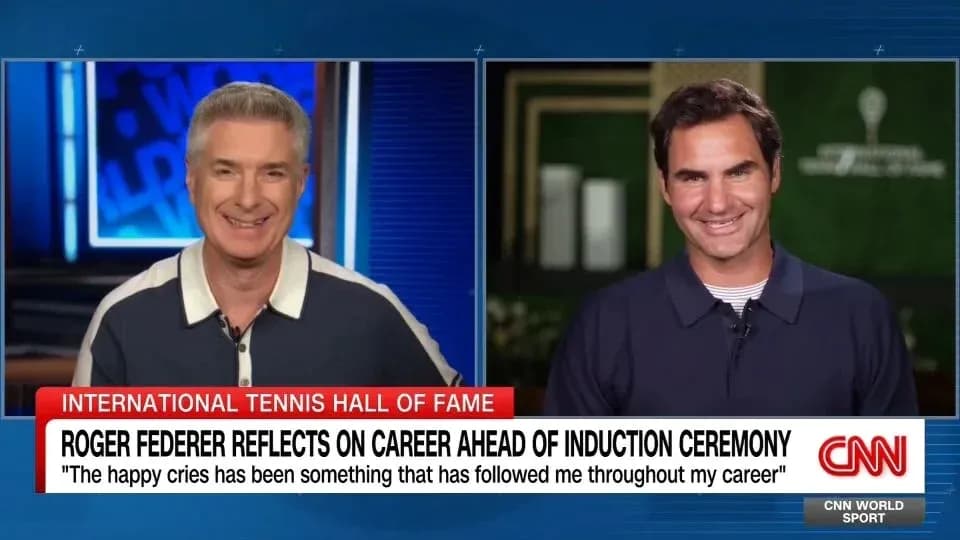
Roger Federer has cried on some of the biggest stages sport can offer. The first time, he didn’t even understand why.
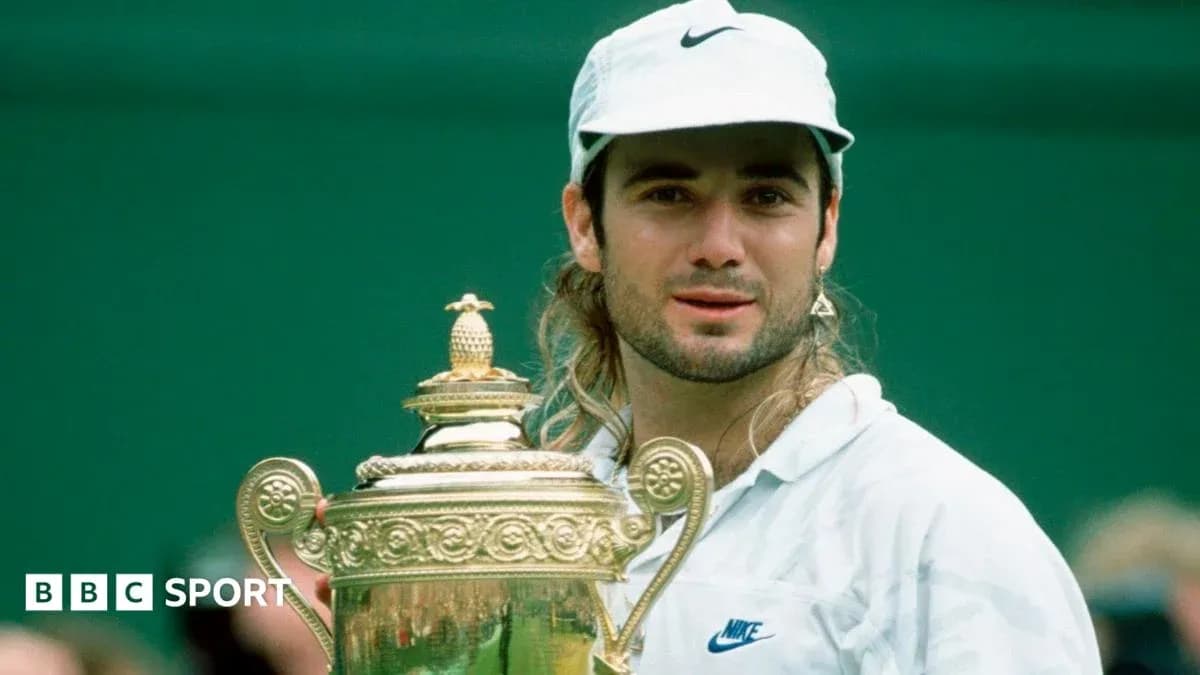
It was Wimbledon, 2001. Centre Court. His debut on the sport’s most famous patch of grass. Across the net, Pete Sampras – the man who owned that lawn, the hero of his childhood. Federer beat him. Then his body did something his mind wasn’t ready for.
“I go to my knees, (then) I shake hands with Pete and he's my hero … and these emotions came all over me,” he told CNN Sports. “And I was like, ‘What is going on?’ This is not who I am normally.”
From that moment to his tear-soaked goodbye in 2022, Federer didn’t just build a career; he built a mythology. Twenty grand slam titles. 310 weeks as world No. 1, including a record 237 in a row. And a reputation as perhaps the most famous crier in sport.
Now, in Newport, Rhode Island, the tears might return again.
A Hall of Fame career, and the man who made it look easy
This weekend, the Swiss is being inducted into the International Tennis Hall of Fame. For most observers, that felt inevitable sometime around 2004, when he ripped through the tour with a calm brutality that redefined dominance.
That year he won three of the four grand slam singles titles and climbed to world No. 1, then refused to let go of the ranking for more than four and a half consecutive years. The numbers from that era still look unreal. In 2005, he won over 95% of his matches. In 2006, he went 92-5, lifting 12 titles and three more majors. A 94.8% win rate, sustained over a full season, on every surface that mattered.
Few believed Sampras’ 14 grand slam titles would ever be touched. Federer didn’t just touch it; he flew past it on the very court where he’d first broken down in 2001, surpassing Sampras at Wimbledon in 2009. Once he moved beyond that mark, he never looked back.
He did it with a style that felt effortless. The glide, the early take of the ball, the liquid one-handed backhand. The way he could turn defence into attack with a single step and a flick of the wrist. On court, grace. Off it, an easy charm and lightness that made him the sport’s global ambassador long before his career was done.
He insists there was a cost to all that elegance.
“It looked like I wasn't actually hitting the ball so hard,” he recalled of how people saw him as a junior. “But it was kind of flying off of my racket with a lot of power. People always thought, like, ‘It's so simple for you,’ because it looked like elastic. But it wasn't the case. There was a lot of work and effort put into it.
“When I would lose, they say, ‘Why don't you try harder?’ And when you win, they would say, ‘Oh my God, it's so easy for you!’”
The smile, the economy of movement, the clean lines of his game – they hid something more brutal: the grind, the sacrifice, the weight of expectation.
“Perhaps within that answer lies the clue to all those famed tears,” he said. “The sacrifice was massive and I was holding a lot of pressure in.”
At peace with the past, in no rush to replace it
Listen to Federer now and there’s no hint of a man itching to get back into the arena. No talk of a void to fill.
“It doesn't sound like he misses it all that much,” the piece notes, and his own words back that up. “I'm actually really happy going through everyday life at a lower pace,” he said.
His days are full. Father of four. Philanthropist. Investor. Businessman. A man who still loves the road, even if it no longer leads to Melbourne, Paris, London and New York with a racquet bag over his shoulder.
“I've always been a guy who loves being on the road,” he said. The travel remains. The pressure does not.
This weekend, though, the past returns in a very specific form: a plaque, a podium, and a room full of legends.
“If I'm speaking about the game and all the gratitude that I have, and having my entire family there – from my parents to my wife to my four children and my whole team from coaching staff and physios, etc. I think it could hit home very hard,” he admitted, hours before his induction.
“If it happens, it will be more memorable for me personally, but I hope I get through the speech without too many hiccups. We'll see.”
The man who once tried to fight back tears on Centre Court now walks into a ceremony half-expecting to be overwhelmed again.
Imagining the matches that never were
The Hall of Fame is a museum, but for Federer it doubles as a playground of the imagination. Standing alongside the game’s immortals has stirred a simple question in him: what if they could all play?
“I would have a little list,” he said, before reeling off the names as if he were reading out a dream draw: Rod Laver, Bjorn Borg, John McEnroe, Stefan Edberg, Boris Becker, and Sampras again.
“I think these would be my favorite players to play against. I've always admired their personalities, what they have achieved, and what they represent in the game.”
He now shares a Hall with those men. On paper, his grand slam tally has been passed. Rafael Nadal and Novak Djokovic have both moved beyond his once-record 20 majors. On court, the numbers say one thing. In the stands and living rooms of his global fanbase, the argument is more emotional.
For many, Federer remains the greatest they have ever seen, the player who made tennis feel like art without ever letting go of the steel beneath it.
A different kind of challenge
So what is a man who mastered the geometry and psychology of a tennis court trying to master now?
“I'm trying to get better at golf,” he said, almost casually. The competitive itch hasn’t vanished; it has just changed shape. “I would love to start with an instrument again. I used to play the piano, so when I have more time, I'd like to dive into that because my four children and my wife play the piano.”
The goals are smaller now, more personal, less public. Lower stakes, but no less meaningful.
“I hope I'm a good listener and a good decision-maker. Hopefully I'm a guy who people enjoy being around. I'm a big family guy. I love being surrounded by my friends – that's really the priority in my life.”
For two decades, Federer’s worth was measured in trophies, titles and records. In Newport, his career gets its official seal from the sport he helped define. He will walk on stage, speak about gratitude and sacrifice, and almost certainly fight back the same emotions that first ambushed him as a 19-year-old on Centre Court.
The difference now? He knows exactly who he is when the tears come.