Roger Federer has spent a lifetime making numbers look elegant. On this night, he chose the strangest ones of all.
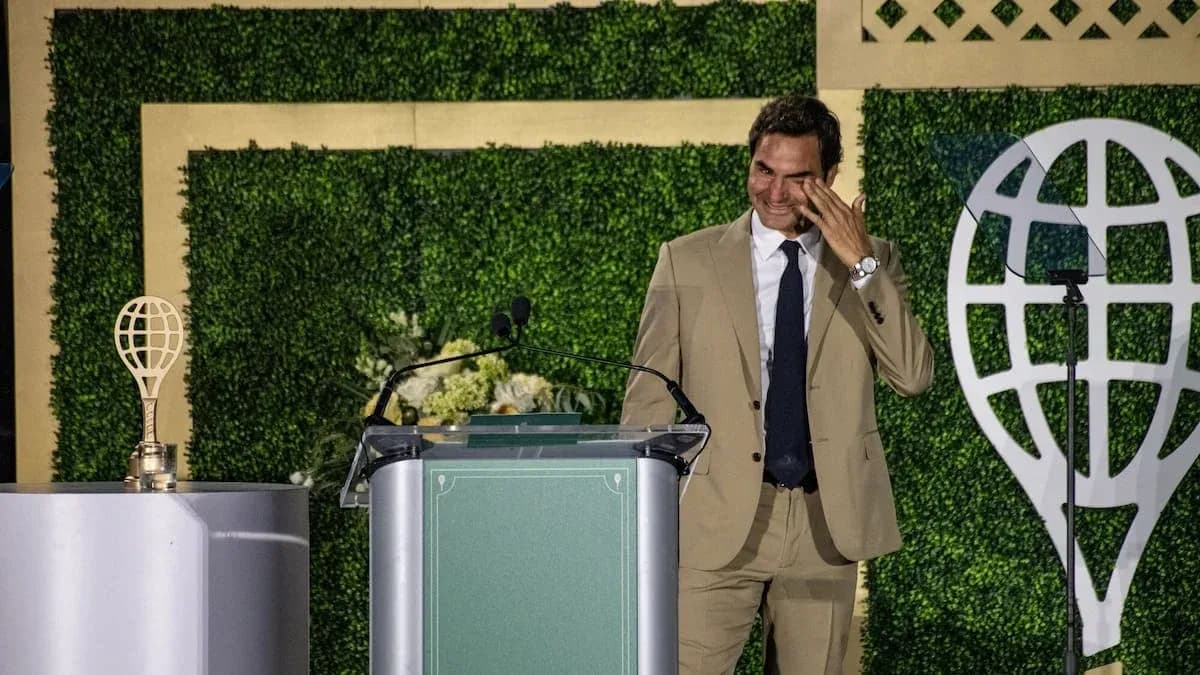
Standing at the International Tennis Hall of Fame, the eight-time Wimbledon champion didn’t reach for the usual markers of greatness. No tally of 20 majors. No mention of weeks at world No 1. Instead, he turned his career into something far more intimate — and disarming.
“Not the obvious stats like the number of majors or number of weeks at number one,” Federer said. “I’m talking about the numbers that really paint a picture.”
Then he started counting.
From his first steps on the ATP Tour in 1998 to his farewell in 2022, Federer reckoned he wore more than 5,000 headbands. He delivered the line with a grin, but the comparison that followed was pure Federer theatre: that total, he said, was more than Bjorn Borg and John McEnroe combined.
The numbers kept rising.
“And if you think that’s impressive, I wore probably over 7000 pairs of socks,” he added. “That’s probably twice as many as most of my opponents, because I doubled them up.”
It was playful, self-aware, and perfectly timed. The crowd laughed. The tension eased. Then the tone shifted.
Because the truth, as Federer quickly admitted, is that none of these numbers can touch what the night really meant.
“But really, there’s no way to measure what it means to be here. It’s hard to put it into words,” he said, his voice dipping as he traced the line from a 13-year-old ballboy at an ATP tournament in Basel to a place in the sport’s pantheon.
That boy had sprinted after loose balls and folded towels in the shadows of stars. The man now stood among them.
“I really want to thank every ball kid who ever stood through my matches or all our matches, for that matter, for hours on end,” Federer said. “I see you. I thank you. I was you.”
The room felt it. So did he.
Federer, who had built a career on composure, had to pause and wipe away tears as he worked through the names that shaped him: his idol Stefan Edberg, fellow champions, family, coaches, support staff. The people behind the effortless façade.
“I need tissues and sunglasses and everything to protect me right now,” he joked, trying to steady himself. “This is such a mess.”
The humour didn’t hide the weight of the moment. It made it sharper. This was not a farewell to tennis — that had come in London in 2022 — but a formal inscription of his story into the game’s permanent record. The Hall of Fame is where careers are frozen in bronze and glass. Federer refused to let his feel static.
“It’s been an incredible journey,” he said. “For me, the International Tennis Hall of Fame provides a great opportunity to look back, but also to look ahead.”
That line mattered. Federer was not closing a book; he was turning a page.
“As you can tell, I’m still writing my love letter to tennis,” he said. “My time as a player is done, but tennis will always stand at the intersection of everything I care most about: my family, our friendships, the past 40 years, the future we’re building. Tennis for me is responsible for it all.”
In the end, the stats that defined his speech weren’t the ones that will sit in record books. Not the majors, not the rankings, not the win–loss columns.
They were headbands and socks. Ball kids and boyhood idols. Tears and jokes in the same breath.
The numbers that really painted the picture were the ones that proved his career is no longer just about what he won, but about what — and who — it created.