Roger Federer pauses, for once. Not to set up for a forehand or walk to the baseline, but to look back.
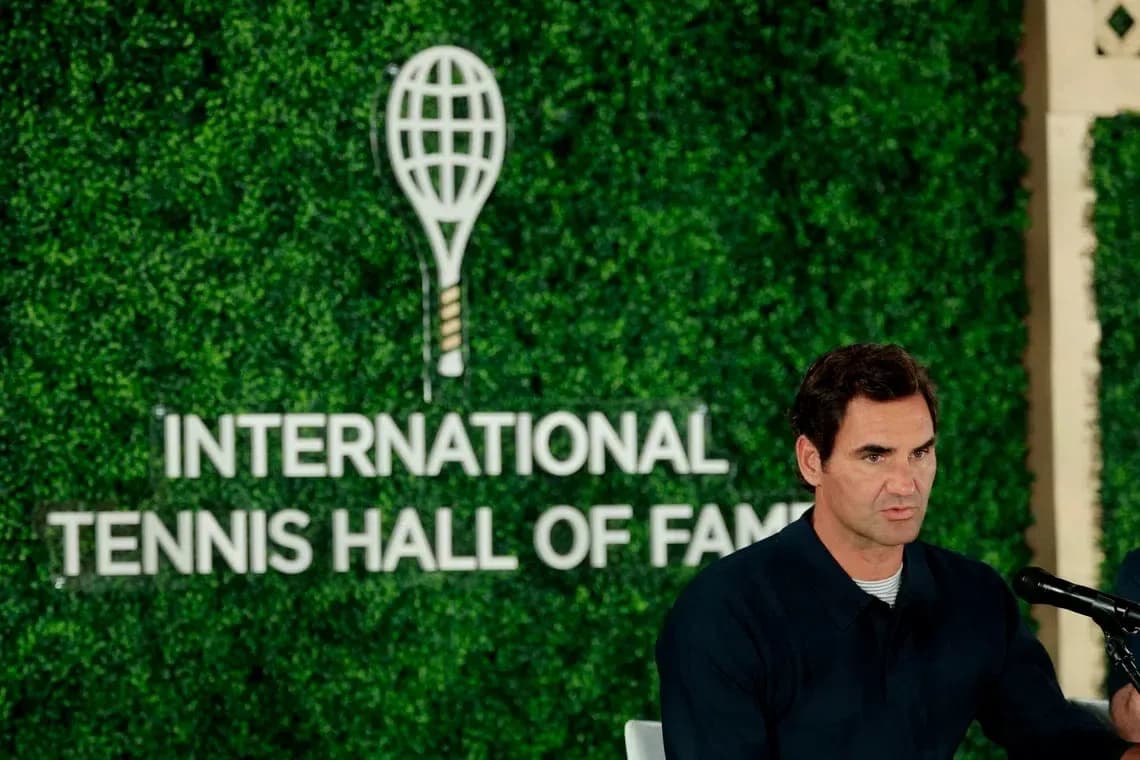
On Saturday in Newport, the 20-time Grand Slam champion will be inducted into the International Tennis Hall of Fame, an honour he says feels nothing like the trophies and rankings that once ruled his life. This one, he admits, forces him to think about what he left behind.
“It’s a huge, huge honour, one of the greatest we can achieve in this sport,” Federer said on Friday, speaking at a news conference moderated by Hall of Fame president Patrick McEnroe.
The words came from a man who has lifted almost everything there is to lift in tennis, yet this ceremony carries a different weight.
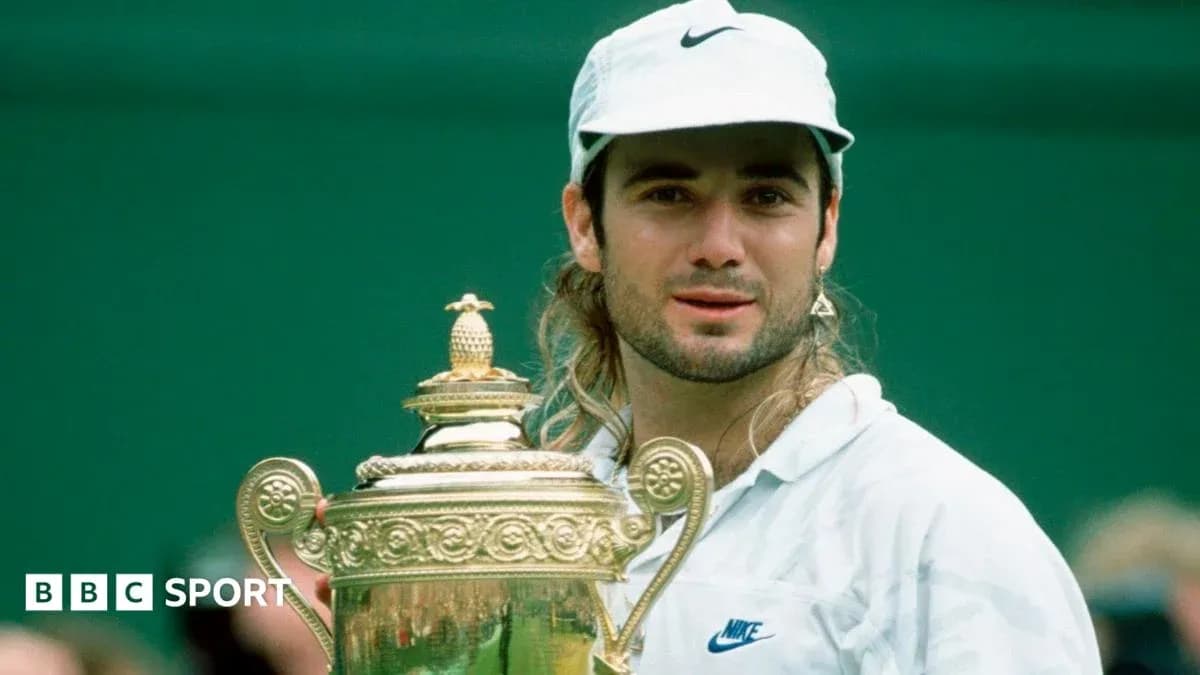
At 45, Federer’s record reads like a history book. A men’s-record eight Wimbledon titles. Six Australian Opens. Five U.S. Opens. The 2009 French Open to complete the career Grand Slam. Olympic doubles gold with Stan Wawrinka in Beijing in 2008. A Davis Cup crown with Switzerland in 2014.
He walked away in 2022 with 103 ATP Tour titles and 310 weeks as world number one. Numbers that once defined him. Numbers he now treats almost as background.
Because for Federer, the Hall of Fame is not just about the statistics etched beside his name. It is about the shape he believes he helped give to the sport itself.
“I hope I represented the sport well,” he said. “But more so that maybe I helped drive the sport in the right direction through all the conversations we had together with the leaders of the sport — on the ATP side, with the Slams, the players and councils where I donated my time.”
That is where his pride really shows. Not in the gleam of a Wimbledon trophy, but in the quieter gains: the prize money that now reaches deeper into the draws, the improved conditions for players, media, medical staff, and the upgraded stadiums that frame the modern tour.
He pointed to the way the financial landscape has shifted, not just at the top. First and second-round losers now earn more. Journeymen can build a career, not just survive.
“I feel like way more players can make a living. And I hope that I have helped with that as well,” he said.
It is a perspective that comes from someone who once stood on the other side of that divide, a talented Swiss teenager trying to prove he belonged. Even then, Federer wanted the biggest stages, the brightest lights.
“I felt like I was a winner early. I liked being on Centre Court,” he recalled. “I preferred Centre Court to Court Five or Court 18. I wanted to be that person, so I think I embraced the pressure.”
He did more than embrace it. He turned it into an art form. But he also knows the cost.
At the very top of elite sport, every match becomes a verdict. Win and you justify the hype. Lose and the noise swells.
“You get affected by so many outside comments that it’s like one big storm sometimes in your brain,” he said. “Sometimes you lose the fun in it. But I feel like, for the most part, I’ve really done a good job of staying really happy on the road.”
That balance—between the storm and the joy—became one of Federer’s signatures. The easy smile, the relaxed walk onto court, the sense that he was still enjoying the game even when the pressure felt suffocating.
This week, at Arthur Ashe Stadium, he gave New York one more glimpse of that presence, rolling back the years in an exhibition match ahead of the U.S. Open. No ranking points, no Grand Slam at stake, just Federer and a racket in front of a crowd that still leans in whenever he appears.
Retirement, though, has not ended his relationship with tennis. If anything, it has made him think harder about what comes next.
He left the door open to several roles: Laver Cup captain, mentor to younger players, perhaps even commentator. Not as a nostalgic figure wheeled out for big occasions, but as someone actively involved in shaping the sport’s future.
“I would like to give back to the sport,” he said. “I try to attend three, four or five events during the year, so I stay connected.
“It rejuvenates me mentally to see what I could be doing in the sport that would be meaningful down the road.”
On Saturday in Newport, the Hall of Fame will officially seal his past. Federer, typically, is already thinking about how he can influence what comes after.