Arthur Ashe Stadium bathed in hard New York light, the night session dressed up like a coronation. Two defending champions, two very different kinds of tension.
Sabalenka Ruthless, Rankling – and Still Under Siege
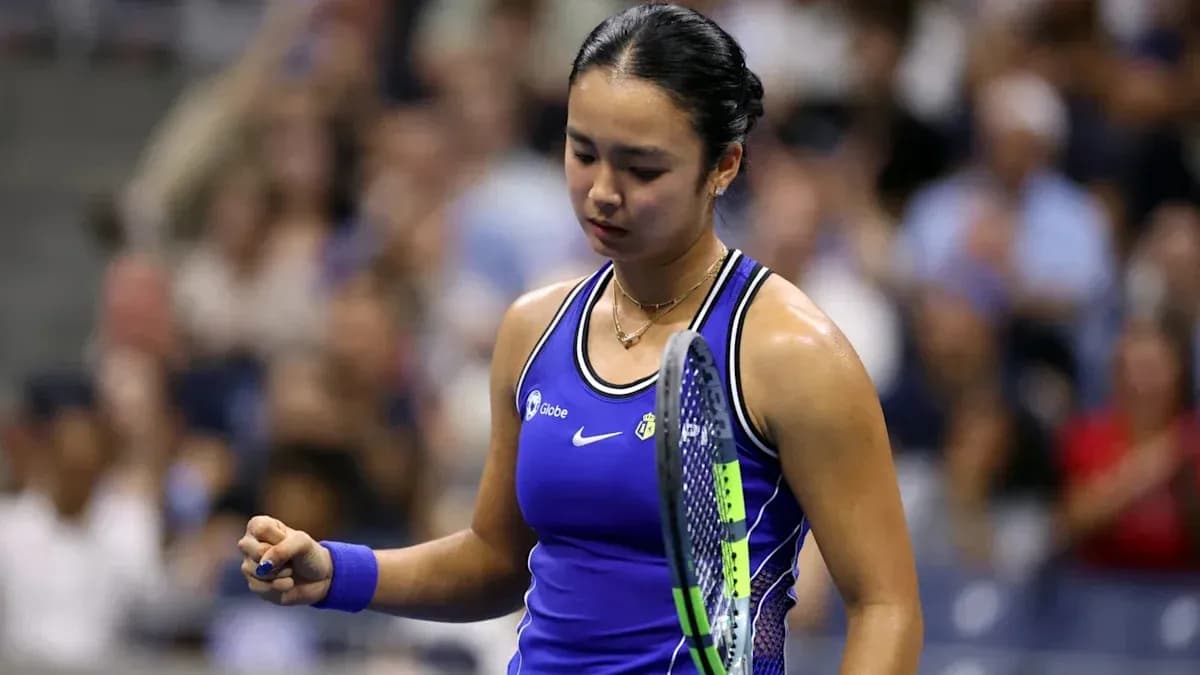
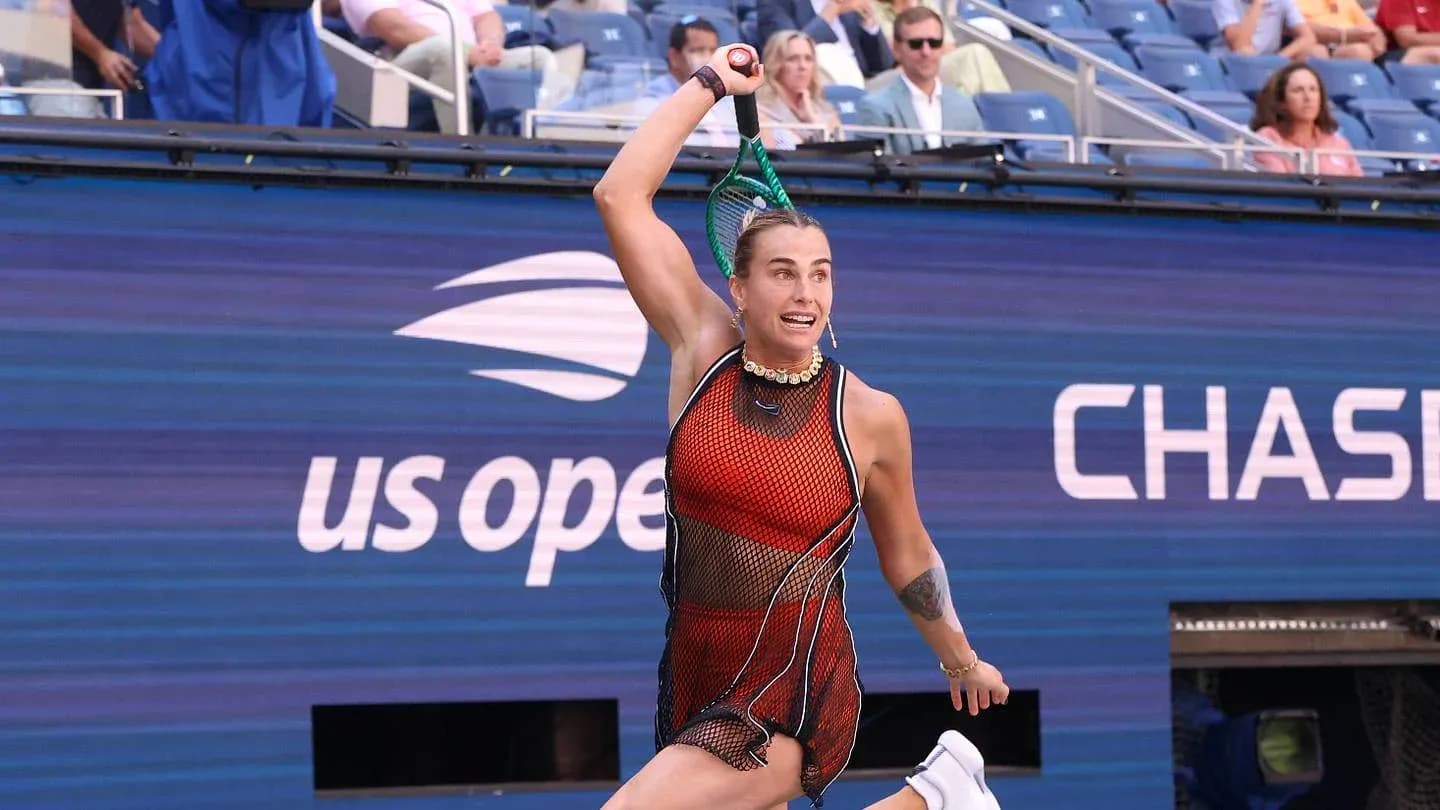
Aryna Sabalenka walked out first, world No. 1 and two-time reigning US Open champion, chasing a slice of history and clinging to a ranking that suddenly looks fragile.
She didn’t so much start her title defence as detonate it.
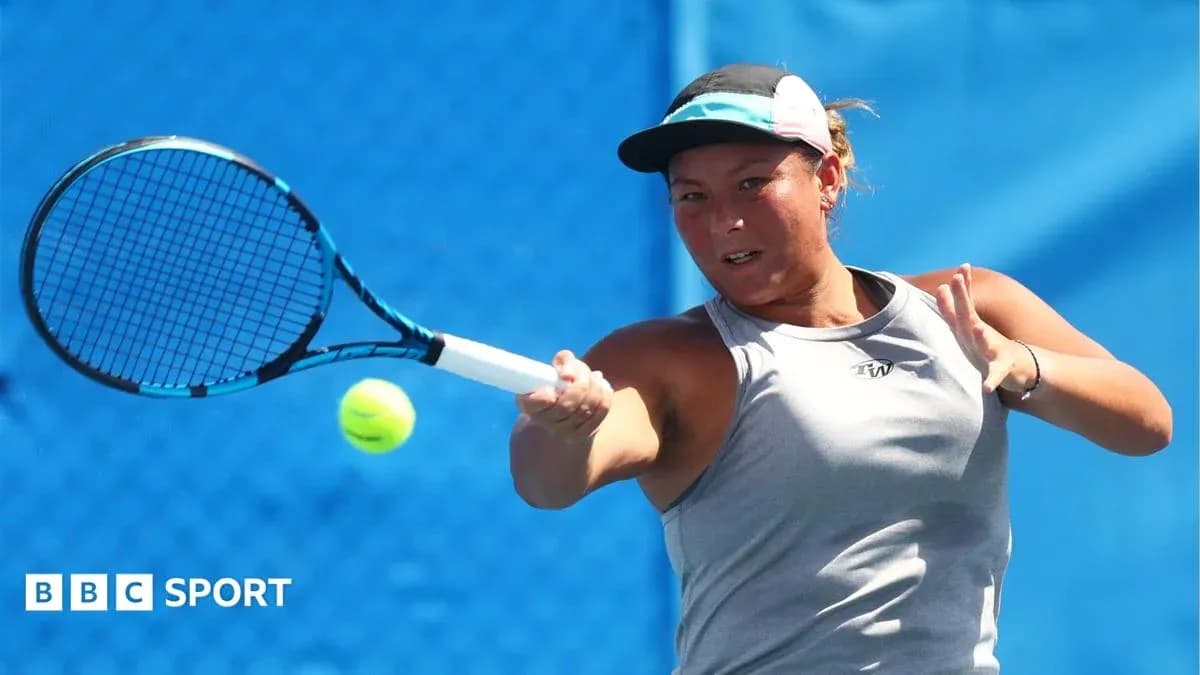
Polina Iatcenko, 22 years old and making her main-draw debut in New York, barely had time to feel the occasion before the match was ripped away from her. Sabalenka tore through the Russian qualifier 6-1, 6-1 in just 53 minutes, a demolition that felt closer to a practice hit than a second-round match on tennis’ grandest stage.
The scoreline flatters Iatcenko. Sabalenka broke three times in each set, her only stumble coming with a single dropped service game early in the second. That was it. One brief flicker of resistance in an evening otherwise defined by one-way traffic and heavy artillery from the Belarusian’s baseline.
For Iatcenko, it was a harsh first taste of Arthur Ashe Stadium – a baptism of fire that exposed the gulf between a qualifier’s dream run and the brutal reality of facing a four-time major champion at full throttle. Still, she leaves with something substantial: a first appearance in a Grand Slam second round and the belief that she belongs at this level.
Sabalenka leaves with something else entirely – a win that did nothing to ease the strain she’s clearly carrying.
She knows the equation. To keep the No. 1 ranking she has held for 99 consecutive weeks, she must lift the trophy again in New York and hope Elena Rybakina fails to reach the semi-finals. Back in March, Sabalenka sat on a seemingly unassailable cushion of roughly 3000 ranking points. That margin has shrunk to 434 after a spring and summer of early exits and puzzling losses.
The urgency is written all over her tennis – and, increasingly, her temperament.
That edge spilled into the press room. Asked about her focus in the build-up to the tournament, with reference to off-court promotional appearances, Sabalenka bristled.
“What kind of question is that?” she snapped. “Just because I posted some activities with brands, you think that I've been partying and not training?”
When a follow-up suggested she was “getting serious” now that the event had started, the sarcasm came quickly: “Oh yeah, I wasn't serious before that. Next question.”
The exchange was brief, but it revealed a player feeling the weight of expectation and scrutiny, even as her tennis suggests she’s still very much in control of her own fate here.
On court, she has barely put a foot wrong through two rounds. Off it, the pressure of history, ranking maths and a season that has tailed off since her blistering start all loom large. Three titles early in the year and a narrow loss in the Australian Open final set a ferocious standard. Everything since has felt like a comedown.
At least the draw has offered a small reprieve. Instead of a potentially awkward third-round showdown with two-time major winner Barbora Krejcikova, Sabalenka will face Kamilla Rakhimova, the Czech’s conqueror. Another chance to impose herself. Another step in a campaign where anything less than the trophy might cost her the throne.
Alcaraz Shakes Off the Rust, Then Turns on the Power
If Sabalenka’s night was all about control, Carlos Alcaraz’s began with doubt.
The defending men’s champion walked into Ashe for only his second competitive singles match in more than four months, the lingering question hovering over his right wrist and his rhythm. Jaime Faria, ranked 72 in the world and with nothing to lose, sensed it immediately.
Alcaraz started slowly. His timing was off, his patterns hesitant. Faria pounced, breaking in the seventh game of the first set and holding his nerve to take it. For a few games, the stadium felt the flicker of something big – the possibility that the champion, rusty and undercooked, might be vulnerable.
That hope didn’t last long.
Alcaraz stared down a crucial cluster of break points in the opening game of the second set. Faria couldn’t convert. The match turned right there. The Spaniard reset, tightened his game and then simply blew the Portuguese away.
From 0-1 in sets, Alcaraz rattled through the next 12 games in a blur of forehands, drop shots and swagger, taking the second set 6-0 and surging ahead in the third. Faria did manage to break back early in that third set, only for Alcaraz to immediately snatch the advantage again and close it out 6-3, before cruising through the fourth 6-2.
Final score: 4-6, 6-0, 6-3, 6-2.
A shaky opening, then three sets that looked exactly like what New York has come to expect from him.
The most significant detail of the night, though, sat in his forehand. After four months nursing a delicate wrist injury, there was no sign of fear in the stroke that defines his game. He swung freely, hit through the ball, and backed up the words he had offered after his first-round win over Roman Safiullin.
“I know once I step on the court, I've just got to go for it every time. I've got to feel normal,” he said. “I have to hit like I was hitting before the injury. I'm feeling great. There is no reason to be afraid and not hitting normal.”
He admitted the first set against Faria had cost him.
“It was a tough match for me. I felt great in the first set, but I didn't take time and that cost me,” he said. “After that I tried to be focused, stay calm and think the good things will happen.”
They did. Yet the caveats remain. Two wins, no obvious physical setbacks, and still the sense that he is operating a gear or two below his electrifying best. The real examination is still to come.
A dangerous third-round test against Wu Yibing awaits, and looming beyond is the possibility of a fourth-round clash with 20th seed Tommy Paul. Five-set marathons, consecutive high-intensity matches, the grind of a full fortnight – those are the unknowns for a player still early in his comeback.
For now, both defending champions have done what they needed to do. Sabalenka is crushing opponents while fighting her own nerves and the rankings calculator. Alcaraz is winning while rebuilding his body and his timing.
The regal night on Ashe ended with both still standing, but the real question hangs over the next ten days: can either of them turn survival into something lasting, something historic, under this unforgiving New York glare?