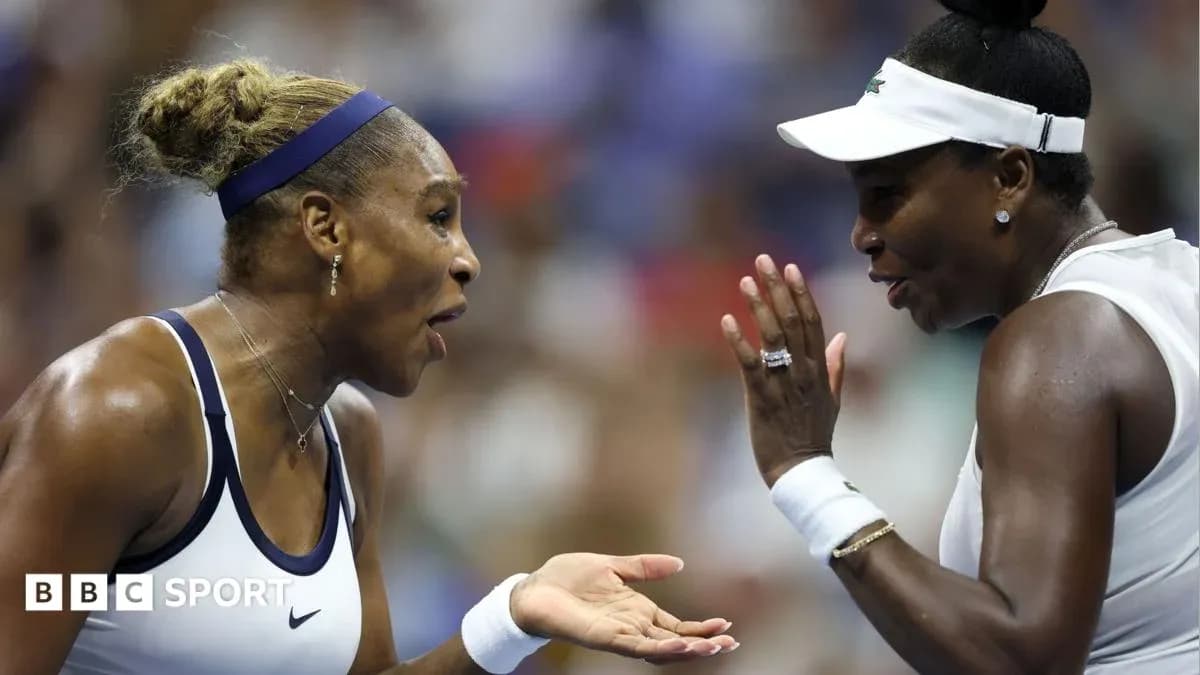
Arthur Ashe has staged hundreds of night-session epics. Very few have started with a women’s doubles first round. Even fewer have felt like this.
Serena and Venus Williams walked back into the New York glare with a combined age of 90 and the weight of three decades of history at their backs. The lights dimmed, the music hit, and 20,000 people rose to greet two players who long ago stopped being just tennis champions and became something closer to cultural landmarks.
They did not win. They did something harder: they made the stadium forget the score.
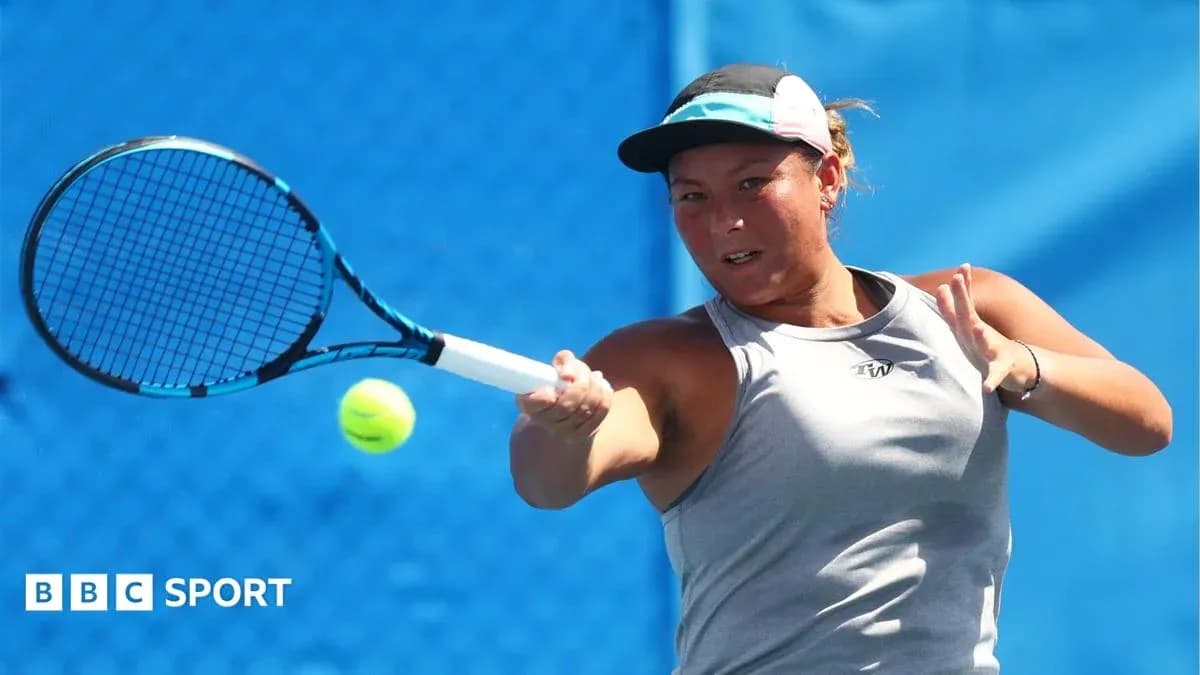
Chan Hao-Ching and Maya Joint, the 14th seeds, left with the 6-3 6-7 (6-8) 7-6 (10-7) victory and a place in the second round. The Williams sisters left to a standing ovation and a sense that, even in defeat, they still own this court.
A flat start, then a spark
For a while, it looked like the script might be brutally short.
The first set was subdued, almost eerie by Ashe standards. The crowd wanted to erupt, but Serena and Venus started slowly, the timing just off, the returns a fraction late. Chan and Joint played smart, clean doubles, taking the opener 6-3 as the noise dipped and phones quietly reappeared in the stands.
Chanda Rubin, who once faced the sisters in the 1999 US Open doubles final, watched on from the commentary box. “It was unbelievable how competitive that was,” she said later. “After the first set you wondered if Serena and Venus would be able to find their mojo – but, boy, they did.”
The shift came in the second set. Serena’s footwork sharpened. Venus, who had been the steadier of the two early on, kept hammering returns and closing at the net. They fought off four break points – two in the fifth game, two in the seventh – and each hold felt like a small revival. The crowd sensed it and finally let loose.
Rallies stretched, angles opened, and those familiar, violent Williams groundstrokes began to dictate. The set tightened, then spilled into a tie-break. This time, the sisters refused to blink, edging it 8-6. Arthur Ashe shook like it was 2002 again.
A final act worthy of their legacy
The decider, at first, did not care for sentiment.
Chan and Joint, unfazed by the noise and the names across the net, jumped to a 4-1 lead. The stadium hushed again, not out of boredom but out of dread. This, surely, was the point where age, rust and reality would close in.
The sisters refused that ending.
They clawed back, one point at a time, leaning on the qualities that built their careers: stubborn defence, fearless hitting, an almost irrational belief that no scoreline is final. The match spilled into a first-to-10 match tie-break, and suddenly the clock seemed to roll backwards.
They raced to 5-0. The place exploded. People stood, filming, shouting, half-celebrating a comeback that felt inevitable when the Williams name is on the scoreboard.
Then the match turned again.
Chan and Joint dug in, stayed calm and began to chip away. A double fault from each sister cracked open the door. The 14th seeds didn’t just walk through it; they sprinted. Point by point, they reeled the Americans in, silencing the roars and replacing them with gasps. From 0-5 down, they surged to 10-7 and the win, handling the moment with the kind of composure that often deserts players on this court.
“The atmosphere was surreal,” Joint said. “It was something we’ve never experienced before, and to play against such legends of the game was super special.” It was the understatement of the night.
More than a match, maybe a farewell
On paper, it was a first-round loss for a wildcard pair. On court, it felt like a curtain call.
Four years had passed since Serena and Venus last played together on Ashe, a straight-sets defeat to Lucie Hradecka and Linda Noskova. In the time since, Serena had “evolved away” from the sport, as she described it in 2022, only to ignite fresh excitement by returning to competition this summer. Venus never left, continuing to grind through the tour with the help of wildcards, a decision that has drawn criticism in some corners but rarely in New York.
Their planned doubles comeback at Wimbledon vanished with Serena’s knee injury in a singles loss to Joint, of all people. They finally reunited in Cincinnati, only to fall in another match tie-break to Marta Kostyuk and Peyton Stearns. The pattern repeated in Flushing Meadows: flashes of vintage brilliance, a narrow defeat, and yet another reminder that their floor, even now, remains remarkably high.
Against Chan and Joint, the numbers told a story of credibility, not nostalgia. The groundstrokes were solid, the movement sharper than their ages suggest, the competitive fire intact. They caused problems, constantly, for a seeded team playing excellent doubles in a partisan cauldron. The younger pair deserve full credit for not shrinking under that weight.
Inside the arena, something unusual happened for a New York night session: silence. Not apathy, but attention. The chatty, restless Ashe crowd stayed locked in on the points, understanding that this might be the last time they would see the sisters share this stage.
When it ended, the initial reaction was a low, collective groan. Then the applause rose, long and affectionate, as Serena and Venus packed their bags and waved. No speeches, no ceremony. Just a raw, unscripted goodbye – or what felt very much like one.
What comes next?
The questions about the future hovered in the humid Queens air.
Serena had teased, in an interview with Good Morning America earlier in the week, that she wanted to play singles again. Venus, after her singles exit on Monday, bristled at the idea of mapping out her post-tennis life, saying she should not “have to” think beyond the doubles.
On Friday night, they chose silence. US Open organisers said the sisters were “not available” to speak to the media. No declarations, no timelines, no answers.
Maybe that was fitting. For three decades, Serena and Venus have dictated the terms of their story, from the moment they arrived as teenagers and tore through a sport that did not quite know what to do with them. They changed the face of tennis, stacked up 30 Grand Slam singles titles between them, added 14 more in doubles as a pair, and carried the game into places it had never been.
Now, in the twilight, they can still walk into Arthur Ashe Stadium and command a night session usually reserved for the sport’s current elite. They can still turn a doubles opener into an event, still make a packed stadium sit down, shut up and watch.
The scoreboard says they lost 6-3 6-7 7-6. The echoes inside Ashe suggest something else: that the sport is still not quite ready to imagine a US Open without them.
Whether this was the last time they share that court is a question only they can answer – and, for now, they are keeping it.