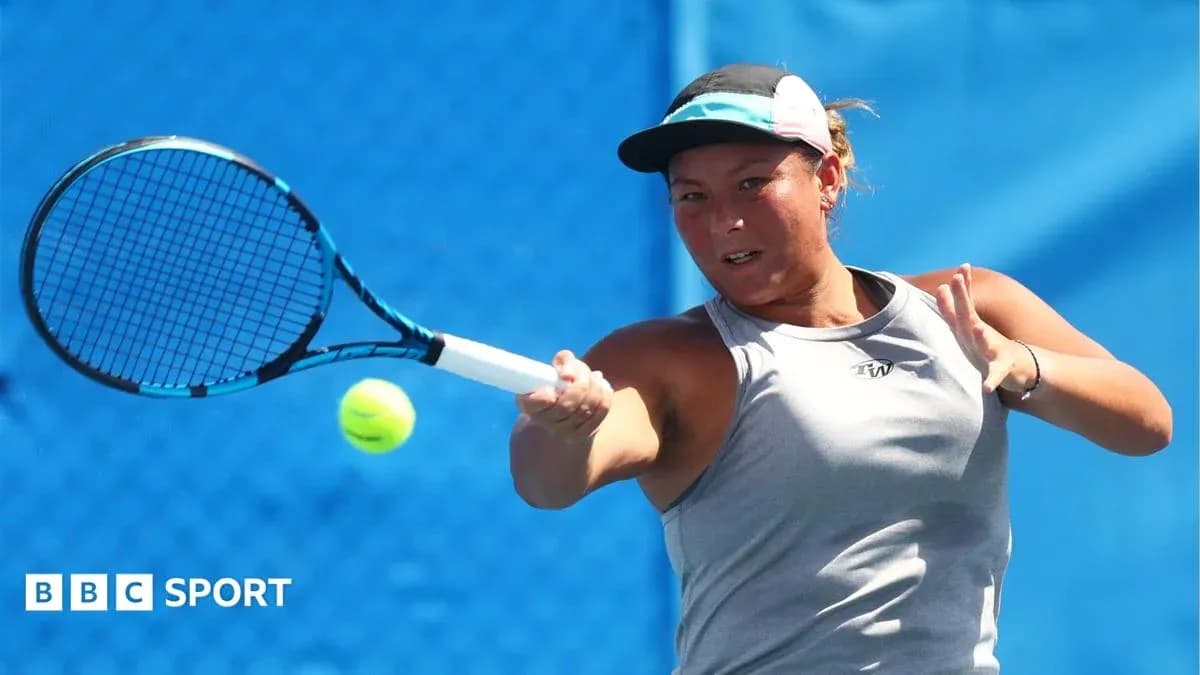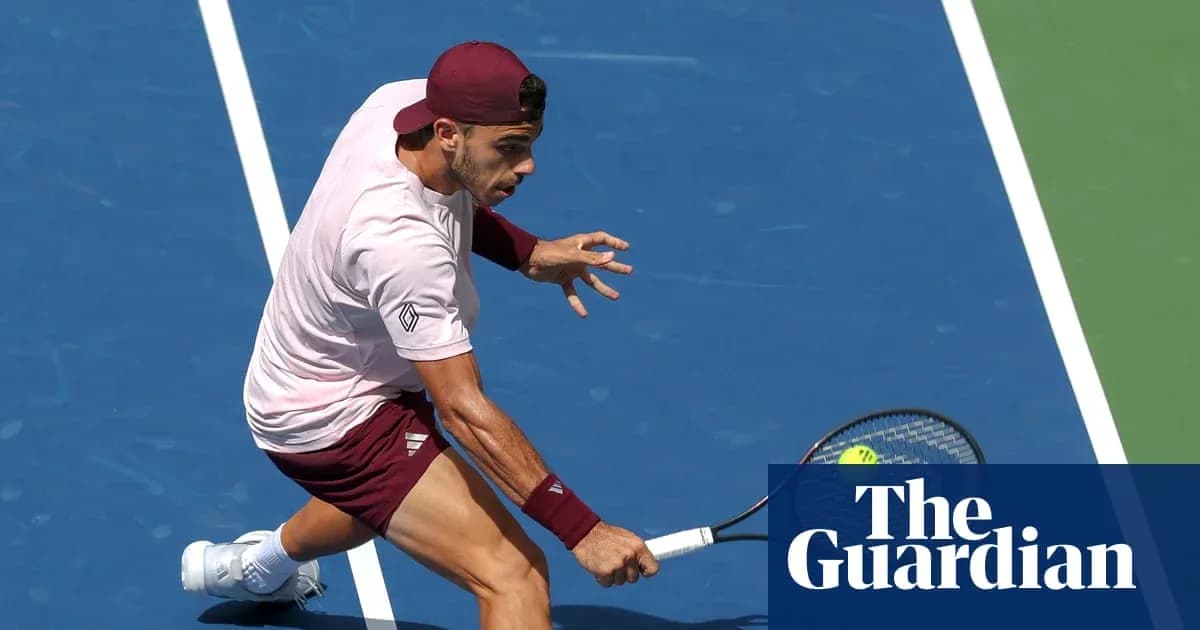
Taylor Fritz buried his face in his hands before the ball had even landed. His final, frantic backhand sailed long, the roar inside Arthur Ashe Stadium closing in around him as the reality hit: a golden chance at his home major had slipped straight through his fingers.
For two sets, Fritz owned the afternoon. He dictated, he bullied, he looked every inch the man ready to seize a suddenly wide‑open US Open. Up two sets to love on Francisco Cerundolo, then breaking immediately in the third, he had the match – and perhaps something bigger – in his grip.
One loose service game changed everything.
Cerundolo pounced, the momentum swung, and Fritz never truly got it back. What followed was a two‑hour grind in which the American chased a rhythm he had already lost, finally falling 3-6, 4-6, 6-3, 6-4, 6-4 in a third‑round defeat that cut far deeper than a routine early exit.
This was supposed to be different. This was supposed to be his opening.
A rare window slams shut
Fritz is no stranger to the glass ceiling. Once ranked as high as No 4, the 28‑year‑old has been the standard‑bearer for American men in a brutal era. In the last three seasons alone he has reached two US Open quarter-finals, both times running into Novak Djokovic, and in 2024 he finally broke through to the final in New York, the first American man to do so since Andy Roddick in 2006.
The pattern has been familiar: Fritz squeezes every drop out of his game, only to find an all‑time great on the other side of the net.
Not this year. Not on paper, at least.
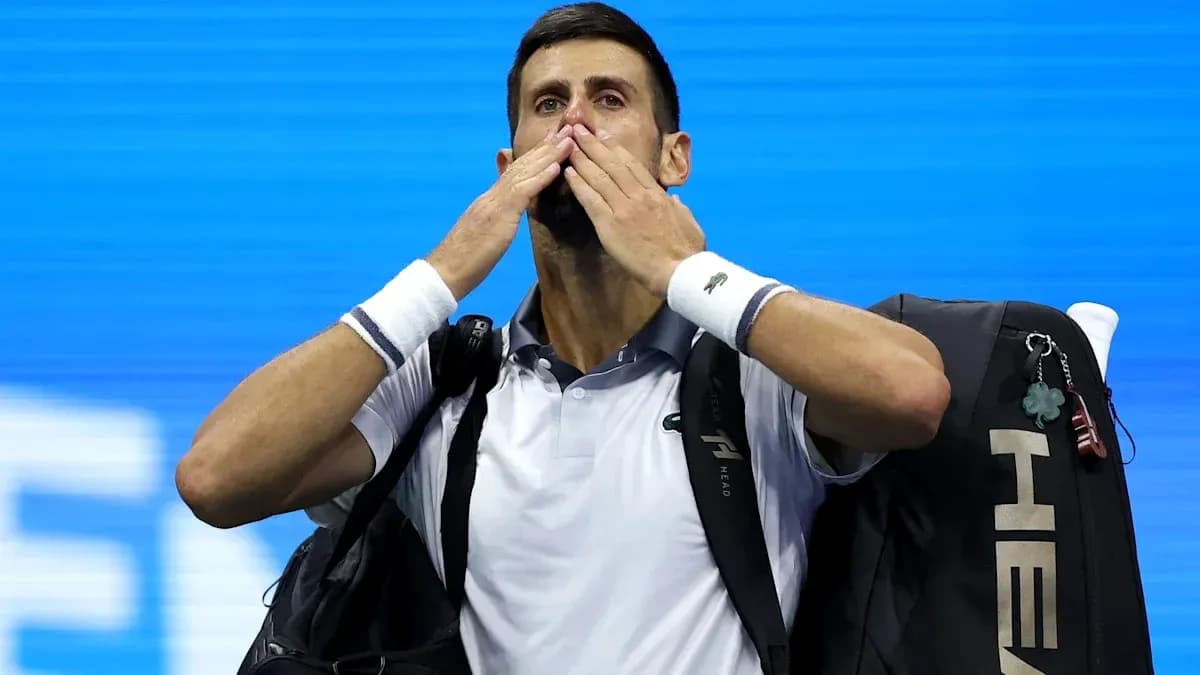
Jannik Sinner, world No 1 and four‑time grand slam champion, is out injured. Djokovic, now 39, crashed out in the first round. Carlos Alcaraz, a seven‑time major winner and defending champion, is feeling his way back after four months on the sidelines. The usual roadblocks have either vanished or arrived diminished.
In this kind of draw, the air tastes different. Every contender can smell it. With no dominant force in full flow, the 2026 US Open has turned into a rare free‑for‑all, a tournament that could define a career for anyone bold enough to grab it.
Fritz knew it. That is why this one hurts so much.
He stood a game away from serving for the match in the fifth set, holding three break points for a 5-3 lead. Convert one, close it out, and he stays alive in a draw begging for a champion from outside the usual trio.
He missed them all.
“I don’t even know what to say,” he admitted afterwards, the shock still raw. “I don’t really want to talk to anybody, see anybody. I kind of just need to get out for a couple days and then just get back to work. I don’t know how I let that happen today.”
The words matched the body language. This wasn’t just a loss; it was a squandered moment in a career that has fought for every scrap of opportunity.
A nation on edge
Fritz was not alone in carrying the weight of expectation.
Seven American men started the day still alive in the singles draw: Ben Shelton, Fritz, Frances Tiafoe, Learner Tien, Tommy Paul, Alex Michelsen and Michael Zheng. In the bottom half, where Friday’s results locked in the fourth round, an American appears in each of the four matches. The path is there, clearly drawn, for someone to become the first US man since Roddick in 2003 to lift a major trophy.
Fritz’s collapse serves as a warning. When the door swings open this wide, the pressure doesn’t ease; it multiplies. Every player can see the finish line more clearly than usual. That clarity can tighten the arm, blur the mind, and turn winning positions into cautionary tales.
The next week in New York will not just decide a champion. It will expose who can live with that kind of opportunity and who cannot.
Keys’ nightmare turn
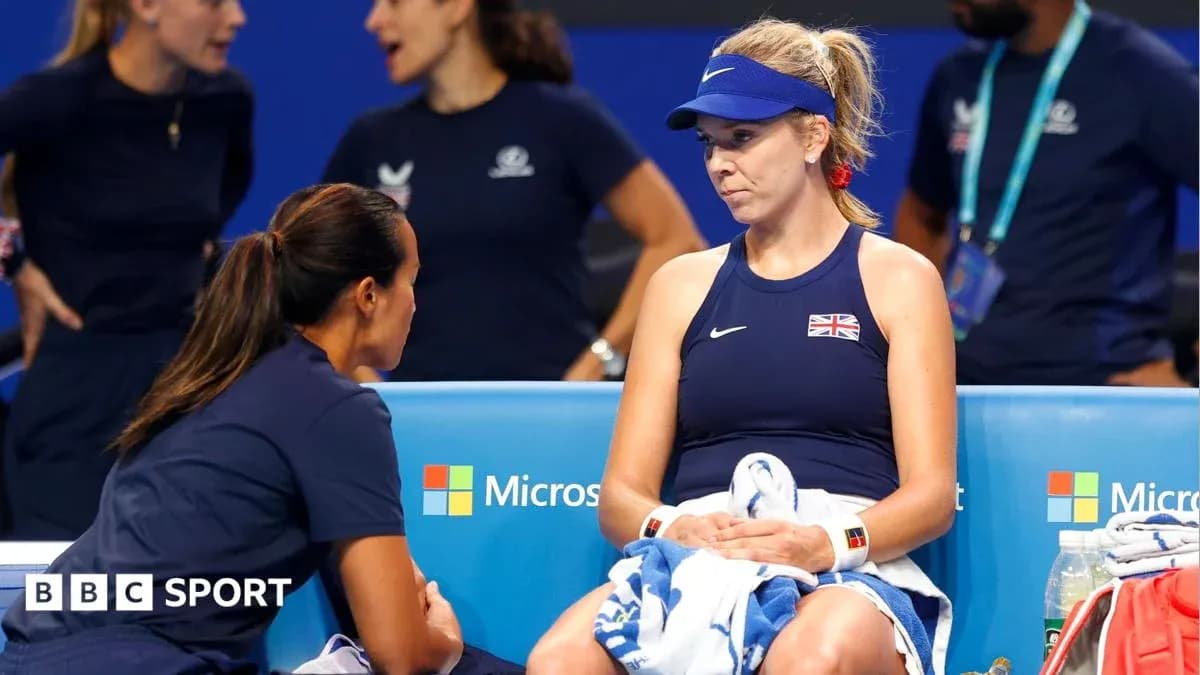
If Fritz’s defeat was brutal, Madison Keys’ afternoon bordered on surreal.
Two days earlier, the 2025 Australian Open champion had authored one of the comebacks of her career, saving five match points to edge Anna Bondar in a tense three‑setter. That kind of escape usually propels a player forward. It can feel like a sign.
Instead, Keys walked straight into one of the most jarring collapses of her life.
Against Zheng Qinwen in the third round, Keys surged to a 5-0 lead in the deciding set. She was crushing the ball, reading the court, and standing on the brink of a statement win. Then the match turned, and it turned hard. Zheng clawed back, point by point, game by game, as Keys’ game disintegrated. The final score – 1-6, 7-6 (3), 7-5 to Zheng – barely captured the scale of the swing.
“I think she started playing better; I started playing poorly,” Keys said. “Then I felt like I couldn’t play tennis any more, and it just was – it just felt like it was a much bigger deal than just playing a tennis match all of a sudden.”
These weren’t the words of a player shocked by a one‑off bad day. Keys suggested the unraveling had been building beneath the surface.
“I just feel like I’ve been struggling for a while now and I feel like I was able to kind of play through it for a bit,” she said. “I’m sure everyone could kind of see that I was struggling a little bit, but inside it felt probably even bigger than that. Some weeks are easier than others, and this week is obviously one of the harder ones just because you care so much. Yeah, I’m going to have to make some changes.”
For an established major champion to talk so openly about needing to reset speaks to the emotional toll of a home slam where every step is scrutinized, every wobble magnified.
Zheng’s statement, Swiatek’s steel
On the other side of the net, Zheng’s victory carried a very different kind of weight.
The 23‑year‑old Chinese star climbed into the top 10 and captured Olympic gold in 2024, only for elbow surgery to halt her rise. The comeback has been anything but smooth. Her ranking dropped so sharply that she needed to battle through qualifying just to earn a place in the main draw here.
Beating a player of Keys’ pedigree from 0-5 down in the third set marks a turning point.
“Tennis sometimes feels like a rollercoaster,” Zheng said. “You see many times that people have a match point, but at the end [their opponent] makes a comeback. Like today was just happening. So this also gives me a lesson that in a tennis match you always have to be there. It doesn’t matter if you are winning or losing, you have a match point or you don’t have a match point – you just need to be concentrated for every single point as long as you can.”
That lesson will be tested immediately. Waiting in the fourth round is Iga Swiatek, who survived her own examination against Marie Bouzkova.
Swiatek, the standard‑setter in the women’s game, had to fend off three set points in the second set before edging through 7-6 (3), 7-6 (3). It was not a clean, crushing performance, but it was the kind of stubborn, problem‑solving win that has underpinned her dominance.
If Zheng’s belief is rebuilding, Swiatek is precisely the opponent who will reveal how far that process has come.
Anisimova slides, the draw tightens
For Amanda Anisimova, the slide is more numerical but no less significant.
Her breakout summer of 2025 – runner‑up finishes at both Wimbledon and the US Open, a surge to No 3 in the world – now feels a little further away. A flat 6-2, 7-5 defeat to 24th seed Anastasia Potapova means she will fall out of the top 10, a sharp reminder of how unforgiving the ranking system can be when early exits start to stack up.
On a day that began with American hopes scattered across the schedule, the scoreboard told a harsher story by nightfall. Fritz gone. Keys out in agonizing fashion. Anisimova slipping backwards. The opportunity in New York remains immense, but so does the strain of trying to grasp it in front of a home crowd that remembers Roddick’s 2003 title and has been waiting ever since.
The draw is open. The giants are wounded or missing. The stage is there.
The question now is simple: who has the nerve to walk through the gap that Fritz and Keys left behind?