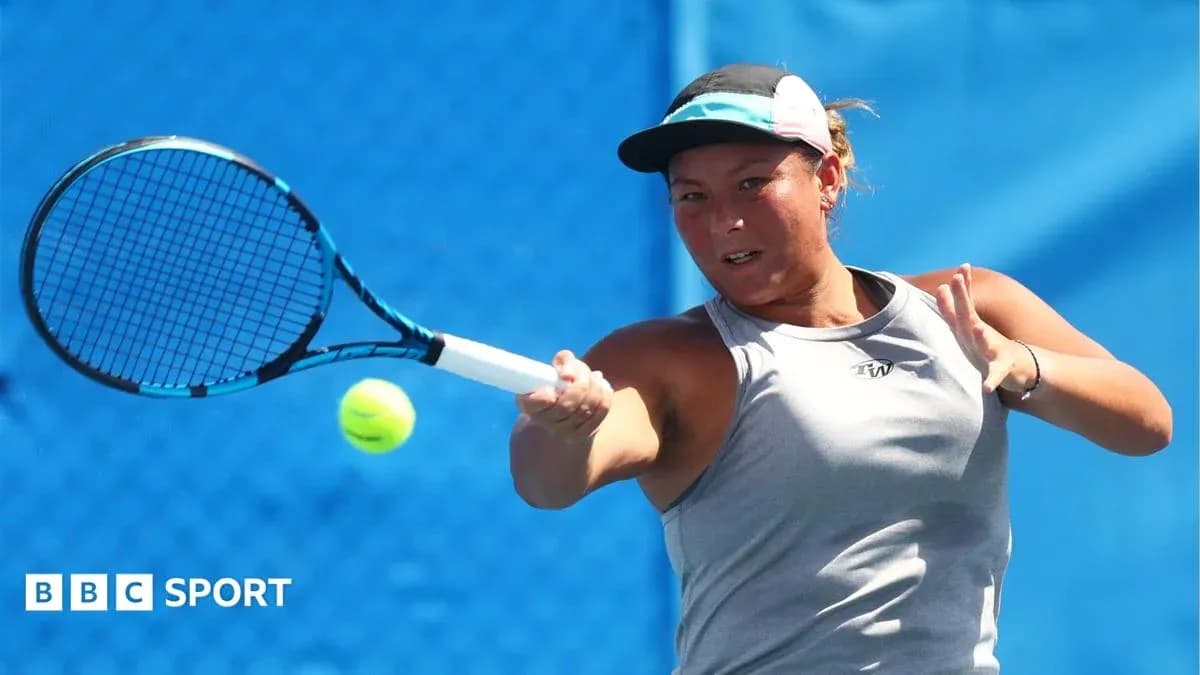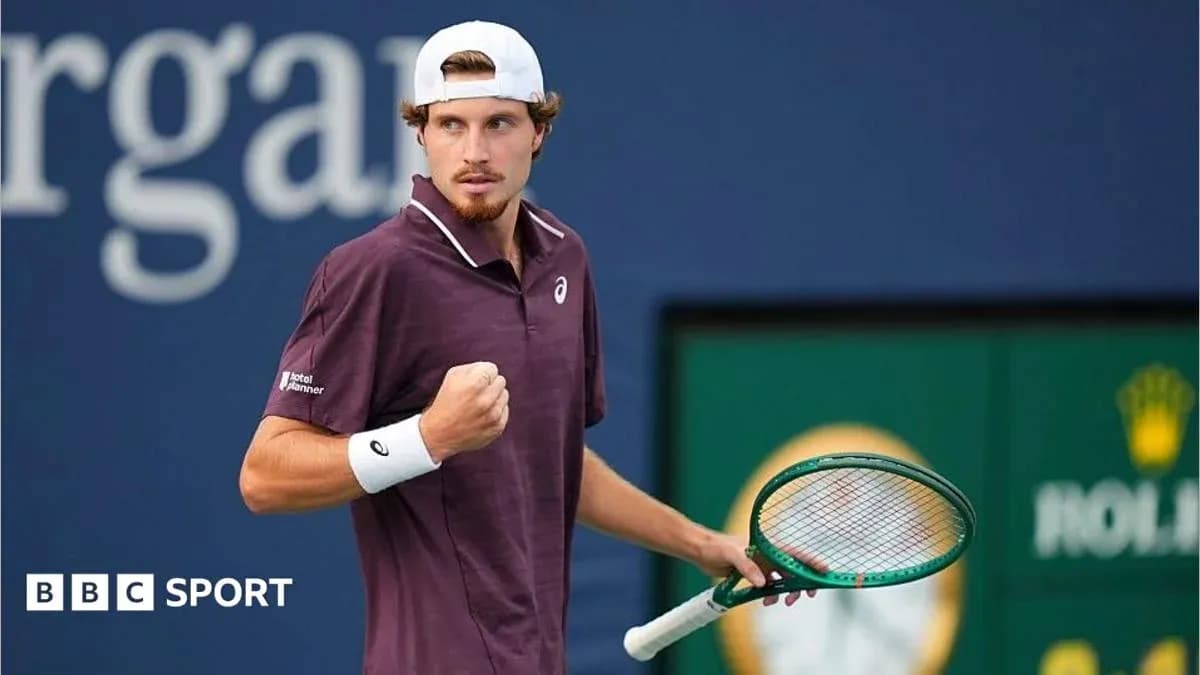
Toby Samuel was wandering the streets of New York when his phone rang. On the other end, Leon Smith. On the line, a moment that changes a career.
“Congratulations, you’ve been selected.”
For most British players, that sentence lives as a daydream. For Samuel, 23, fresh from his US Open debut, it became real in an instant. Within seconds, a year that already felt improbable tilted into something else entirely: Davis Cup tennis for Great Britain, a tie against Ecuador, and his name on the team sheet alongside Arthur Fery, Cameron Norrie, Henry Patten and Lloyd Glasspool.
“It’s surreal,” he admitted to BBC Points West. The word fits. Twelve months ago he was chasing Challenger entries; now he’s climbing into the world’s top 100 and talking about representing his country.
From Challengers to centre stage
Scroll back eight or nine months and Samuel’s ambitions were modest by comparison: get into more Challengers, test himself, inch forward. The leap since then has been brutal in its speed.
He has played three Grand Slams this year. Not just turned up – made a mark.
At the US Open, he collected his first main-draw win at a major with a commanding victory over Tomas Machac, a performance that announced he belonged on the sport’s biggest stage. The run ended in the next round against 18th seed Jiri Lehecka, but the tone had been set. Samuel could swing freely with top-20 opposition and not look out of place.
Paris brought a different kind of test. No wildcards, no shortcuts. He fought through three rounds of qualifying at Roland Garros to reach the main draw, then ran into world number eight Alex de Minaur in the first round. No shame there; just another lesson, another data point in a season full of them.
Then came Wimbledon. A wildcard. A home Slam. A five-set war with Czech 15th seed and French Open semi-finalist Jakub Mensik. Samuel pushed him all the way, dragging the match into a deciding set and showing, on grass, in front of a British crowd, that he could sustain it physically and emotionally.
Those three events alone would make for a transformative season. For Samuel, they were only part of the story.
Learning to live with the elite
The jump from the Challenger Tour to the Slams is not just about ranking points or prize money. It is about walking into a locker room and seeing the faces you’ve watched on TV for a decade.
“At first it was a completely new experience,” he said. “I was pretty nervous going to those tournaments, seeing the top guys there in the locker rooms and playing against them – I was sort of shaking a little bit on court.”
You can’t fake that. For a player coming from Winchester and training in Bath, suddenly sharing space with the sport’s elite can rattle the hands and tighten the shoulders.
But repetition changes everything.
“After the second or third time I did it I got more used to it and I felt like I was a lot calmer on the court which helped me to go deep.”
The nerves eased. The rallies lengthened. The belief grew.
The five-set education
With that came the physical shift. On the Challenger circuit, matches are best of three. At the Slams, the men go the distance. Three, four, sometimes five hours. It’s a different job.
For Samuel, this was a new world. His body had to learn the grind of five-set tennis, the nutrition, the recovery, the mental resets between sets. Every long match became a tutorial.
He talks about it as a “new thing” – the idea of playing for that long, of having to sustain focus and aggression without fading away. It’s one thing to hit big for two sets; it’s another to keep doing it into a fourth or fifth when the legs burn and the lungs bite back.
What has helped him survive that step is not just fitness, but weapons.
Weapons that now “scare people”
Samuel’s game has evolved. He points directly to his serve and forehand as the keys.
“Before they were good but they weren’t really scaring people,” he said. “Now they’re my biggest weapons and I can take matches with them.”
That’s the language of a player who has crossed a threshold. At the top level, “solid” doesn’t cut it. You need shots that force opponents backwards, that make them hesitate, that change patterns. Samuel now believes he has that.
The serve sets the tone, the forehand finishes the argument. On hard courts in New York, on clay in Paris, on grass at Wimbledon, those two shots have started to travel with him, not as hopeful swings but as reliable tools.
From Winchester to the world – and now Ecuador
All of this funnels into this weekend’s Davis Cup tie. For a player who once just hoped to crack Challengers, to now sit as the fifth man in a Great Britain team is more than a line on a CV. It is validation.
He grew up in Winchester, honed his game in Bath, and now steps into one of the sport’s most historic team competitions. The call from Leon Smith wasn’t just a courtesy; it was a statement that Samuel’s rise is being taken seriously inside British tennis.
“It was unbelievable, it was one of the best moments of my tennis life,” he said. “It’s what every British player wants, to represent their country and play for their country.”
That is the standard now. Not just qualifying, not just competing, but carrying the flag in a team room, in a tie that matters.
The surreal feeling may linger for a while yet. But if this past year is any guide, the question for Toby Samuel is no longer whether he belongs – it’s how far, and how fast, he can push this surge.