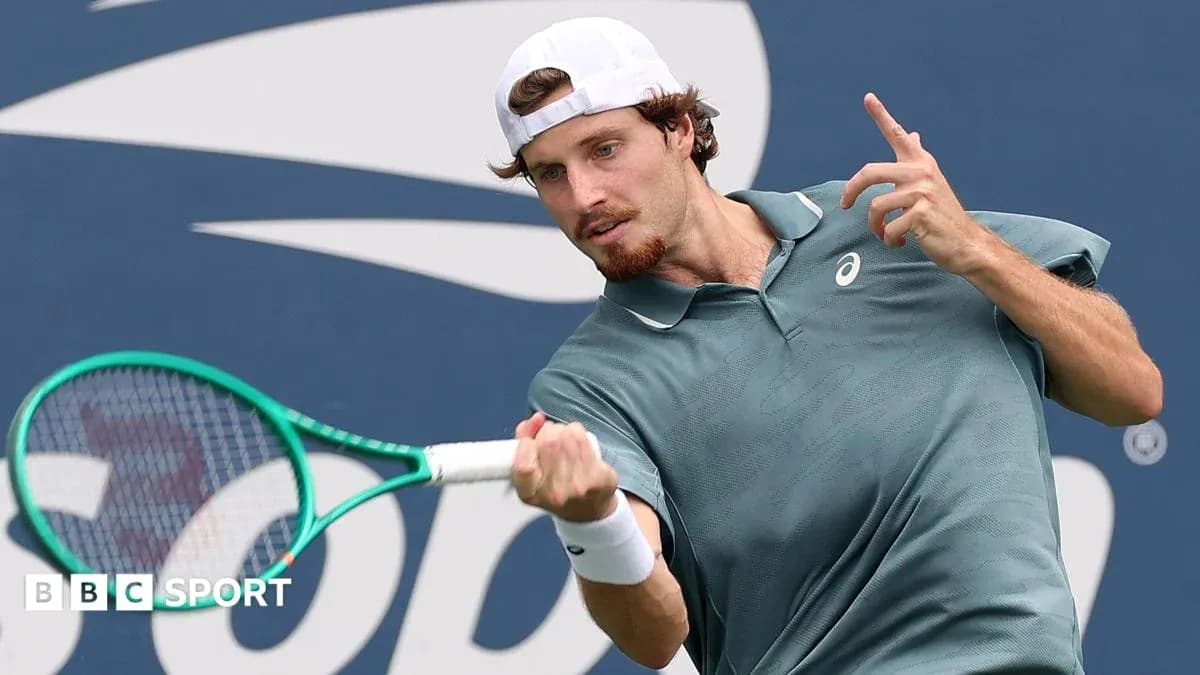
Toby Samuel walked into his first US Open main draw like a man used to climbing out of holes. This time, he never even stepped near one.
The 23-year-old Brit, who had to come from a set down in all three of his qualifying matches in New York, dismantled former world No.20 Tomas Machac 6-2 6-3 6-2 in just over 90 minutes to claim his first Grand Slam main-draw win.
No drama. No five-set grind. Just clean, ruthless tennis.
“It means everything to me. It's what I dreamt of as a kid watching these big tournaments,” he told BBC Radio 5 Live, the emotion still fresh. “Being able to win my first Grand Slam match is unbelievable.”
Two years ago, this would have sounded far-fetched. Samuel had tumbled towards 2,000 in the world rankings, his right arm ravaged by bone bruising that wrecked much of his 2024 season. He was nowhere near the tour’s spotlight, let alone the Arthur Ashe billboards.
Now he sits inside the live ATP top 100, with a $140,000 payday in his pocket – by far the biggest cheque of his career – and a second-round date with Czech 18th seed Jiri Lehecka on the horizon.
From obscurity to the big stage
Samuel’s climb has been steep and unforgiving. He rebuilt his ranking on the Challenger circuit, winning 36 of 39 matches last year to force his way back into the top 300. That surge gave him a platform; 2026 has turned it into a breakthrough.
He qualified for his first major at Roland Garros having never played a single ATP Tour main-draw match. He then rode that confidence into a semi-final run at Eastbourne, earned a Wimbledon wildcard, and picked up a third Challenger title of the year on the hard courts of Winnipeg.
Now, with his new ranking, he’s on course to gain direct entry into next January’s Australian Open. If that holds, he will complete a full set of Grand Slam main-draw appearances barely a year after cracking the top 250.
This isn’t a slow burn. It’s an explosion.
Starstruck no more
The speed of the rise has forced Samuel to adjust just as quickly off the court. At Roland Garros he admitted to being starstruck in the locker room, brushing shoulders with players he had only seen on television.
“I'm still a little bit but I'm definitely more comfortable being around those top guys because I could be playing them the next day,” he said. “I have to start thinking of them not as stars but people I can play against.”
That shift in mindset showed against Machac.
Samuel was clinical from the start, ripping through his opening two sets with an authority that belied his ranking history. Across his first nine service games, he dropped just five points. Three of those holds came to love, part of a seven-game streak that broke the back of the contest.
The only wobble came early in the third. Trailing 2-0, he could have let Machac back into the match. Instead, he reset, tightened his patterns, and reeled off six straight games. He even saved two break points along the way, shutting down any hint of a comeback.
It was the kind of performance that makes a qualifier look like a seed.
Built in Carolina, sharpened in New York
Like his former Wimbledon boys’ doubles partner Arthur Fery – who rocketed up the rankings after a surprise run to this year’s SW19 semi-finals – Samuel has leaned heavily on the American college system.
A former junior world No.57, he followed his parents’ advice and headed to the University of South Carolina, where he collected an All American doubles title and learned how to handle the “super lively” college crowds. Those rowdy nights in Columbia have translated well to the noise of New York.
Several of his Carolina team-mates were in the stands for his first-round win, and he didn’t downplay their impact. He credited their “fighting energy” with helping him “get the job done” against Machac, a nod to the collective spirit that underpinned his college years.
His parents, who had watched him fight through qualifying, were absent this time, busy helping his younger brother settle into his own college journey in the United States.
“My brother's just started university in America so they flew out to help him settle in, and I think my dad will fly back out for the second round,” Samuel said.
It’s a family split between campuses and courts, but the message is clear: this is only the beginning.
British momentum in New York
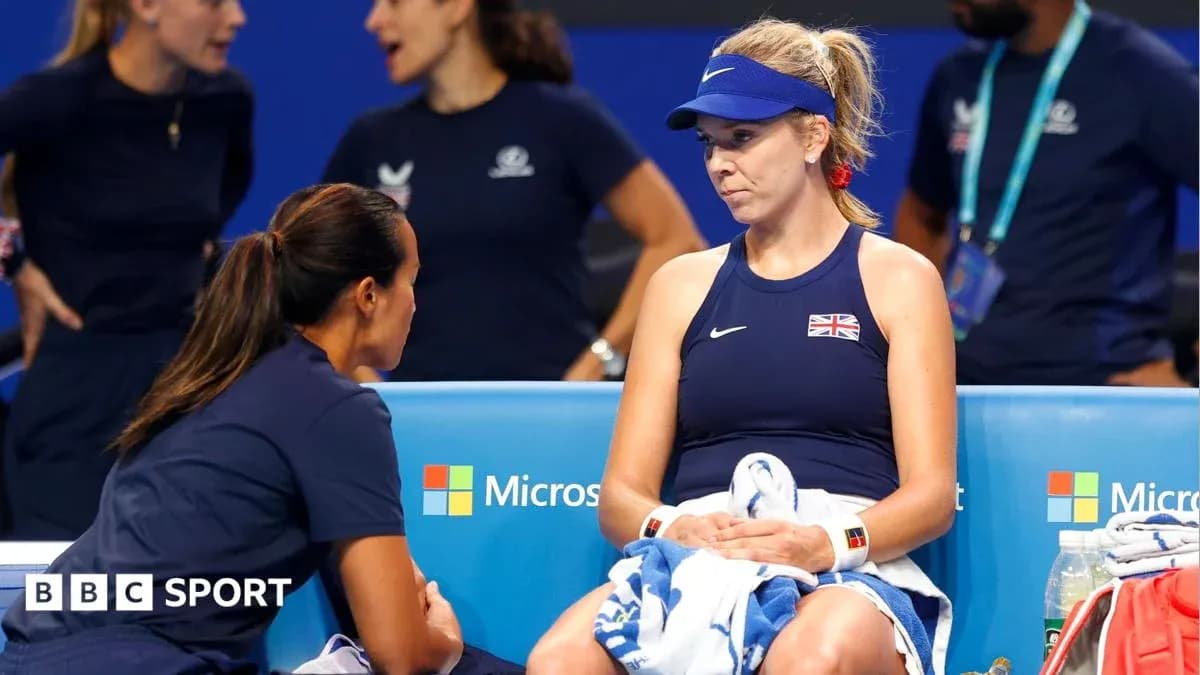
Samuel will not be alone in the second round. Compatriot Katie Boulter also advanced, grinding past American wildcard Carol Young Suh Lee 6-4 3-6 6-0 to keep British interest alive on both sides of the draw.
For Samuel, though, the next step is the most intriguing. Lehecka, the 18th seed, will offer a sharp test of where this surge truly stands. The Czech hits big, moves well, and has already made his mark on the tour.
Two years ago, Samuel was battling injury and anonymity. Now he walks into a Grand Slam second round with a top-20 scalp in his sights and the Australian Open door swinging open.
The kid who once watched these tournaments on television has arrived in the picture. How long he stays there now depends on whether this win is a high point – or just the new normal.