By the time the last stragglers drifted out of Flushing Meadows and the sun was thinking about coming up, the US Open looked less like a grand slam and more like a construction site in crisis. In one of the on-site shops, a small crew of workers huddled under a gaping hole in the ceiling, wrestling with a burst pipe and trying to stop water from pouring down on racks of expensive merchandise.
It felt grimly familiar.
Walk into Arthur Ashe Stadium this year and the first thing you saw were the warning signs: “Pardon our appearance while we write the next chapter of Arthur Ashe Stadium.” The next chapter, it turned out, was being written in leaks, plastic sheeting and the stench of drains. For a tournament that likes to sell itself as a global showpiece, the main arena often looked and smelled like it was coming apart at the seams.
In the media centre, new leaks appeared with comic regularity. Long plastic sheets dangled from the ceiling, funnelling water into buckets scattered across the floor. Reporters typed beneath a makeshift plumbing system, the steady drip-drip soundtrack underlining just how fragile the place felt. Nearby, a workers’ restaurant had to shut for a day after a dramatic burst of water from above. Some photographers said they felt physically sick from the foul fumes rising out of the drains in the photo pit.
It was, by any reasonable measure, the worst-run grand slam in recent memory.
And that was before you even got to the people who came to watch.
The year of ring lights and restless nights
When 2026 is recalled, this US Open will carry another label: the year of the influencers. They arrived armed with ring lights and tripods, determined to turn one of sport’s great theatres into a backdrop for their own content. They filmed TikToks during points, stood up mid-rally to take selfies, and behaved as if the match was an inconvenience interrupting their feed.
The sport lives in an age where “growing the game” has become a mantra, a justification for almost anything. But as the noise inside Ashe swelled, there were moments when even Aryna Sabalenka’s trademark roars vanished beneath the roar of conversation. At times, gatekeeping didn’t just feel acceptable. It felt necessary.
While the stands buzzed and the ceilings leaked, the tennis itself veered between the sublime and the absurd. On one marathon day that ran from 11.30am on Tuesday until 3.33am on Wednesday, Ashe hosted 16 hours of play and four quarter-finals that all went to deciding sets. It was gripping, dramatic, impossible to turn off.
It was also a glaring indictment of a sport that still refuses to fix its late-night problem. Players staggered off court in the early hours, fans trudged home on empty trains, and the schedule rolled on as if this were normal.
Women’s game delivers, again
Amid the chaos, women’s tennis imposed order of its own. The entire top six reached the quarter-finals. For the first time in 51 years, the top four players in the world locked down all four semi-final spots. The hierarchy held, and it produced a week of heavyweight clashes.
Sabalenka’s run summed up the brutality and beauty of it. Her comeback win over Linda Noskova, the 21-year-old Wimbledon champion, was one of the matches of the season: raw, emotional, and played at a level that made everything else on the schedule feel slower. After a nightmare summer, just dragging herself to the final was an achievement she will savour when the frustration fades.
Elena Rybakina walked through fire of a different kind. She arrived juggling the No 1 ranking, an achilles problem and a draw that offered no soft landings. She left with the title. On hard courts over the past year she has been relentless, her quiet, contained demeanour the perfect contrast to Sabalenka’s explosive presence. Where Sabalenka storms, Rybakina glides. The result is the same: opponents broken, trophies lifted.
Zheng Qinwen staged the sort of comebacks that usually belong in fiction. Down 0-5 in the third set against Madison Keys in the third round, she somehow turned it into 7-5. Then she did it again in the very next match, rallying from 0-5 to 7-5 in the first set against Iga Swiatek. Those turnarounds weren’t flukes; they were statements from a player who has fought her way back to the sport’s biggest stages.
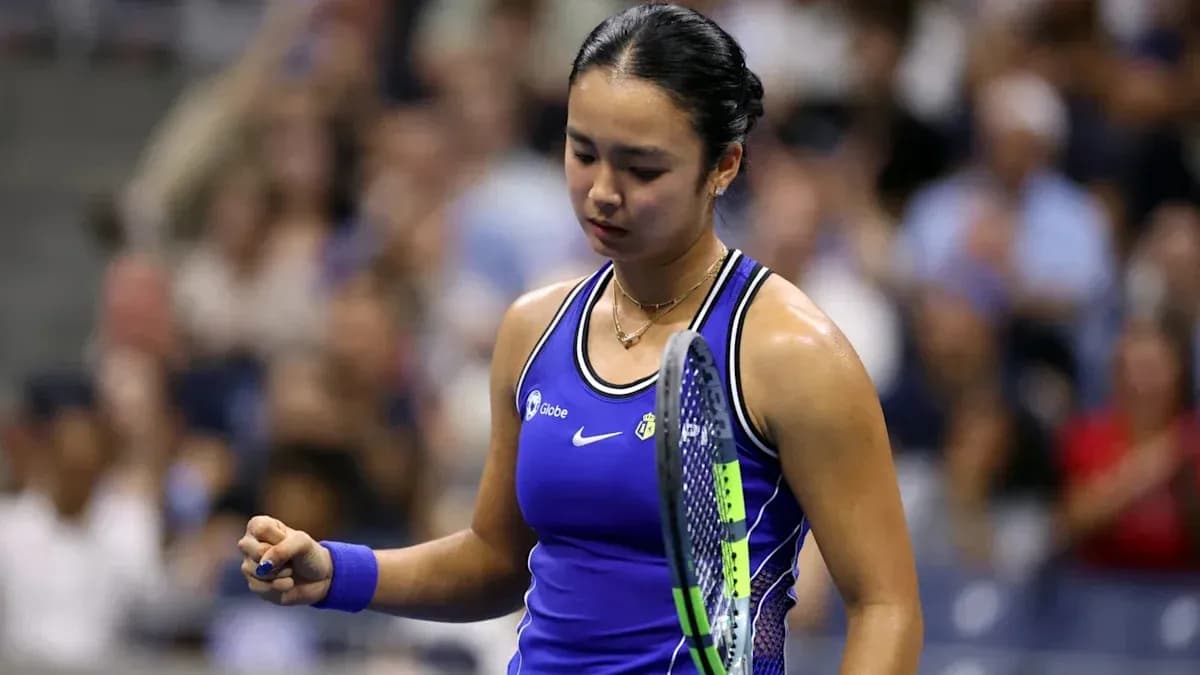
On the outer courts, Iva Jovic and Alexandra Eala reminded everyone that ruthless competitiveness and genuine friendship can share the same baseline. They fought deep into the night, trading blows and smiles, proof that the next generation understands both edges of the game.
Coco Gauff’s semi-final run carried its own emotional weight. A year ago, her serve collapsed so badly here that it left her in tears on court. This time, that same shot held firm under pressure, a visible marker of the work she has done and the ground she has gained.
A bruised men’s field, a defiant champion
The men’s tour arrived in New York already limping. The injury list among the younger generation has grown into something alarming. Carlos Alcaraz and Jannik Sinner have dominated the headlines, but they are just the most visible faces of a wider problem. Jack Draper, Holger Rune, Lorenzo Musetti, Arthur Fils and João Fonseca have all spent large chunks of the past year on the sidelines. Even those who made it to Flushing Meadows did so while still patching over months of lost rhythm and conditioning.
Yet from that battered field came one of the defining images of the sporting year.
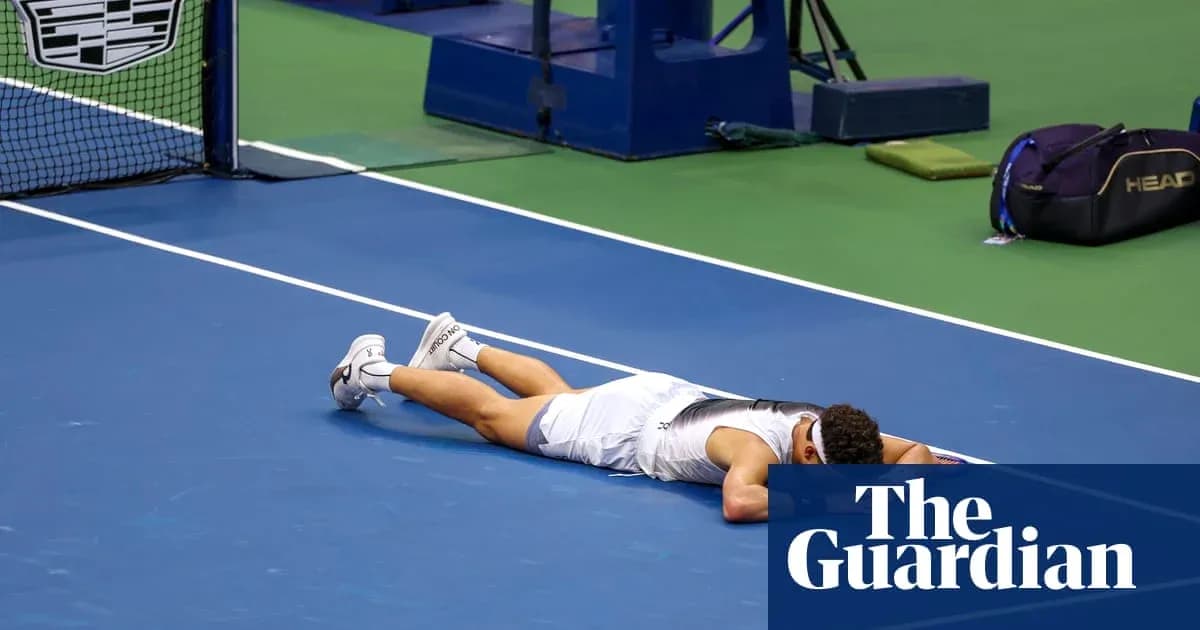
At 3.40am on Wednesday, Ben Shelton walked off Arthur Ashe Stadium as the man who had just taken out Alcaraz in a five-set epic. Alcaraz had pushed himself to the edge for 4 hours and 28 minutes, vomiting multiple times, refusing to back down, only to lose in a fifth-set tie-break. The margins were brutal.
But the story didn’t end with the scoreline. Alcaraz had been away for four and a half months with a wrist injury, unsure how his body would respond, unsure if he could still trust the instincts that made him a phenomenon. In New York, in the suffocating humidity and under a leaking roof, he found his way back to himself.
As he finally left the court and walked down the tunnel towards the locker room, a place that has seen more than its share of broken dreams, his face told the real story. No tears. No slump. Just a wide, unguarded smile.
The building might be crumbling. The schedule might be broken. The influencers might be everywhere.
But if players can still walk out of Arthur Ashe at 3.40 in the morning, exhausted and grinning, what exactly will it take for this sport to fix the stage they’re playing on?