The Arthur Ashe court has seen its share of drama. Tie-breaks. Meltdowns. Night sessions that run past midnight and into legend.
On Monday, the flashpoint came from a ring light.
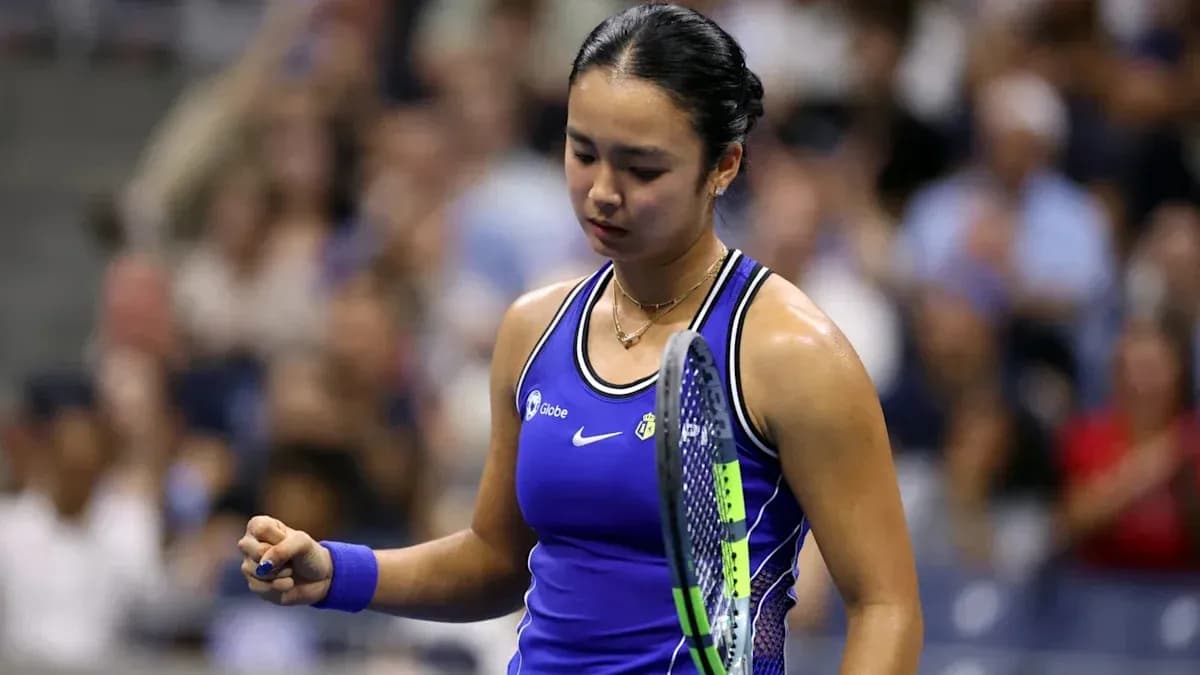
Naomi Osaka’s match against Anastasia Zakharova was rolling along under the lights at the U.S. Open when the chair umpire suddenly broke from the usual rhythm. His focus shifted from the baseline to a suite high in the stands, where a group of influencers were loudly filming what looked like a TikTok dance, bathed in the glare of a bright phone-sized light.
He asked them to be quiet. Then asked again. And again.
Play stopped. Patience snapped.
A video of the moment, shot by Katherine, a lifelong tennis fan in the stadium, tore through social media within hours. More than 1,500 comments piled up beneath it, many of them from frustrated fans who’ve watched the Open morph from a tennis tournament into something closer to a content festival.
For years, the signs have been there: Honey Deuces held aloft for Instagram, tennis WAGs turning the players’ box into a curated feed, sponsor activations built for selfies rather than serves. The resentment had been simmering. This time, it boiled over.
“All around the stadium, there were people — in the middle of serves and in the middle of points — getting up, walking through the crowd down to the closest they could get to the court in their section, and taking pictures, taking videos, using ring lights,” Katherine said. Anyone who has grown up with the sport knows the unwritten rule: you sit still during points. You move at the changeover. At worst, you wait for a lull.
The U.S. Open used to enforce that. In 2024, it relaxed its rules on walking around during matches. On Monday, that decision felt like it had come home to roost.
From Katherine’s vantage point, one suite in particular stood out: around a dozen people, noisy, lit up, and seemingly oblivious to the match below. A U.S. Open usher held the light for them as they filmed. The umpire turned toward them several times, asking for quiet. The group barely reacted.
“It didn’t seem like they were aware that the umpire was talking to them because they weren’t really watching the match,” Katherine said. “I’ve never seen that in the middle of a point. The flash was the craziest thing.”
The clip she posted didn’t just capture the light. It captured a collision of cultures: a sport built on silence and concentration versus an economy built on visibility and clicks.
Caught in the middle was Mriganka Chawla, a fashion and lifestyle influencer who appeared in Katherine’s video taking a selfie while Osaka played. Chawla was not in the notorious suite that drew the umpire’s ire, but she quickly became a face of the controversy.
She had come to the Open for the first time with her fiancé’s tennis-obsessed family, she said, not on an official content trip. At one point, she left her seat to get an ice-cream sandwich. On the way back, she spotted a relatively empty section, asked an usher to snap a photo, and used a selfie light — the same one popularized by Alix Earle.
In her mind, it was harmless. A quick picture, far from the core of the action.
“I was seriously so far away,” she said. “I’m really sorry if I disrupted any playing.” After she identified herself in the comments under Katherine’s video and insisted her flash hadn’t bothered anyone, the internet did what it does. Some users sent what she described as “death threats.” Others just wanted to know which selfie light she used.
“This is such an influencer thing, and I understand that now, but everybody has really cute photos [from the Open]. I just wanted one cute photo,” she said. “I wish somebody had told me, ‘You can’t do that.’ This is also on me. I should have researched it. I wish there were some guidelines or something.”
Her regret came with a twist of irony. The photo that sparked the storm? It didn’t even work. “It looks like I’m mid-sneeze,” she said, laughing. “Hey, everyone knows I went to the U.S. Open now, so I guess I don’t have to post anything.”
Behind the individual missteps lies a deliberate strategy. The United States Tennis Association has spent the past few years reshaping the Open into what its CEO recently called “tennis Disneyland” — a place where the sport shares top billing with food courts, concerts, sponsor activations, and, crucially, social media content.
Influencers are central to that push. Sportico reported that the USTA handed out media credentials to 100 influencers and podcasters this year, double last year’s tally of 50. That doesn’t include the creators hosted in corporate suites by sponsors, each of them under pressure to justify their invite with posts, reels, and stories.
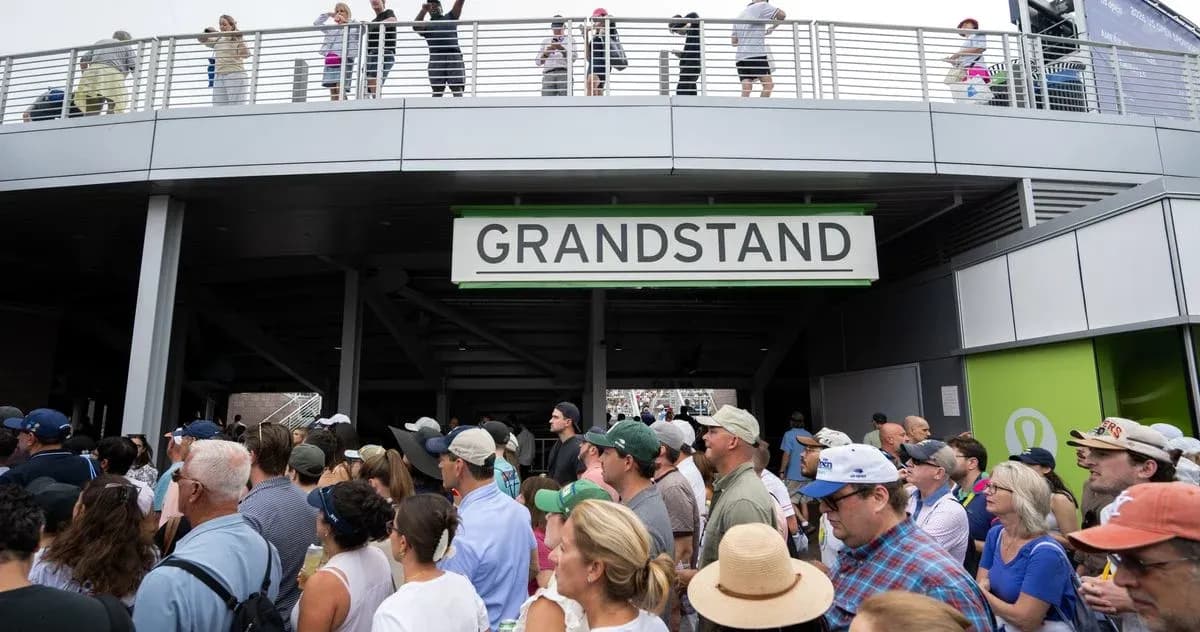
The result is a very different atmosphere from the one traditional fans remember. The Open has always been the loudest of the four majors, a night-session cauldron where New Yorkers talk through changeovers and cheer double faults. But this is something else: not just noise, but movement, lights, and people who appear more focused on capturing the moment than watching it.
The backlash has grown with every tournament. Fans grumble about ticket prices that keep climbing, crowds that feel more packed, and newcomers who either don’t know the etiquette or don’t care. A recent piece in the culture magazine Mercer Edition labeled it an “influencer problem,” warning that a sport “built around a level of concentration that can’t be understood until fully observed” risks eroding its core if it opens the doors too wide in search of “vanity metrics and corporate satisfaction.”
Katherine has felt that shift acutely over the past two years.
“Tennis fans have gotten really fatigued with influencer culture” at the Open, she said. The tournament’s rowdy reputation never bothered her; the roars, the buzz, the late-night energy are part of the charm. The constant selfies and ring lights are not. “Once it’s impacting the play of the game, that’s a breaking point.”
On Monday night, that breaking point played out in front of a global audience. A chair umpire pleading for quiet. A suite that didn’t seem to hear him. A player trying to serve through the glare.
The U.S. Open wanted to become tennis Disneyland. It got its spectacle. Now it has to decide how much of the tennis it’s willing to trade away.