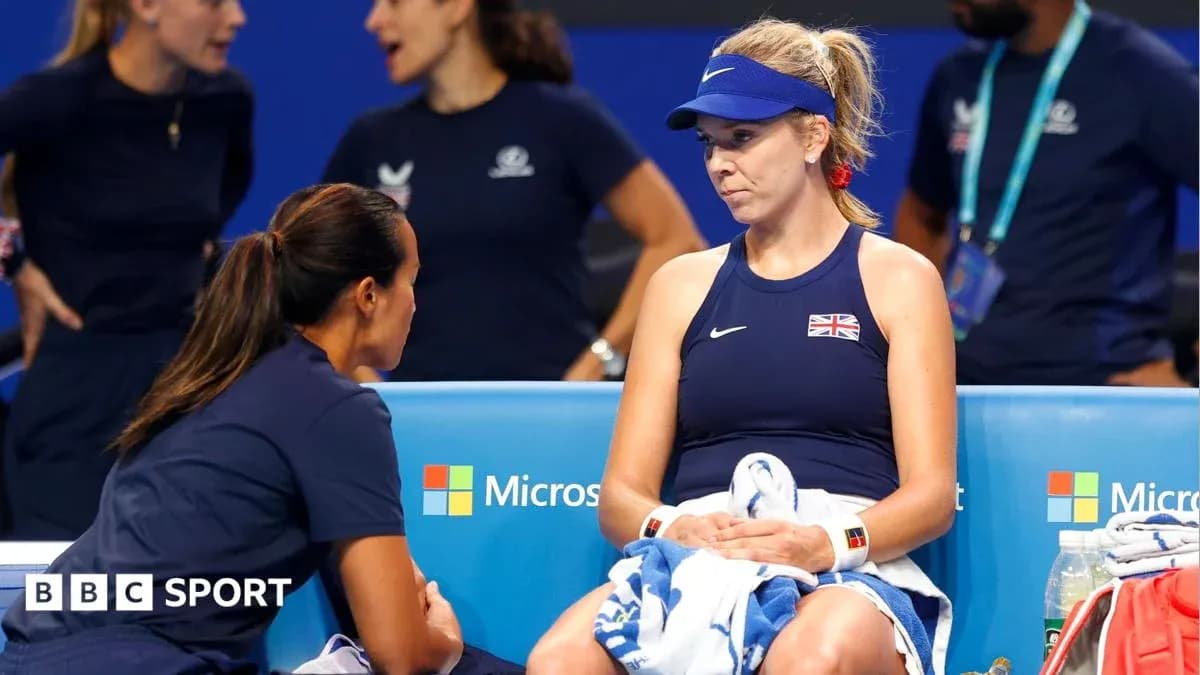
New York likes to brag that it never sleeps. This year’s US Open is doing its best to prove it.
Night sessions have bled into the small hours, matches have stretched towards dawn and players chasing Grand Slam glory are stumbling back to their hotels just as Manhattan pours into the subway. The city’s nocturnal myth makes for great television. It makes far less sense for elite athletes trying to win a major.
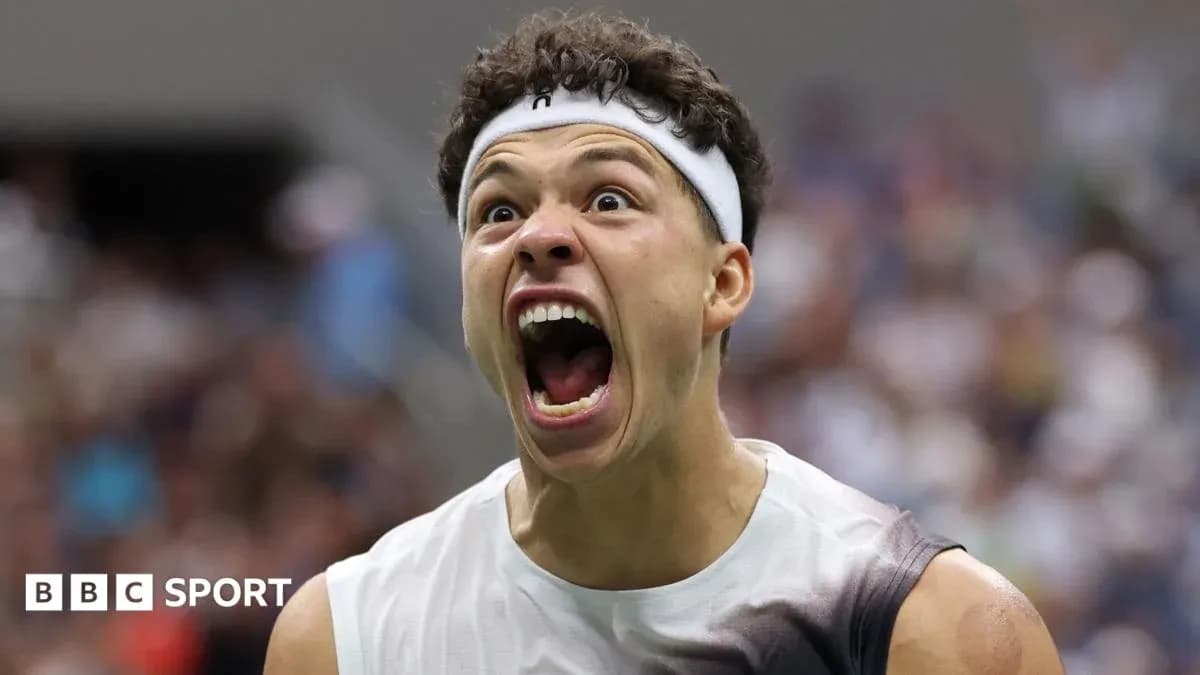
At the heart of the debate stand two men’s semi-finalists: Ben Shelton and Alexander Zverev, both living on a schedule more suited to a transatlantic flight than a tennis tournament.
Zverev’s twilight marathon
For top seed Zverev, this has become routine. Three of his five matches at Flushing Meadows have finished after 1am. Not figuratively late. Literally the middle of the night.
"I've been to bed as late as 6:45am in the past week so I'm kind of a bit jet-lagged," he said. "I feel like I'm playing the Australian Open in New York right now."
That line is not a throwaway joke. His body clock is all over the place. He did not get to bed until after 5am following each of his opening three wins, then stayed up on his night off to watch Shelton’s quarter-final against Carlos Alcaraz – which itself did not end until 3:34am on Wednesday, the latest finish in US Open history.
Now, for the first time this fortnight, Zverev will play in daylight. His semi-final against Karen Khachanov, scheduled not before 15:00 local time (20:00 BST) on Friday, drags him back into something resembling a normal day. The German has been living in an artificial timezone; on Friday afternoon, the sun and the schedule finally align.
His opponent’s path could hardly look more different.
Khachanov fresh, Zverev frazzled
Khachanov, unseeded and largely untroubled by the clock, has not played beyond midnight at this tournament. His quarter-final against Alexander Blockx wrapped up shortly before 19:00 local time on Wednesday. He left the court with the evening still ahead of him, not the sunrise.
He has slept when the rest of New York slept. Zverev has not.
Matt Little, Andy Murray’s long-time strength and conditioning coach, has seen what this sort of chaos does to a body.
"The advantage of the opponent who has played earlier in the day will be big - they've had that full evening's rest and a good night's sleep," he told BBC Sport. "We can all relate to it - if you have one really bad night's sleep, you have the knock-on effect of that for the coming days."
Little lived it with Murray at the 2023 Australian Open, when the Scot finished at 4am after an epic against Thanasi Kokkinakis. Murray managed three hours’ sleep before returning to Melbourne Park at about 11am. He later called the situation a "farce". Few disagreed.
The lesson was obvious: the body does not simply shrug off a night stolen by the schedule.
Shelton and Tiafoe caught in the night shift
On the other half of the men’s draw, the same problem is brewing.
American eighth seed Shelton needed until 3:34am on Wednesday to close out his quarter-final win over Alcaraz. It was a wild, breathless night on Arthur Ashe Stadium, the stands still buzzing as the clock lurched towards dawn. Great drama, brutal timing.
Shelton now faces 11th seed Frances Tiafoe in Friday’s night session (19:00 local time/00:00 BST, Sat). Tiafoe’s route? A five-set thriller against fellow American Alex Michelsen on Tuesday, but crucially done and dusted by around 19:00.
He walked off court, had dinner, slept. A normal athlete’s rhythm.
Shelton had two days off court and insisted he would pull up "all right". Little spelt out the challenge.
"He'll have to be napping to catch up some sleep," he said. "On the nutritional side, he'll be making sure he gets as many carbs and as much protein as he can in for that next match, and trying to get back to a bit of a routine.
"It's about making sure you can optimise the hydration and get as much sleep as possible without completely going into a full slumber."
That last phrase underlines the absurdity: players trying to sleep, but not too deeply, at odd hours, because the tournament might drag them back under the lights at any moment.
When spectacle collides with science
This is not a quirk of one tournament. It is becoming a fault line in the sport.
Murray’s 4am finish in Melbourne forced some action. The Australian Open cut the number of day-session matches on its main courts from three to two, hoping to stop the night session from being pushed into the early hours.
The tours have moved as well. In early 2024, the ATP and WTA brought in rules preventing tour-level matches, which are best-of-three sets, from starting after 23:00. But those rules do not touch the Grand Slams. The majors sit outside, clinging to their own traditions and television windows.
Flushing Meadows has leaned into the late-night drama more than most. Last week, Venus Williams and Sofia Kenin began their first-round match at 12:13am, the latest start in US Open history. It was one of three matches that finished after 2am in the first seven nights. Three more ended after 1am. Shelton’s win over Alcaraz pushed the boundary even further.
"Something has got to give," said 18-time Grand Slam singles champion Martina Navratilova. "This is not OK and it is not normal."
She is not railing against atmosphere. She is challenging the idea that a sport which demands precision, power and split-second reactions can treat sleep as an optional extra.
The US Open’s identity crisis
There is another side. Some argue these nights are the essence of the US Open: raw, loud, unruly. Tennis with the volume turned up, in a city that prides itself on never turning the lights down.
Those nights have always been part of the tournament’s mythology. Jimmy Connors roaring into the dark. Fans singing, shouting, living every point long after midnight. The players feel it too; the adrenaline, the noise, the sense that anything can happen under the Ashe lights.
This year, though, the balance has tilted. The volume of early-morning finishes has spiked, and not all of it stems from poor planning. On Tuesday, the late finish at 3:34am was born of a perfect storm. All three preceding quarter-finals on Arthur Ashe Stadium – Aryna Sabalenka beating Linda Noskova, Jessica Pegula overcoming Emma Navarro, with Tiafoe’s win sandwiched in between – went the distance. The schedule collapsed under its own weight.
But freak days do not explain away a pattern. When semi-finalists are talking about feeling "jet-lagged" without leaving the city, when legends of the sport call the situation "not normal", the question becomes unavoidable.
How many more dawn finishes can tennis tolerate before the romance of the night session starts to look like self-sabotage?