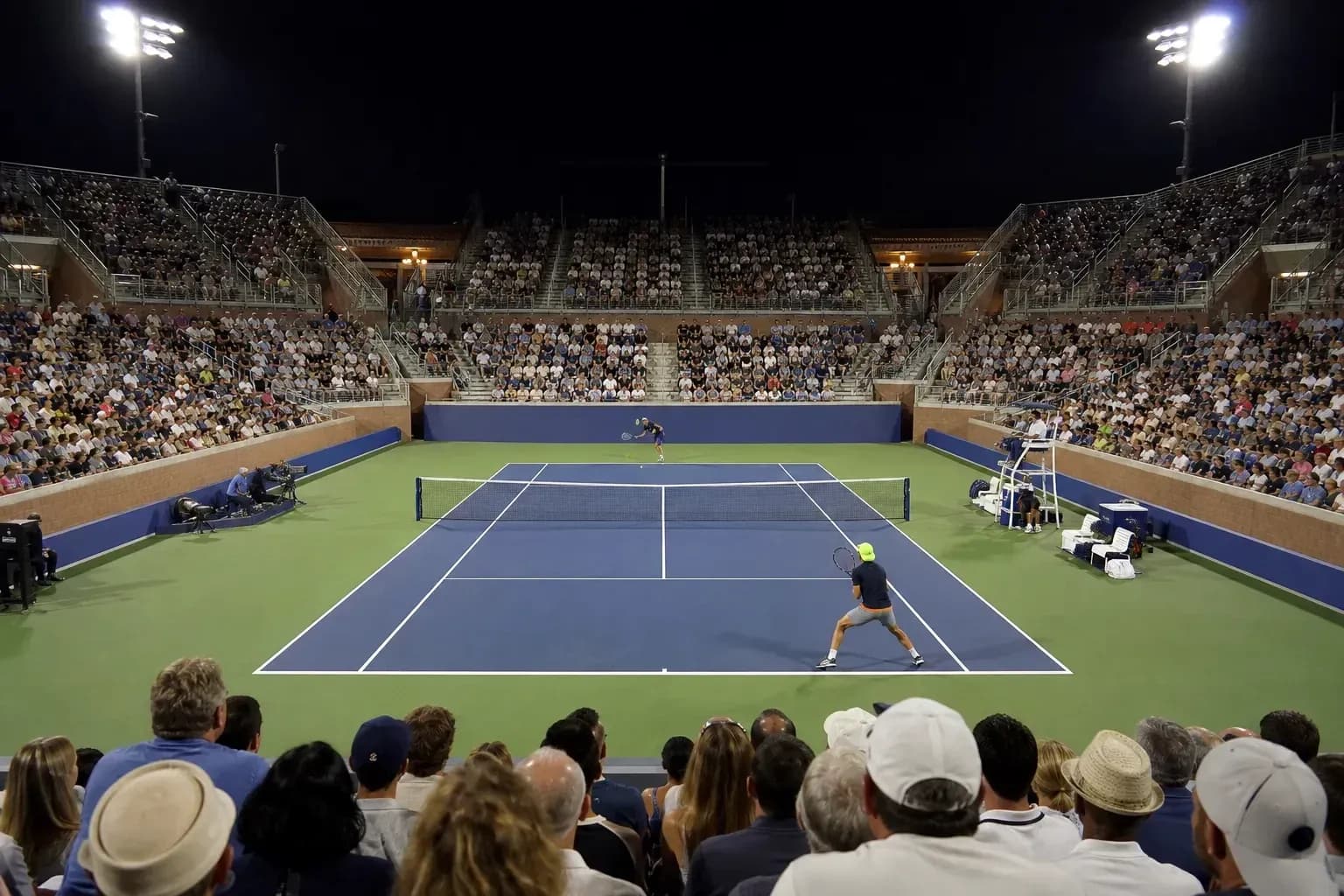
The US Open has always sold itself as the sport’s great night show. This year, the lights stayed on so long that the sun almost joined in.
The quarterfinal in which Ben Shelton stunned defending champion Carlos Alcaraz did not wrap up until 3:33 a.m. on Wednesday, the latest finish in the tournament’s history. By the time Shelton sealed the upset, much of New York was asleep. Flushing Meadows was still working.
That match capped a first week in which late nights stopped feeling like a novelty and started to look like a problem. According to The Japan Times, three matches in week one ended after 2:00 a.m., with two more drifting well past midnight. The latest-starting match — Venus Williams’ first-round appearance — didn’t begin until 12:13 a.m.
For a 46-year-old legend, that was a bridge too far.
Players Push Back
After her loss to Sofia Kenin, Williams did not dress up her view of the schedule. A midnight curtain-raiser, she said, was “less than ideal,” and she pointed out that she couldn’t think of another major sport where athletes are asked to start competing at that hour. The implication was clear: tennis can do better.
Jessica Pegula, the world No. 3, widened the lens. For her, this isn’t just about sore legs and tight turnarounds.
Pegula highlighted the knock-on effect of these marathon evenings: fans stranded on late trains, broadcasters juggling time slots, tournament staff and media trudging out of the grounds in the small hours. She openly questioned the logic of finishing at 2:00 a.m. and floated a simple fix — move the evening session up by an hour.
Start earlier. End earlier. Protect everyone.
The problem, of course, is that the US Open has built a brand around prime-time tennis in a city that works late. That tension now sits at the heart of the debate.
Organizers Weigh Their Options
Tournament officials know they have an issue. A US Open representative described Tuesday as one of the most unusual days the event has ever staged and said organizers need to review every option when they build future schedules.
But they also spelled out the constraints. Pushing the evening session before 7:00 p.m. is not a simple switch. New York crowds fight commuter traffic to reach the Billie Jean King National Tennis Center after work. Any change must account for how tens of thousands move in and out across both day and night sessions.
Squeeze the schedule too hard, and you risk chaos at the gates instead of drama on court.
One of the more radical ideas on the table would reshape the sport’s format at its core: making men’s early-round matches best-of-three sets instead of best-of-five. That would trim match times and help keep the order of play on a tighter leash.
Not everyone is on board.
American Frances Tiafoe has nailed his colours to tradition. He wants the men to keep best-of-five, arguing that the longer format has produced many of tennis’s greatest epics. Cut it, and you cut into the sport’s history.
So the tournament stands at a crossroads. Protect the spectacle of late-night New York or protect the players’ bodies and the broader ecosystem that keeps the event running?
The lights at Flushing Meadows will stay bright. The real question now is how long they should be allowed to burn.