New York sells itself as the city that never sleeps. This year’s US Open is doing its best to prove it.
Night sessions have bled deep into the small hours, turning Flushing Meadows into a floodlit endurance test. Matches are starting when most of the city is heading home, and ending when the first commuters are grabbing coffee. It makes for gripping television. It also raises an uncomfortable question: at what point does the spectacle start to distort the competition?
Zverev’s body clock vs Khachanov’s routine
No one left in the men’s draw has lived the nocturnal chaos quite like Alexander Zverev.
The top seed has played five matches in New York. Three of them have finished after 1am. On at least one night he did not get to bed until 6:45am.
"I've been to bed as late as 6:45am in the past week so I'm kind of a bit jet-lagged," he admitted. "I feel like I'm playing the Australian Open in New York right now."
His semi-final against Karen Khachanov on Friday, scheduled not before 15:00 local time (20:00 BST), will be the first time he has stepped on court in daylight at this tournament. For a player used to structuring his entire routine around evening matches, that is a jolt.
Khachanov, unseeded and quietly efficient, has lived a very different fortnight. He has not played beyond midnight once. His quarter-final win over Alexander Blockx wrapped up shortly before 19:00 on Wednesday. He walked off court, ate, recovered, slept like a normal human being, and woke with an extra cushion of preparation time.
In a sport where marginal gains are everything, that contrast is stark.
Shelton and Tiafoe on opposite clocks
The imbalance is just as clear in the other semi-final.
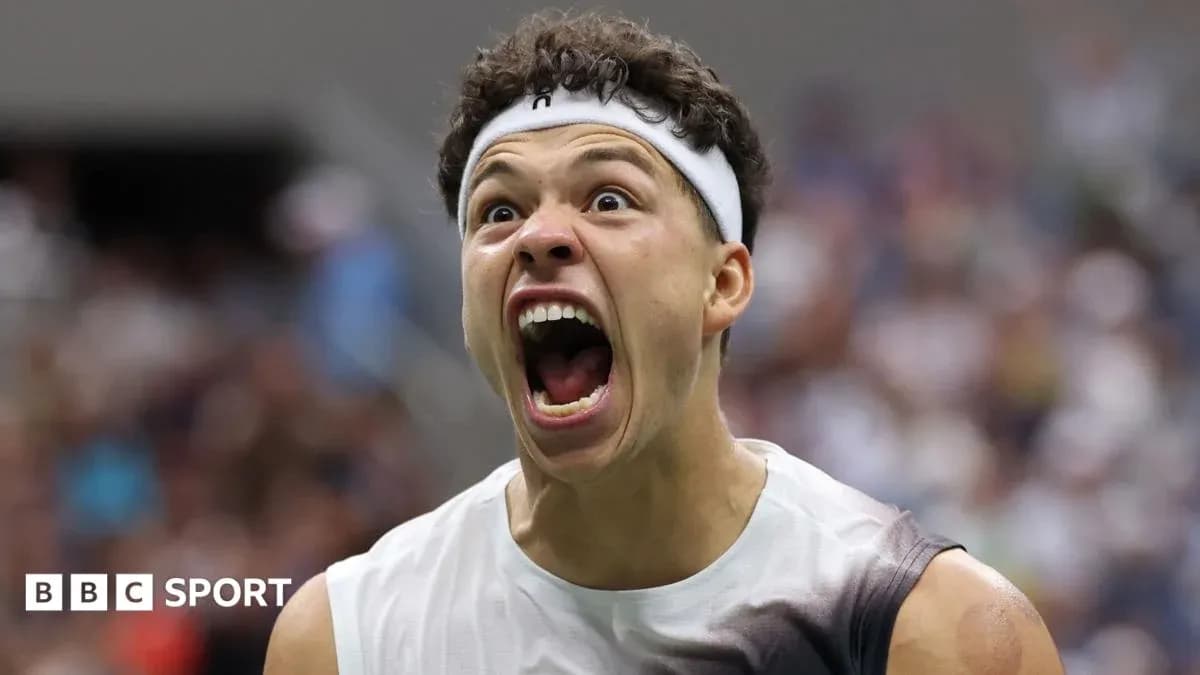
American eighth seed Ben Shelton did not finish his quarter-final win over Carlos Alcaraz until 3:34am on Wednesday, the latest finish in US Open history. The stadium was still buzzing; social media lit up; New York loved it. Shelton’s body, less so.
His next opponent, 11th seed Frances Tiafoe, had already banked a full night’s sleep by then. Tiafoe’s own five-set epic against compatriot Alex Michelsen ended around 19:00 on Tuesday. He had time to decompress, refuel and reset while Shelton was still trying to bring his heart rate down at dawn.
Shelton now heads into Friday’s night session (19:00 local time/00:00 BST, Saturday) with two days off court, and he insists he will be "all right". The science, and the schedule, are not exactly on his side.
"The advantage of the opponent who has played earlier in the day will be big - they've had that full evening's rest and a good night's sleep," Matt Little, Andy Murray’s long-time former strength and conditioning coach, told BBC Sport.
"We can all relate to it - if you have one really bad night's sleep, you have the knock-on effect of that for the coming days."
Little’s warning is rooted in experience. He watched Murray stagger through one of the most notorious late finishes in tennis history.
Lessons from Melbourne’s 4am “farce”
Murray’s second-round win over Thanasi Kokkinakis at the 2023 Australian Open ended at around 4am, the second-latest finish ever at a Grand Slam. The Scot managed just three hours’ sleep before returning to Melbourne Park around 11am.
He called the whole thing a “farce”. Few in the game disagreed.
The reaction forced change. The Australian Open trimmed its day session on the main courts from three matches to two, trying to ease the logjam that was pushing night sessions into the early morning. The message was clear: drama is good; 4am marathons are not.
The tours have followed with their own line in the sand. Early in 2024, the ATP and WTA brought in rules preventing regular tour matches – best-of-three, not best-of-five – from starting after 23:00. Those rules stop the worst excesses. They do not apply at the Grand Slams.
And so, in New York, the experiment continues.
Fuel, naps and damage limitation
For players stuck in these warped timeframes, survival becomes a multidisciplinary project.
Little expects Shelton to lean heavily on sleep where he can find it.
"He'll have to be napping to catch up some sleep," he said.
Nutrition becomes another battleground. "On the nutritional side, he'll be making sure he gets as many carbs and as much protein as he can in for that next match, and trying to get back to a bit of a routine.
It's about making sure you can optimise the hydration and get as much sleep as possible without completely going into a full slumber."
That phrase – “without completely going into a full slumber” – captures the strange limbo these players inhabit. They are trying to rest but not reset, to recover without confusing their internal clocks even more. They are athletes, but also shift workers, trapped in a rolling night shift dictated by television windows and ticket sales.
Zverev, for example, did not get to bed until after 5am following each of his opening three wins at Flushing Meadows. On his night off, he stayed up again to watch Shelton beat Alcaraz. The spectacle is so compelling that even the competitors cannot look away.
“Something has got to give”
The US Open has always embraced its identity as the rowdiest of the majors. The night sessions on Arthur Ashe Stadium are a badge of honour, a raucous, neon-soaked tribute to the city outside the gates. Many argue these late-night epics are the essence of the tournament.
This year, though, the volume of early-morning finishes has spiked.
In the first seven nights alone, three matches finished after 2am, and three more crept past 1am. Last week, Venus Williams and Sofia Kenin began their first-round match at 12:13am – the latest start in US Open history. The sport’s elder stateswomen were sent out when most fans were heading home.
"Something has got to give," said 18-time Grand Slam singles champion Martina Navratilova. "This is not OK and it is not normal."
Her words carry weight. They also echo around a fortnight that has repeatedly tested the limits.
Even Tuesday’s 3:34am finish for Shelton and Alcaraz came from a perfect storm of scheduling. All three preceding quarter-finals on Ashe – Aryna Sabalenka beating Linda Noskova, Jessica Pegula overcoming Emma Navarro, with Tiafoe’s win wedged between them – went the distance. One long match bled into another, and by the time Shelton and Alcaraz walked on, the night was already slipping away.
The crowd stayed. The noise never dipped. New York loved the theatre.
The question now hangs over the semi-finals and beyond: how long can tennis keep chasing that midnight magic before it finally has to put the lights out a little earlier?