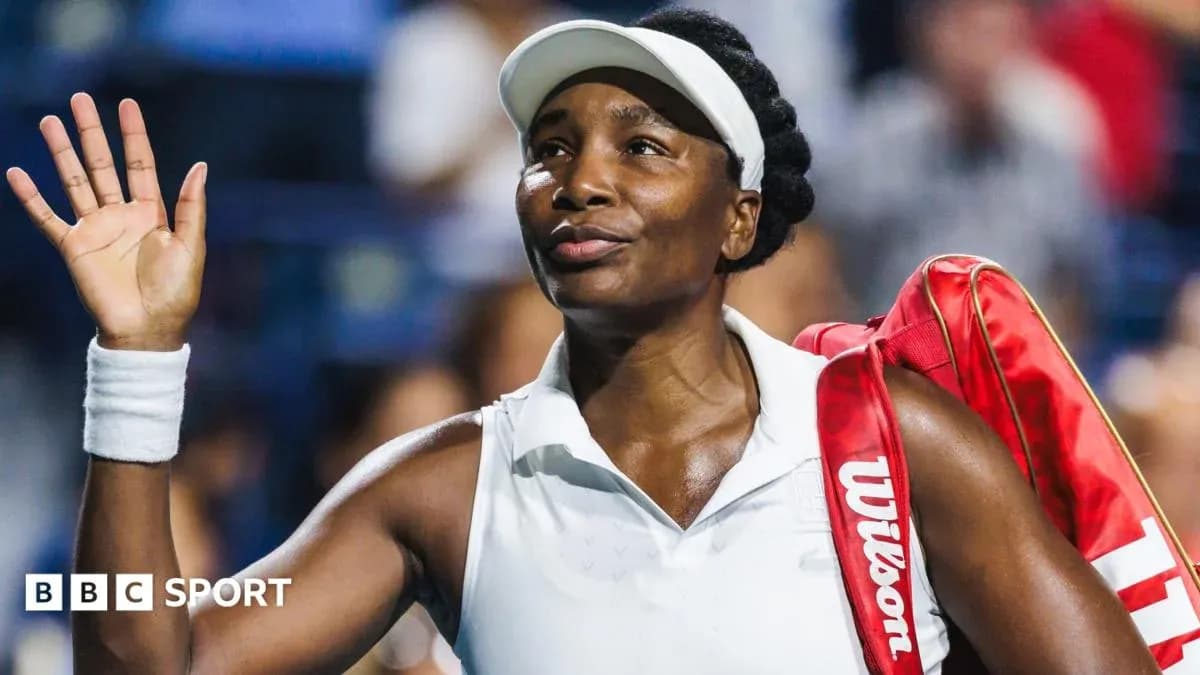
Venus Williams walks back into Flushing Meadows as both outlier and institution. A seven-time major singles champion, five times the ruler of Wimbledon’s lawns, she is now ranked 611 in the world and riding a 14-match losing streak in singles. Yet the US Open door swings open for her again.
Wildcard number 12 of the season. And counting.
At 46, Venus has spent almost three decades on tour. Her last Grand Slam singles win came at Wimbledon in 2021, the last time she qualified for a major on ranking alone. Since then, her route into the sport’s biggest arenas has depended on invitations from tournament directors who still see enormous value in the name on the marquee.
Some argue that value has its limits.
With no singles wins in 2024 and only one victory in her past 19 matches – over Peyton Stearns in Washington last July – the question grows louder: how many wildcards is too many, even for a legend?
Tournament directors keep answering with actions, not words. New Zealand, Australia, Spain, Germany, Canada, the United States – all have offered her a place this year. The United States Tennis Association has done so again, setting up a first‑round US Open meeting with fellow Grand Slam champion Sofia Kenin.
Karl Hale's Perspective
For Karl Hale, the tournament director in Toronto, the equation is clear.
“I think it's good for tennis to have these generational icons,” he said after handing Venus a wildcard for this month’s WTA 1000 in Canada. “That they are still allocating wildcards for them says something to their intrinsic value to the tournaments.”
The numbers back him up. Wildcards guarantee a star name on opening day. They guarantee headlines. They help sell tickets.
“Venus played opening day. She kicked off our tournament, so it added a lot of value,” Hale explained. Media interest spiked. The tournament got its story.
This is how the wildcard economy works.
Grand Slams reserve eight of their 128 singles spots for discretionary entries. Regular WTA and ATP events usually have between four and eight, depending on the draw size. National federations tend to look after their own first, but commercial pull carries weight. So do relationships.
Hale talks about “trades” – informal exchanges between federations and agencies such as IMG, which manages players and until recently owned the Miami and Madrid Opens. The most visible example is the reciprocal agreement between the USTA, Tennis Australia and the French Tennis Federation: each offers a men’s and women’s wildcard to the others, knowing their own players will be welcomed in return.
Within that ecosystem, a name like Venus Williams is still gold.
Two-time US Open singles champion. Doubles quarter-finalist in New York as recently as last year. A player who, even in defeat, rarely disappears meekly. She pushed Karolina Muchova to three sets at the US Open last year as the 11th seed fought to escape. She took Olga Danilovic the distance at the Australian Open in January.
Her results since then tell a harsher story. The loss to qualifier Emiliana Arango in Cincinnati this month was her 18th defeat in 19 singles matches. The scoreline against Kamilla Rakhimova in Toronto – 6-4 6-1 – looks routine, but Hale saw enough to believe.
“The first set was really competitive. She's still competitive, but just not winning these matches,” he said. “You never want to put a player out there that you are unsure about.”
That’s the crux of the debate. At what point does sentiment give way to opportunity for the next wave? When does a wildcard for an icon become a wildcard taken from a young player trying to break through?
Golf has already wrestled with a version of that question. The Open Championship once allowed former winners to tee it up until they turned 65. Now, the cut-off is 55, freeing places for younger, higher-ranked professionals. Golfers can stay competitive longer than most tennis players, but the principle is clear: nostalgia has a shelf life.
Tennis, by contrast, has never imposed an age line. Martina Navratilova received wildcards for Roland Garros and Wimbledon in 2004 at 47 and even won a round on the grass. The sport has always allowed its greats to decide when to step away – or left it to individual tournaments to choose when to stop inviting them back.
Hale believes Venus will know when that moment arrives.
“When the time comes that Venus is not competitive in sets, then I think she will make that call,” he said. Until then, he sees no issue with doors remaining open. “Venus and Serena have done so much for women's tennis and the sport that they should be able to play as long as they want. I'm very happy they are continuing and they make their decision when they are ready, or each tournament makes their decision when they are ready.”
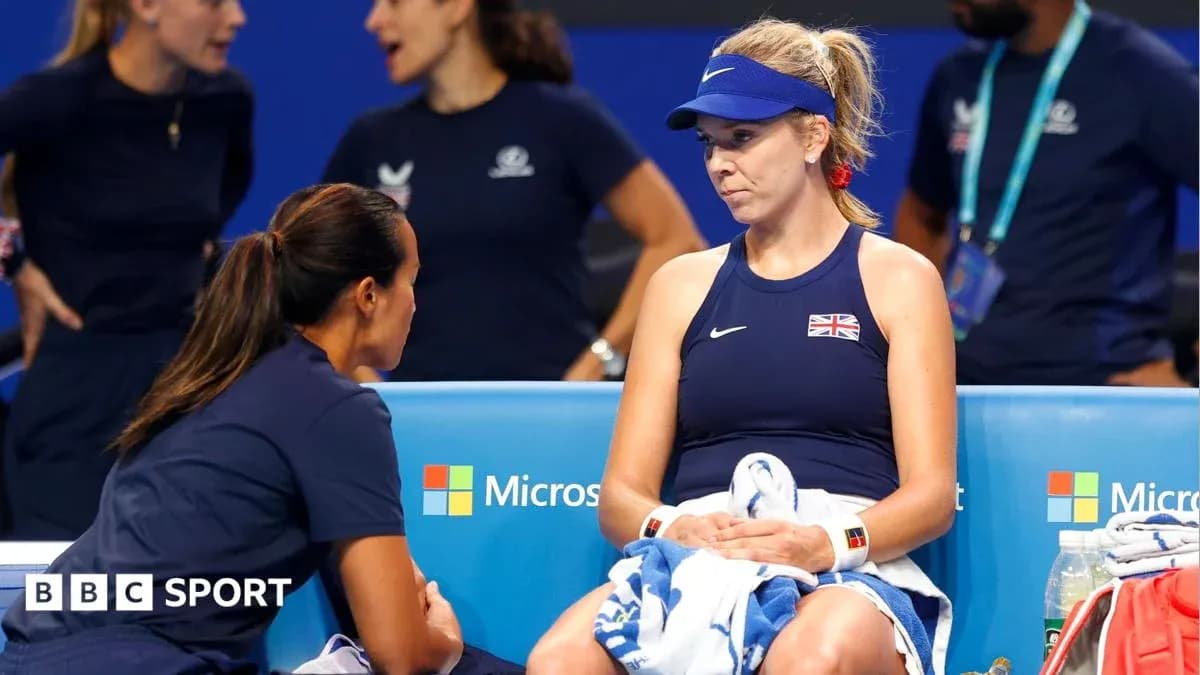
Players feel it too. British number one Katie Boulter partnered Venus in doubles in Madrid in April and called her an “absolute icon”.
“Venus has given so much to our sport that she deserves to get what she needs back,” Boulter said. “We have to be grateful that she is still out there, doing the best she can.”
That “best” no longer looks like the Venus who once bulldozed through Wimbledon fields, or the teenager who redefined power tennis at the end of the 1990s. It looks like a 46‑year‑old still chasing the ball, still taking swings at the biggest stages, still believing there is one more run in her.
The wildcards keep that belief alive. They also force the sport to confront an uncomfortable truth: tennis loves its legends, but it also feeds on renewal.
In New York, under the lights that once framed her as the future, Venus Williams walks back in as a wildcard again. How many more times will the sport be willing – or able – to say yes?