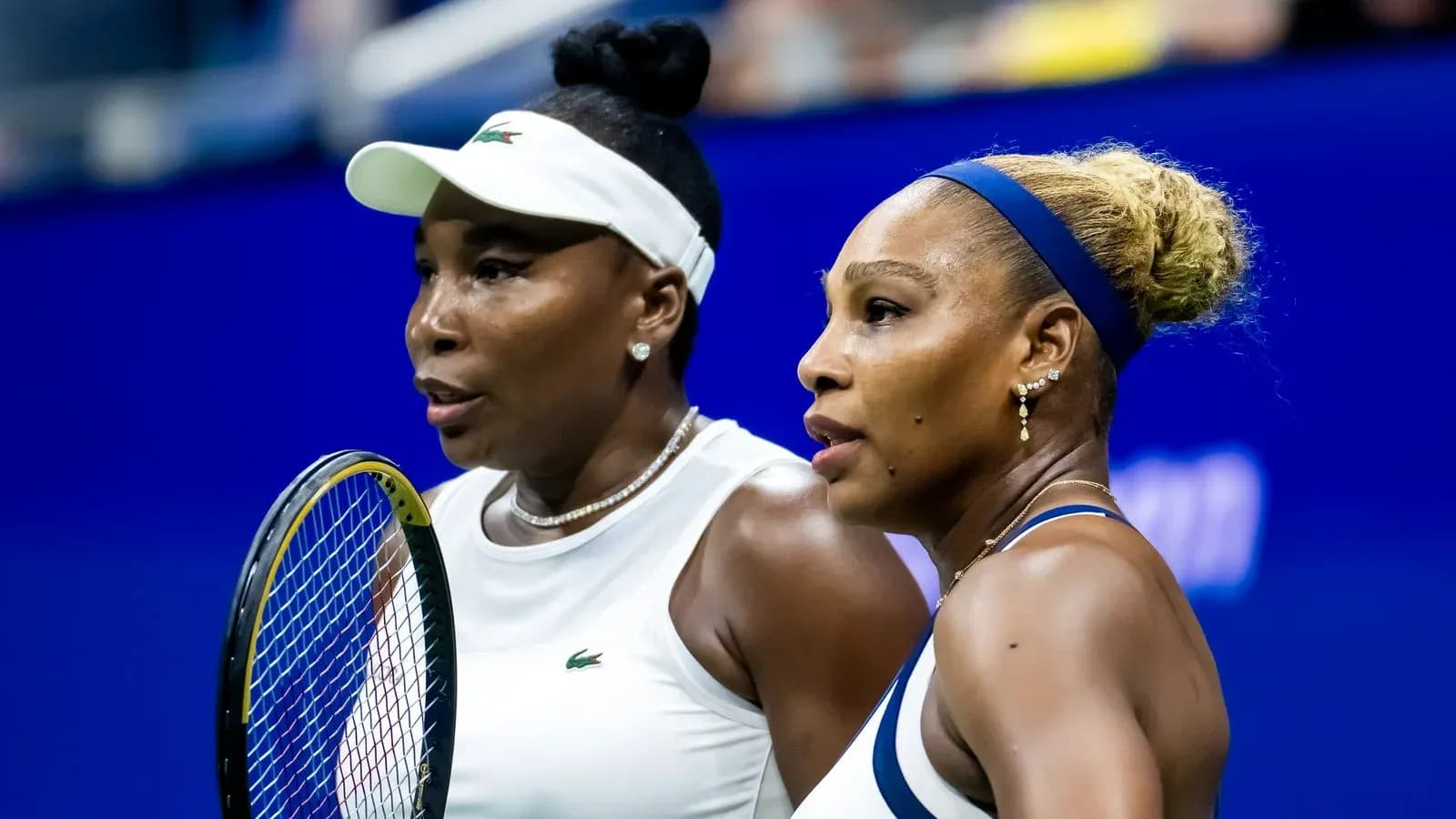
Serena and Venus Williams walked back into Arthur Ashe Stadium on Friday night and, for long stretches, it felt like time bent to their will.
The scoreboard will say they lost. The noise, the tension, the faces in the stands told a very different story.
A comeback soaked in history
Twenty-seven years after they first lifted the US Open women’s doubles trophy, the Williams sisters returned to New York as wild cards, a combined age of 90, carrying a record book’s worth of achievements between them: 14 Grand Slam doubles titles together, two of them in this arena, three Olympic golds, and another 30 major singles titles split between the two.
This latest chapter began with a suggestion from Serena’s daughter. It ended with a three-hour, two-minute epic that swung violently, emotionally, before landing just out of their reach.
Facing 20-year-old Australian Maya Joint and the experienced Chan Hao-Ching, Serena and Venus fell 6-3 6-7 (8-6) 7-6 (10-7) in a match that never once felt like a routine first-round exit.
Ashe on its feet
From the moment they walked out, the sisters were treated as they always have been in this stadium: as royalty. Every clean strike, every angled volley, every flash of the old power drew roars from a packed Ashe that desperately wanted to believe in one more run.
They obliged, for a while. Venus knifed through volleys at the net, Serena uncorked those familiar swinging winners, and the arena responded with the kind of full-throated approval that belongs more to a title match than an opening round.
Two breaks of Serena’s serve cost them the first set, a reminder that this is no longer their weekly grind. Her delivery had looked sharp at Wimbledon and during a recent mixed doubles outing with Carlos Alcaraz, but Joint and Chan punished the lapses and took control early.
The response was pure Williams.
Tie-break drama, twice over
In the second set, the sisters dug in. Rallies stretched. The noise rose. They forced a tie-break, then clung on as chances slipped away. Four set points came and went. The tension became almost physical inside Ashe.
On the fifth, Joint finally blinked, sending an overhead long. The stadium erupted. The match, and the night, were alive again.
The decider followed the same script, only louder. Neither team could land the knockout blow. Games ticked by. The clock kept climbing. For the first time since 2001, Serena and Venus found themselves beyond 5-5 in a deciding set together at a Grand Slam.
The tie-break that followed felt like a throwback and a shock all at once.
They surged to a 5-0 lead, the court crackling as if it might just will them over the line. Every point felt like a shared memory between players and crowd. Then, just as the finish line loomed, the match turned.
Joint and Chan refused to fold. Point by point, they clawed back, the gap shrinking, the tension flipping from hopeful to anxious. The Williams sisters stumbled, the rhythm gone. At 9-7, Chan stepped in and punched away a volley, ending the comeback and silencing the roar to a stunned murmur.
There would be no on-court farewell speech. The US Tennis Association confirmed the sisters would not be available for comment.
A night for the next generation too
For Joint, this was the latest highlight in a breakout summer defined, improbably, by Serena Williams.
The 20-year-old beat Serena on Centre Court at Wimbledon in singles, then found herself opposite her idol again on the biggest tennis stage in America, in front of 23,000 fans who had come to see history, not necessarily an upset.
“Being able to play against such legends of the game is super special,” Joint said on court. “I’m lost for words to think of it. She’s my idol, both of them. I grew up in Michigan so I always looked up to them. Being able to play them twice is amazing.”
On this evidence, she is not just a footnote in someone else’s story. She is starting to write her own.
What next for Serena?
The result will fuel an already simmering question around Serena’s future. ESPN commentator Caroline Wozniacki said during the broadcast that she believes Serena wants to return to singles next year. There was nothing official from the 23-time Grand Slam champion, but the way she moved, the way she competed, will only add to the intrigue.
For now, all that remains from this night is the image of two sisters, back where it all began, still trading blows, still demanding a tie-break in a deciding set, still dragging a stadium to its feet with one more volley, one more forehand, one more memory.
If this really is the closing stretch of their time together on these courts, they are determined to make every last point feel like a main event.
Tsitsipas breaks new ground, Tiafoe cruises
Away from the Williams spotlight, Stefanos Tsitsipas quietly ticked off a milestone of his own. The Greek star shook off a sluggish start to beat Czech 18th seed Jiri Lehecka 2-6 6-1 7-6 (7-3) 6-1, sealing a place in the US Open fourth round for the first time in his career.
After dropping the opening set, Tsitsipas tightened his game, dominated on serve, and took control of the baseline exchanges. The third-set tie-break proved the hinge; once he owned that, he ran away with the fourth.
American 11th seed Frances Tiafoe delivered a more straightforward night’s work. Backed by a home crowd of his own, he brushed past Monaco’s Valentin Vacherot 6-4 6-2 6-4, conserving energy and momentum for the deeper rounds to come.
On a night that blended nostalgia with the sport’s future, the question lingered as the lights dimmed over Ashe: was this one last cameo for Serena and Venus, or the prelude to one more act?