Willy Hutchinson Becomes WBC Light-Heavyweight Champion with Win Over Joshua Buatsi
Willy Hutchinson walked into the AO Arena with a promise he’d written as a 13-year-old in a book in Sweden. He walked out with a WBC light-heavyweight world title strapped across his shoulder and a career-defining win over Joshua Buatsi on his record.
On a night when the upper tier was shut and tickets moved slowly, the Scot produced the kind of performance that fills arenas, not closes them. The judges scored it 117-112, 115-113, 115-113 in his favour, a tight but deserved verdict in Manchester and a sharp reversal of the story these two men wrote in 2024.
Back then, Buatsi had been the coming force. He dropped Hutchinson twice, bullied him to the body and left with a split-decision victory that felt like a statement. This time, the roles flipped. The Londoner, now 31, looked like the one chasing ghosts, while Hutchinson – sharper, cooler, more mature – dictated the terms.
The belt on offer had changed too. What began as an interim title fight was upgraded when David Benavidez vacated the WBC crown to head for cruiserweight. It turned a grudge rematch into a golden opportunity. Only one of them grabbed it.
From the walk-ins, the tone was clear. Hutchinson, the 28-year-old from Scotland, strode out to a wall of noise. Buatsi followed to boos, circling the ring as if trying to summon the menace of their first encounter. It never really came.
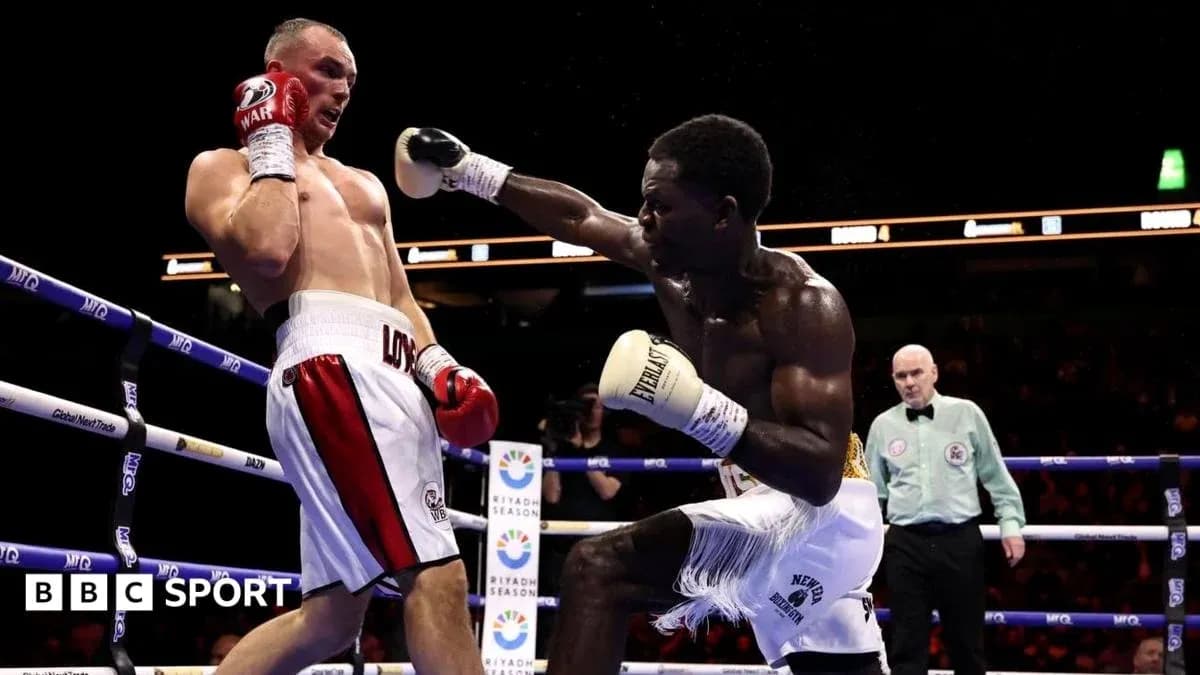
Buatsi went back to what he knew: heavy hooks downstairs, those trademark body shots that had broken Hutchinson before. The difference was that this version of Hutchinson had answers. He slid away from the worst of the punishment, picked Buatsi off with rapid-fire jabs and refused to be bullied on the inside.
At times, he toyed with him. Standing in the centre of the ring, switching stances, snapping out triple jabs that snapped Buatsi’s head back and punctured his rhythm. The Londoner kept trudging forward, but the ideas ran out long before the rounds did.
The AO Arena has seen chaos and carnage before – Ricky Hatton’s epic over Kostya Tszyu in 2005 still echoes around these walls – and this never threatened to touch that level of frenzy. Large sections of the arena sat in darkness, the upper tier closed, many of Jack Rafferty’s fans already heading for the exits after the local favourite won the co-main event.
Those who stayed made themselves heard. They roared every Hutchinson feint, every clean jab, every Buatsi miss. Manchester royalty Bez from the Happy Mondays watched from ringside as Hutchinson’s corner laid it out plainly after the ninth round: “Three rounds and you’re a world champion.”
The message landed. Hutchinson boxed with discipline down the stretch, refusing to get dragged into wild exchanges, even as Buatsi finally began to force the pace. The Londoner surged late, trying to turn back the clock and the tide, but the sharpness wasn’t there. The man who had once floored Hutchinson twice now looked a step behind, swinging at the echoes of openings that weren’t there.
When the final bell rang, Hutchinson knew. He’d controlled the tempo, controlled the space, controlled the story. The cards confirmed it. The Scot raised his arms, Buatsi stared into the middle distance, and the AO Arena erupted for a new champion – the eighth British fighter to claim the WBC light-heavyweight title, and the first since Nathan Cleverly in 2017.
Then came the release. Hutchinson, emotional and breathless, reached back to that 13-year-old boy with a pen and a dream.
He spoke of his father working in Sweden, of signing his name next to the words that he would become a world champion. He thanked his coach, the man he said had dragged him from a hole he never thought he’d escape. “This is all a bonus baby,” he said, title belt glinting under the lights.
The numbers on his record now read 21 wins, two defeats, and one very loud statement. The questions, though, belong to Buatsi. Fight week had been clouded by whispers that he was over the hill. On this evidence, he did little to silence them.
Hutchinson, once the man on the canvas, now stands on the summit with the WBC strap. The boy who wrote it down became the man who made it real. The only thing left to discover is how long he can keep his grip on the mountain.