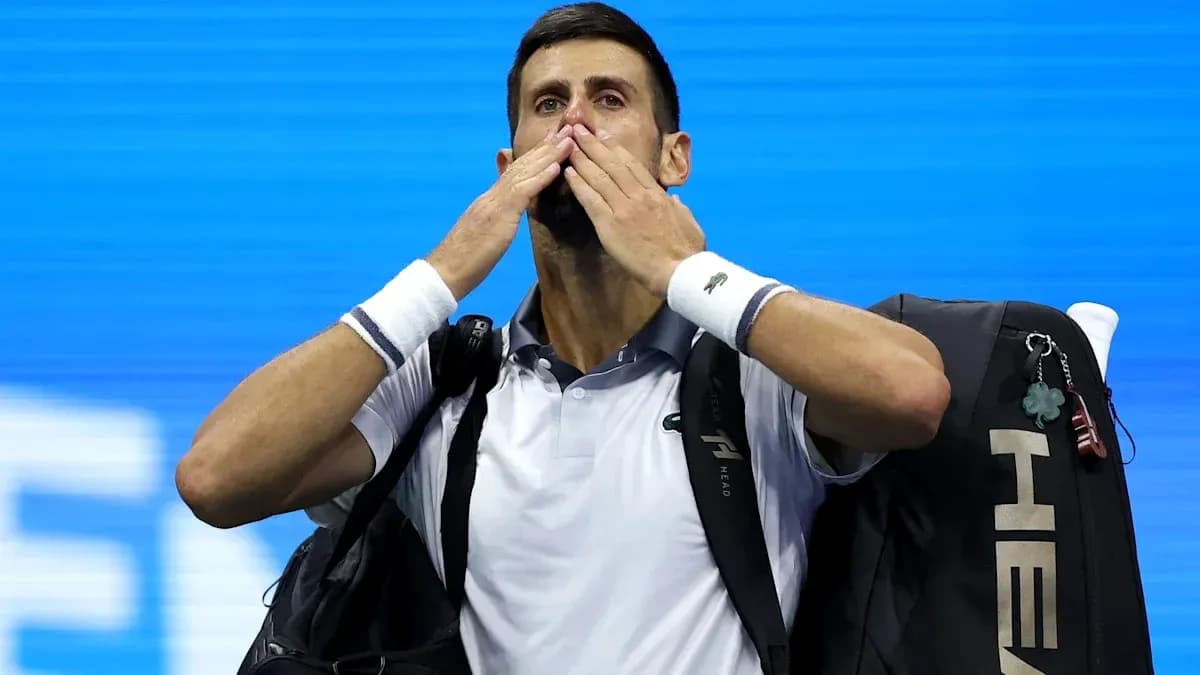
Ben Shelton had one last surge in him.
After nearly three hours of being outserved, outplayed and largely outclassed, he arrived at 5-6 in the third set, a game from defeat, and finally swung with the abandon that has carried him through this summer. He cracked his forehand, hunted returns, broke Alexander Zverev for the first time and dragged the US Open final into a fourth set. He roared, cupped his ear to Arthur Ashe Stadium and tried to drag the afternoon his way.
It lasted one game.
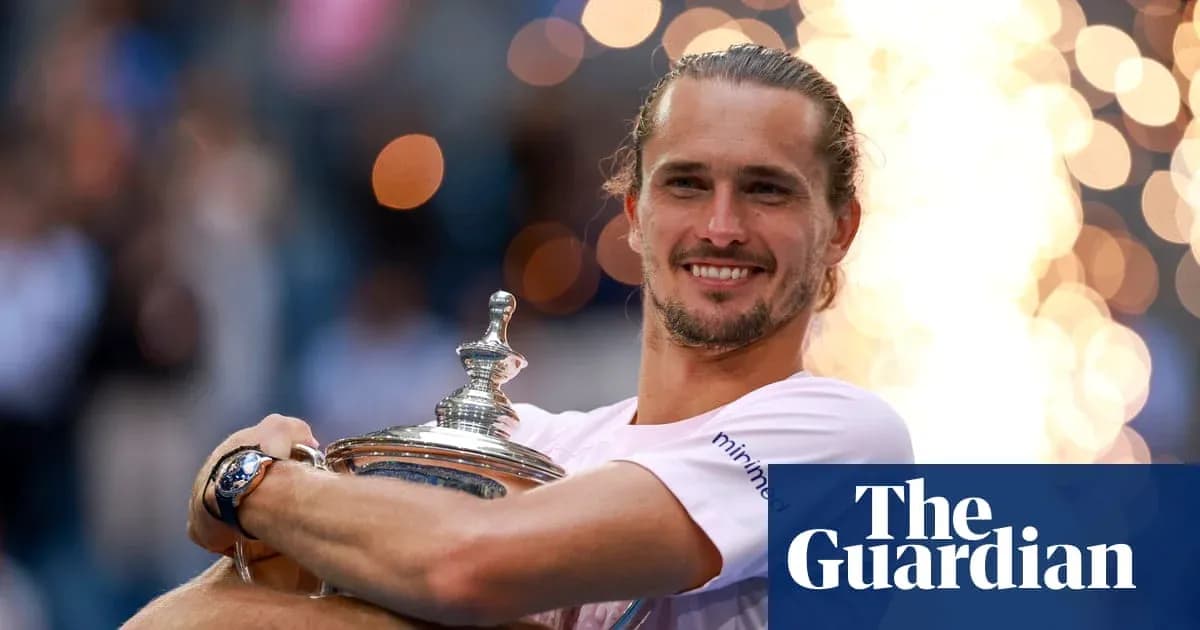
Shelton opened the fourth set with a nervy, faltering service game, surrendered his serve immediately and never quite climbed back. Zverev, the top seed, shut the door with the cold authority that has defined his season, closing out a 6-3, 7-6 (2), 5-7, 6-2 win to claim his second grand slam title of the year.
Zverev’s historic season, Shelton’s missed landmark
At the start of 2024, Zverev still carried the label that had followed him for years: a perennial contender without a major title. That conversation is over. With this US Open crown, he becomes only the fourth man in the Open era – after Jimmy Connors, Guillermo Vilas and Jannik Sinner – to win his first two grand slam titles in the same season.
His victory also shut down a storyline that had hovered over New York for two weeks. Shelton was chasing history of his own, trying to become the first Black American man since Arthur Ashe in 1968, and the first American man since Andy Roddick in 2003, to win the US Open. On a grey, unforgiving Sunday, he never really got close.
One number tells the story of this matchup: 6-0. That is now Zverev’s head-to-head record against Shelton. For the German, this is a comfortable pairing. He served better, held firmer from the back of the court and, once again, used his elite two-handed backhand to smother the left-hander’s heavy forehand, turning Shelton’s biggest weapon into a liability.
A serving duel that never truly materialised
On paper, this final promised a serving shootout. Two of the biggest deliveries in the game. Two men who can turn any service game into a formality.
Only one of them showed up from the start.
Shelton walked on court visibly tight and paid for it immediately. In the very first game of the match he double-faulted on break point, gifting Zverev an early lead. When the set reached its key moment, he repeated the same mistake: another double fault, this time on set point, handing over a second break and the opener.
From the baseline, the gap was even clearer. Shelton’s forehand, usually a sledgehammer, sprayed errors at the worst moments. Zverev’s game, by contrast, looked ruthlessly measured. He landed 69% of his first serves and won 85% of those points, a suffocating platform that left Shelton constantly scrambling just to stay attached to the scoreboard.
The American finally steadied his serve in the second set. He found a rhythm, held more comfortably and pushed Zverev into a tie-break. That was the moment he needed to flip the match.
Instead, Zverev seized it.
He earned the first mini-break with a sharp forehand passing winner after a tentative approach from Shelton. On the next crucial exchange, he lashed a ferocious forehand down the line for a second mini-break. Two unreturned serves later, he led 5-0 in the tie-break. The set was gone. So, almost, was Shelton’s chance.
A brief rebellion, then the inevitable
Shelton refused to fold. He chased, he shouted, he urged the Ashe crowd to join him. In the third set he finally prised open Zverev’s armour, pressing on return and capitalising on a rare dip from the German to steal the set 7-5 and extend the final.
That was the high point. The emotional spike was followed by a crash.
The fourth set’s opening game told the truth of the day. Shelton’s arm tightened again. His serve, his lifeline all fortnight, deserted him. Zverev broke, settled, and from there he simply managed the match. He controlled rallies, leaned on that backhand, protected his own serve and allowed no hint of another twist.
By the time the final ball flew long, the result felt like something that had been coming since the first game.
A grand slam year with a shadow
This US Open final closed a grand slam season on the ATP tour that never quite found its full rhythm. Carlos Alcaraz spent months sidelined and only returned here from a long injury layoff. Jannik Sinner has been hampered by physical issues. Their absences and limitations opened the door wide for the rest of the field.
Very few walked through it.
Zverev did. He reached deep into the second week of majors again and again, and the sport rewarded his consistency. He kept putting himself in position, and each step seemed to harden him mentally. The player who once faltered at the finish line now looks increasingly assured when the biggest trophies are on the table.
Yet his success comes with an unavoidable tension.
Two former girlfriends, Olya Sharypova and Brenda Patea, have accused him of physical abuse. During his run to the French Open final in June 2024, he settled an assault case in Germany relating to an allegation that he pushed and strangled Patea, the mother of his daughter. The case ended without a verdict; a court spokesperson said: “The truth remains open.” Zverev has denied those charges and all allegations against him.
The disquiet has followed him. At the Australian Open last year, a fan interrupted his trophy ceremony speech with a shout of: “Australia believes Olya and Brenda.” His three grand slam finals this season, though, have passed without similar incident, and he remains a popular presence at major tournaments.
The contradiction lingers: a player at the peak of his sport, and a cloud that refuses to clear.
Shelton’s rise, and the gap that remains
For Shelton, this defeat caps the greatest summer of his career.
He arrived on the North American hard courts trying to shake off the sting of a painful first-round loss at Wimbledon. He leaves with a second Masters 1000 title from the Canadian Open, a first grand slam final and a new career-high ranking of world No 4. At 23, he has announced himself as a permanent threat on this surface.
His run in New York also underlined the work ahead. When the noise dropped and the afternoon turned lonely inside Arthur Ashe Stadium, the flaws in his game stood out. The return of serve that still leaks points. The ground game that can be dragged out of position and rushed into errors by the very best.
Those shortcomings were exposed by Zverev again, just as they have been in each of their six meetings.
Shelton has time, energy and a booming game that thrills crowds. Zverev has the titles, the record, the edge in their rivalry and, for now, the last word on this grand slam season. The question is whether the American’s furious rise can bend that script the next time they meet under the lights.