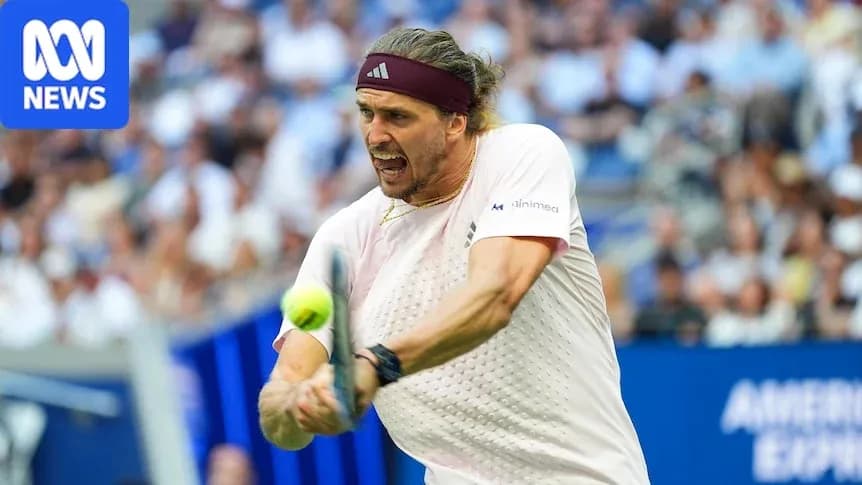
Alexander Zverev knows all about waiting. For years he carried the label no player wants: the best man on tour without a major. Now he has one, a second final this year, and a very simple plan for New York.
Keep America waiting.
The top seed marched into the US Open final with a 6-3, 7-6 (9-7), 7-6 (8-6) win over Karen Khachanov, a straight-sets scoreline that barely hints at the tension that crackled through Arthur Ashe Stadium.
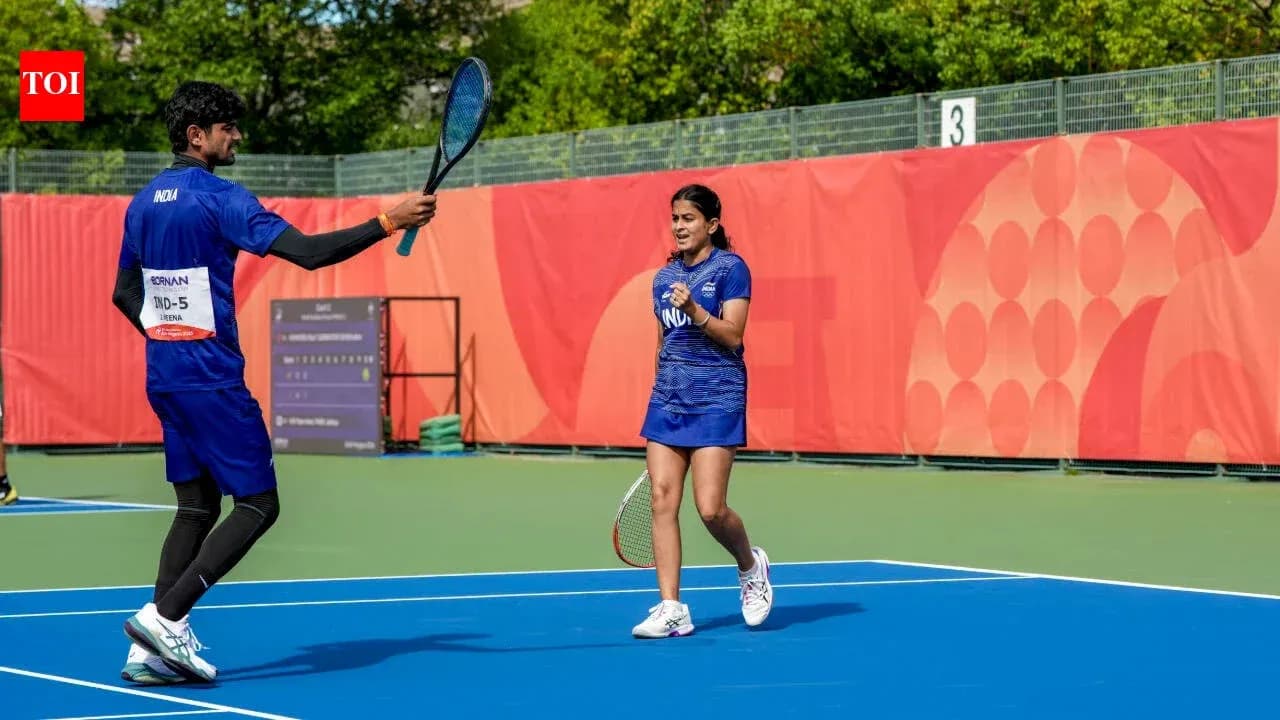
On Monday morning (AEST), Zverev will face either Ben Shelton or Frances Tiafoe, the two homegrown showmen duelling for the right to become the next American in a US Open men’s final. Both have felt the heat of a New York semifinal. Neither has stepped onto a major championship Sunday.
The United States has been stuck on that statistic since Andy Roddick lifted the trophy here in 2003. Twenty-one years. A generation.
“Hopefully I can not make the American dream come true,” Zverev said, with the kind of cold clarity New York respects.
A season finally breaking his way
For so long, Zverev’s grand slam story was about near-misses and what-ifs. This year, the narrative has snapped.
He broke through at Roland Garros, finally turning all that promise into a major title. He followed it by reaching the Wimbledon final, losing only to Jannik Sinner. Across the four biggest stages in 2024, he now owns a 24-2 record.
“Sometimes just things go your way and I feel like I've had a lot of struggles at the major level,” he said. “I was so close so many times and maybe this year God has said that this is going to be your year and just enjoy the time on the court.”
Enjoyment is one thing. Exorcism is another.
This tournament still carries a scar for him. In 2020, Zverev led Dominic Thiem by two sets in the final and somehow watched the title slip away in a fifth-set tiebreak. Thiem became the first man since 1949 to win the US Open after losing the opening two sets. Zverev walked away with a memory that has lived with him ever since.
He is back now, older, harder, less forgiving with a lead. Up two sets on Khachanov, he did not blink.
Khachanov’s surge meets Zverev’s steel
Khachanov arrived in New York with a losing record on the year and very little noise around him. He leaves with a third grand slam semifinal on his résumé, a second at this tournament, and the lingering sense that he pushed the best player of this slam season as hard as anyone has.
He started flat, dropped the first set, and quickly trailed 2-0 in the second. Then something clicked. The forehand began to bite. The serve found its spots. He broke Zverev back, dragged the set level, and suddenly the top seed was being forced to defend, not dictate.
The second-set tiebreak turned into a street fight. Khachanov saved two set points. Zverev refused to panic. At 8-7, they locked into a 34-shot rally that summed up the night: Zverev hanging, stretching, then finally seizing his moment. One brutal exchange, one lung-busting point, and the German had a two-set lead.
Still Khachanov kept coming.
In the third-set breaker he surged 3-0 ahead, then 5-2. The upset felt close enough to touch. Zverev ripped it away. He tightened his patterns, went after his serve, and reeled off point after point to turn a deficit into a straight-sets win that was anything but routine.
Khachanov’s level in those final two sets, with the lines found and the shoulders loose, probably beats the version of Zverev who staggered through the opening rounds. It just arrived too late, against a very different animal.
From early struggles to full control
Zverev’s path here has not been smooth. Elevated to the top seed at a major for the first time after Sinner withdrew with a knee injury, he looked anything but comfortable in week one. He needed five sets against Lorenzo Sonego. Another five against Quentin Halys. Almost nine and a half hours of grinding just to reach the third round.
He admitted he and his team could only laugh at how poor the tennis had been at times.
“That kind of sense of humour, it helped me,” he said. “Moving forward, I was playing much better tennis. Obviously I have improved a little bit. Otherwise, I wouldn't be in the US Open final.”
The numbers back him up. Since those early marathons, Zverev has not dropped a set. Thirteen in a row now, a run built on a heavy first serve, deep returns, and a mental resolve that used to wobble in these moments.
American dream vs German redemption
Across the grounds, the spotlight tilted toward the all-American semifinal between Shelton and Tiafoe, staged on the 25th anniversary of the 9/11 attacks. Two fan favourites, one long national drought, and a primetime billing that pushed Zverev-Khachanov into the role of undercard.
Ticket prices told the story. Seats for Zverev’s match were available at unexpectedly low figures, even as Khachanov chased history as the lowest-ranked US Open finalist since the ATP rankings were introduced in 1973.
Zverev did not seem to mind the quieter stage. He has had enough noise in New York over the years. This time, he walked off with what he came for: another shot at the title that slipped through his fingers.
The American public will pour into Ashe on Monday desperate for a new homegrown champion, a new Roddick moment. Zverev has his own unfinished business with this court.
One nation’s drought, one player’s redemption arc. Only one of them survives the final.