On most birthdays, cricketers cut cakes and pose for photos. Abhishek Sharma wakes up to numbers. Not the candles on the cake, but the ones that now define him: 931 ICC T20I rating points, the highest any men’s T20 batter has ever touched.
It’s a staggering figure for a boy who first picked up a bat at three-and-a-half in Amritsar, more out of mimicry than ambition. Yet that tiny grip on a wooden handle has turned into one of the most explosive careers modern T20 cricket has seen.
The child who wouldn’t put the bat down
Abhishek’s story begins at home. His father, Raj Kumar Sharma, a former cricketer himself, didn’t just hand him a bat; he handed him a way of life. By the time most kids were learning alphabets, Abhishek was learning bat-swing arcs.
The obsession took hold early. Punjab’s age-group system quickly realised this wasn’t just another talented left-hander passing through. During the 2015-16 Vijay Merchant Trophy, he tore the competition apart: more than 1,200 runs at an average of 109.09 and 57 wickets for good measure. Those are not youth numbers; those are warning signs to the rest of the country.
Leadership followed the runs. He captained Punjab to the Under-19 Asia Cup title in 2016, then slipped seamlessly into India’s victorious Under-19 World Cup campaign in 2018. By then, the IPL had already come calling.
Delhi Daredevils picked him up in the 2018 auction when he was just 17. The script seemed obvious: prodigy, big league, instant stardom. It didn’t quite happen that way. The early IPL years were more about learning than headlines, more about net sessions than prime-time highlights.
He had the tools. The explosion just needed the right spark.
Yuvraj’s touch and the birth of a destroyer
That spark arrived in the form of one of India’s greatest white-ball match-winners. Yuvraj Singh saw something familiar in Abhishek: a natural ball-striker with the instinct to attack first and calculate later.
During the Covid-19 lockdown, when cricket shut down but dreams didn’t, Yuvraj went to work on the youngster. Not to tame him. To sharpen him.
He didn’t ask Abhishek to dial it back. He asked him to own it. To turn that aggression into a method, not a gamble. To hit hard, but hit smart.
That philosophy became the spine of Abhishek’s T20 game. When he finally broke into India’s T20I side in July 2024, he arrived not as a tentative debutant, but as a batter already clear about who he wanted to be.
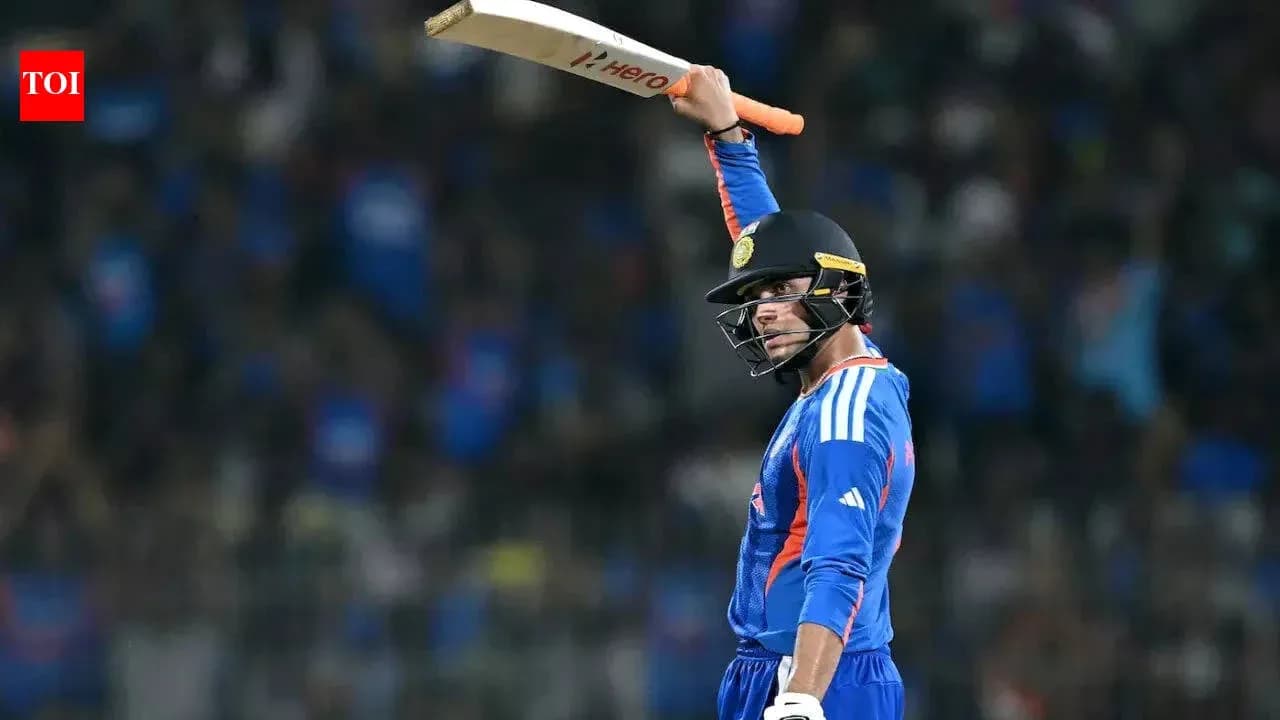
The world truly saw it in February 2025 in Mumbai. England felt the full force. Abhishek blasted 135 off 54 balls, an innings that looked like it had been ripped from a video game. Thirteen sixes. A hundred in 37 balls. A statement, not just a scorecard.
That night, India didn’t just find another opener. They found a weapon.
Asia Cup dominance and a world record
The 135 was supposed to be the outlier. It became the template.
At the 2025 Asia Cup, Abhishek turned from breakout star to India’s undisputed tone-setter at the top. Match after match, he walked out and swung the tempo in India’s favour before opponents had even settled.
Seven games. 314 runs. Strike rate: 200. Player of the Tournament as India lifted the trophy.
The pressure he put on new-ball attacks changed games in the powerplay itself. Bowlers weren’t trying to get him out; they were trying to survive him.
Then came the number that rewrote the record books. A 61 against Sri Lanka pushed his ICC T20I batting rating to 931 points, the highest ever for a men’s T20I batter. Dawid Malan’s 919 was gone. The peaks once scaled by Suryakumar Yadav and Virat Kohli were left behind.
In a format that chews up reputations and spits them out in a season, Abhishek had climbed to the very top.
A calendar year like no other
The raw data behind his rise looks almost unreal.
In 2025, Abhishek became the first player to score over 1,000 runs in T20 cricket in a single calendar year while still striking at more than 200. That combination — volume and velocity — is what separates entertainers from era-defining players.
He finished the year at a strike rate of 202 and hammered 108 sixes. That’s not a purple patch. That’s sustained demolition.
The IPL, always a harsher judge than any bilateral series, saw the same brutality. For Sunrisers Hyderabad, Abhishek unleashed one of the great innings in league history: 141 off 55 balls against Punjab Kings in 2025.
He flew to fifty in 16 balls, raised his hundred in 40, and finished with 14 fours and 10 sixes as Hyderabad hunted down 246. It wasn’t just a chase; it was a dismantling.
That 141 wiped out KL Rahul’s mark for the highest score by an Indian batter in IPL history. In a tournament stacked with global stars, an Indian left-hander from Amritsar had just planted his flag.
Behind the scenes, the influences kept shaping him. Yuvraj remained a constant presence. Shikhar Dhawan offered the calm, seasoned opener’s lens. Brian Lara and Travis Head, at Sunrisers, added layers of nuance to his strokeplay and game awareness.
On the field, his partnership with Head became one of the most feared opening acts in T20 cricket. Two left-handers, both unafraid to go aerial early, ripping up the old manual about “sizing up conditions” and “taking your time”.
World champion with the same fearless script
By the time the 2026 T20 World Cup arrived, Abhishek was no longer a curiosity. He was a marked man. Plans were drawn, fields were stacked, lengths were debated in team meetings across the tournament.
It didn’t matter.
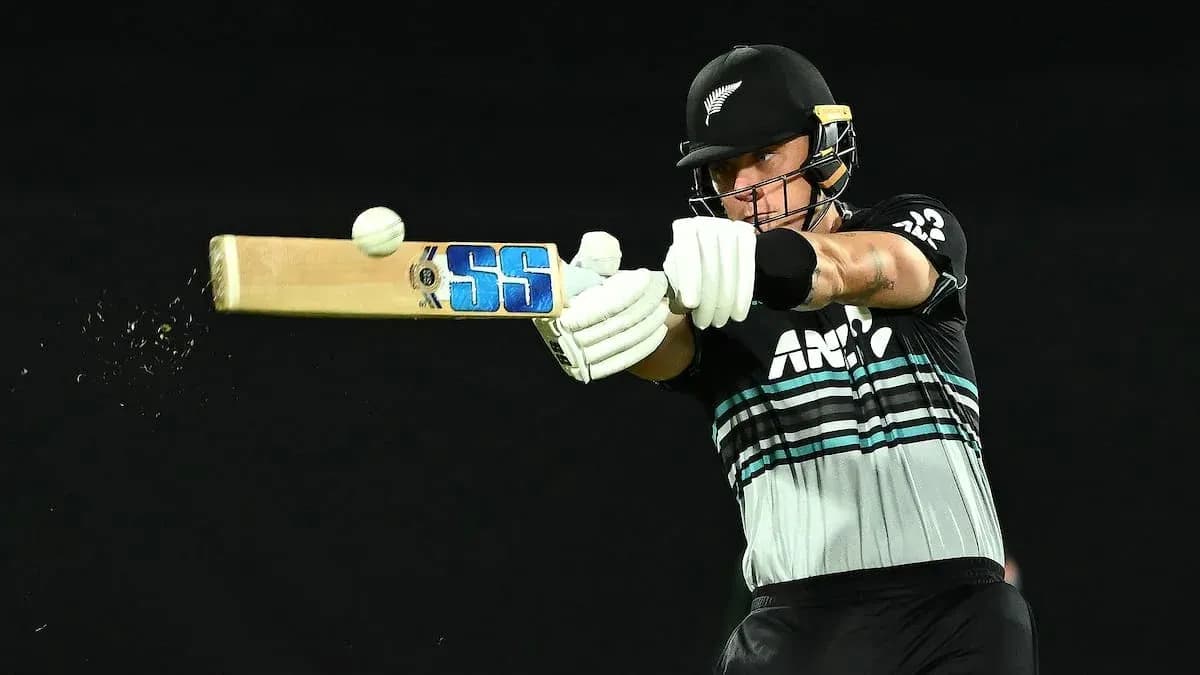
In India’s title-winning run, he played the role expected of him: shock absorber for the rest of the batting order, taking the blows to the opposition in the first six overs. In the final against New Zealand, on the biggest stage of his career, he stayed true to his method.
Fifty-two off 21 balls. Blistering, decisive, and entirely in character.
The innings didn’t just tilt the final. It underlined that his approach — high risk, high reward — could stand up to the pressure of a world title match.
The numbers behind the fear factor
Strip away the romance and you’re left with a career already stacked with substance.
Between 2024 and 2026, Abhishek Sharma has played 56 T20Is for India, scoring 1,629 runs in 55 innings. His average sits at 30.73, but in T20 cricket, that number barely tells the story. The strike rate does: 187.24.
Two centuries. Eleven fifties. A highest score of 135. And a boundary chart that explains why bowlers rarely relax when he’s at the crease — 164 fours and 104 sixes in international T20s alone.
He doesn’t accumulate. He invades.
From the little boy in Amritsar gripping a bat almost as tall as himself to the man now sitting atop the T20I batting rankings, Abhishek’s rise has been rapid, ruthless and very modern.
The question now is no longer whether this is for real. It’s how much further he can push the limits of what a T20 opener is supposed to be.